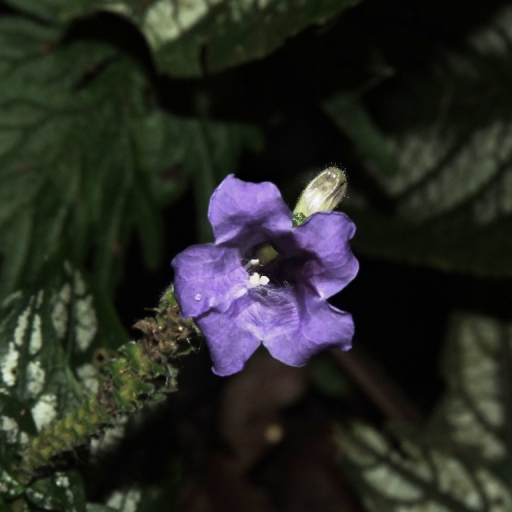
Plant Overview
Known as the Blue Trumpet or the Ear-leaved Strobilanthes, this Himalayan native brings a touch of mystical mountain mist to any collection. While its cousin, the Persian Shield, is famous for purple leaves, Strobilanthes auriculata is prized for its delicate, lavender-blue flowers and deeply textured foliage. In its native habitat, it carpets the forest floor, waiting for the perfect moment to burst into a sea of blue.
🔍 How to Identify
- 👂 Ear-Shaped Leaves: The name "auriculata" comes from the unique "auricles"—small, ear-like lobes at the base of the leaves that clasp the stem.
- 🎺 Trumpet Blooms: It produces clusters of pale purple or bluish-violet flowers that are shaped like curved trumpets, often appearing in late winter or early spring.
- 🌿 Deeply Veined Foliage: The leaves are elongated and serrated, featuring a prominent, almost quilted vein pattern that gives the plant a lush, prehistoric look.
🏡 In Your Garden
- ☁️ Humidity is Key: Coming from the humid foothills of the Himalayas, this plant thrives on moisture. If the air is too dry, the leaf edges will quickly turn brown and crispy.
- 🌤️ Dappled Sunlight: It prefers "goldilocks" lighting—not too dark that it gets leggy, but not so bright that the sun scorches the leaves. A spot with morning sun and afternoon shade is its happy place.
- ✂️ The Pruning Dance: Because it can grow quite sprawling and "leggy," it benefits from a firm pinch-back after flowering to encourage a bushier, more compact shape.
⚠️ Safety & Toxicity
- 🟢 Generally Safe: This plant is not considered highly toxic to humans or common household pets.
- 🤏 Skin Sensitivity: Like many members of the Acanthaceae family, the sap can occasionally cause mild skin irritation for those with sensitive skin. It’s always a good idea to wear gloves when doing heavy pruning.
✨ Fun Fact
Many species in the Strobilanthes genus are "plietesials," meaning they grow for several years, flower all at once in a massive "masting" event, and then die back. While auriculata is more predictable in cultivation, its wild relatives can wait up to 12 years just to bloom for a single season!

Detailed Care Instructions
To grow Strobilanthes auriculata, also known as golden shrimp plant or false Agastache, you can follow these steps:
- Choose a suitable location: Select an area with partial shade to full shade. The plant prefers a warm climate but can tolerate colder temperatures above freezing.
- Soil preparation: Strobilanthes auriculata prefers well-draining soil that retains moisture. Amend the soil with organic matter such as compost or well-rotted manure to improve fertility and drainage.
- Planting: Dig a hole slightly larger than the plant's root ball. Place the plant in the hole, ensuring that the top of the root ball is level with the soil surface. Backfill the hole with soil and gently firm it around the base of the plant.
- Watering: Water the plant thoroughly after planting to settle the soil and encourage root growth. Keep the soil consistently moist but not overly saturated. Water more frequently during hot, dry periods.
- Mulching: Apply a layer of organic mulch around the plant to retain moisture, suppress weeds, and moderate soil temperature.
- Fertilization: Feed Strobilanthes auriculata with a balanced fertilizer, such as a slow-release granular fertilizer or a water-soluble fertilizer. Follow the package instructions for application rates and frequency.
- Pruning: Prune the plant regularly to maintain its desired shape and promote bushiness. Trim back any straggly or leggy growth to encourage new growth.
- Pests and diseases: Monitor the plant for common pests such as aphids, mealybugs, or spider mites. If detected, treat the infestation promptly with organic or chemical insecticides. Watch out for fungal diseases like powdery mildew and treat accordingly with fungicides.
- Propagation: Strobilanthes auriculata can be propagated through stem cuttings or by division. Take stem cuttings from healthy plants and root them in a well-draining potting mix. To divide the plant, carefully dig up the clump, separate the individual plants, and replant them.
- Winter care: In colder regions, provide frost protection for Strobilanthes auriculata during winter. This can be done by covering the plant with a frost cloth or temporarily moving it to a frost-free location.
Remember to regularly monitor the plant's condition, adjust watering and care based on its specific needs, and enjoy the beautiful blooms of Strobilanthes auriculata.

Place in a window with dappled sun or a spot in the middle of a room. Or directly in a window facing west or east.

To water this plant, you should first check the moisture level of the soil by sticking your finger or a small tool about an inch deep into the soil. If the soil feels dry, it is time to water the plant. Use room temperature water and water the plant slowly, making sure the water gets distributed evenly across the soil. Do not over-water the plant, as this can cause root rot. If the plant is in a pot, make sure there are drainage holes at the bottom to prevent waterlogging. It is also important to avoid getting water on the leaves or stem of the plant, as this can cause leaf spots or fungal growth.
- Choose a fertilizer that is rich in nitrogen, phosphorus, and potassium.
- Apply the fertilizer evenly around the base of the plant.
- Use a rake or garden fork to work the fertilizer into the soil to a depth of about one inch.
- Water the plant thoroughly after fertilizing.
- Repeat the fertilizing process once every four to six weeks during the growing season (spring and summer).
- Do not fertilize during the dormant season (fall and winter).
- Avoid over-fertilizing, which can lead to burnt leaves or death of the plant.
Strobilanthes auriculata thrives in soil that is well-draining and loamy, with a pH range between 6.5 and 7.5. The soil should have a good amount of organic matter, which can help retain moisture and provide nutrients to the plant. It is also important to avoid soil that is too heavy or compacted, as this can hinder root growth and lead to waterlogging. A balanced fertilizer can be added every few weeks to help promote healthy growth. Overall, choosing a high-quality potting mix that meets these criteria will help ensure that Strobilanthes auriculata grows and thrives.
Strobilanthes Auriculata is a plant that can be propagated through stem cuttings. Here are the steps to propagate Strobilanthes Auriculata plant:
- Select a healthy stem from the mother plant that is free from any damage or pests.
- Use a clean and sharp pair of scissors or pruning shears to make a diagonal cut on the stem. The cutting should be around 4-5 inches long.
- Remove the lower leaves of the cutting, leaving only a few leaves at the top.
- Dip the cut end of the stem into rooting hormone powder.
- Prepare a well-draining soil mix by mixing perlite, peat moss, and vermiculite in equal proportions.
- Make a hole in the soil mix using a stick or pencil and insert the cutting in the hole.
- Firmly press the soil around the cutting to ensure it is in place.
- Water the cutting thoroughly to settle the soil and to keep it moist.
- Cover the cutting with a clear plastic bag or a plastic dome to create a greenhouse-like environment.
- Place the cutting in a warm, bright, and humid location but away from direct sunlight. A temperature of around 70-75°F is ideal for rooting.
- Mist the cutting with water daily to keep the humidity level high.
- After 3-4 weeks, gently tug on the cutting to check for root development. Once the cutting has roots, remove the plastic bag or dome and gradually expose the plant to more sunlight.
- After a few more weeks, the cutting should be established enough to be transferred to a larger pot or planted in the ground.
Common pests of the persian shield include Mealybugs, spider mites, thrips. Make a habit of checking your persian shield frequently for pests so that any infestations can be caught and managed early.







