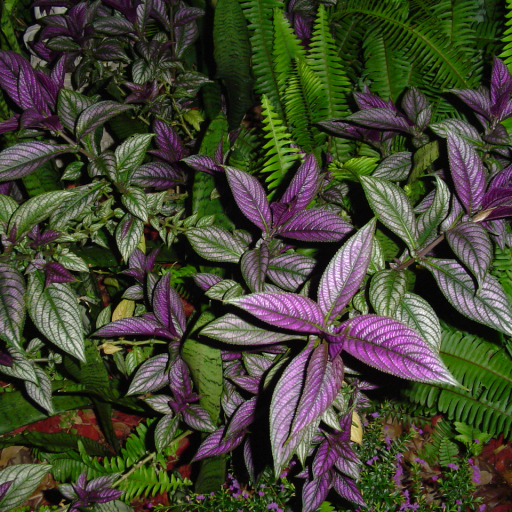
Plant Overview
Often called the "Persian Shield," this royal beauty is famous for its iridescent, metallic foliage that looks almost too vibrant to be real. Native to the warm, humid jungles of Myanmar (formerly Burma), it has become a favorite for those looking to add a dramatic splash of purple to their indoor or outdoor collections. Despite its name, it has no historical connection to Persia, but its shield-shaped leaves certainly command a noble presence.
🔍 How to Identify
- 💜 Luminous Foliage: The leaves are the main attraction, featuring a deep violet-purple center with a shimmering, silvery-metallic overlay that catches the light.
- 🌿 Bold Texture: Each leaf is lance-shaped with slightly serrated (toothed) edges and prominent dark green veins that create a quilted appearance.
- 🍃 Deep Undersides: If you flip a leaf over, you’ll find a solid, rich maroon or burgundy underside, providing a beautiful contrast to the shimmering top.
🏡 In Your Garden
- ☁️ The Shade Secret: While most purple plants love the sun, the Persian Shield is a "vampire" of sorts; too much direct afternoon light will bleach its metallic sheen. It thrives in dappled light or partial shade to keep those colors intense.
- 💧 Thirsty Tendencies: This plant is quite vocal about its needs. It prefers consistent moisture and high humidity; if it gets too dry, the leaves will dramatically wilt or develop crispy brown edges.
- ✂️ Pinching for Lushness: Left to its own devices, it can become "leggy" or tall and spindly. To keep it bushy and full, gardeners should regularly pinch off the tips of the stems to encourage side branching.
⚠️ Safety & Toxicity
- ✅ Generally Safe: Strobilanthes dyeriana is widely considered non-toxic to humans, cats, and dogs, making it a great choice for households with curious pets.
- 🧪 Sap Sensitivity: While not poisonous, the sap can occasionally cause mild skin irritation for people with very sensitive skin. It is always a good idea to wear gloves if you are doing heavy pruning.
✨ Fun Fact
Though it is grown almost exclusively for its leaves, the Persian Shield can produce tiny, funnel-shaped violet flowers in the winter. However, many growers actually pinch these buds off, as the plant’s energy is better spent maintaining its spectacular "metal-plated" leaves!

Detailed Care Instructions
To grow Strobilanthes Dyeriana, also known as the Persian shield plant, follow these steps:
- Location: Choose a suitable location for your Strobilanthes Dyeriana plant. It prefers bright, indirect sunlight, so place it near a window where it can receive a few hours of sunlight each day. Avoid placing it in direct sunlight as it can scorch the leaves.
- Soil: Use well-draining soil with a mixture of potting soil, perlite, and peat moss. This will prevent waterlogging and improve the plant's overall health.
- Watering: Keep the soil consistently moist, but allow the top inch of soil to dry out between waterings. Ensure that the pot has drainage holes to prevent water from pooling at the plant's roots.
- Humidity: Strobilanthes Dyeriana appreciates high humidity levels. To increase humidity, mist the leaves with water daily or place a humidifier near the plant. You can also place the pot on a tray filled with water and pebbles to create a humid microclimate around the plant.
- Temperature: This plant thrives in a warm environment. Ideally, maintain a temperature between 65-75°F (18-24°C). Avoid exposing the plant to cold drafts or sudden temperature changes.
- Fertilizer: Feed your Strobilanthes Dyeriana with a balanced, water-soluble fertilizer once a month during the growing season (spring and summer). Follow the instructions on the fertilizer package for proper dosage.
- Pruning: Regularly prune your plant to encourage bushier and more compact growth. Pinch or trim the tips of the stems to promote branching.
- Propagation: You can propagate Strobilanthes Dyeriana through stem tip cuttings. Take a 4-6 inch cutting just below a leaf node and remove the lower leaves. Place the cutting in a glass of water or in a pot with moist soil until roots develop, and then transplant it into a separate container.
- Pests and diseases: Watch out for common houseplant pests like aphids, spider mites, and mealybugs. Regularly inspect your plant and treat any infestations promptly. Also, be mindful of overwatering to prevent root rot.
By following these care guidelines, you can successfully grow and maintain a vibrant Strobilanthes Dyeriana plant.

Place in a window with dappled sun or a spot in the middle of a room. Or directly in a window facing west or east.

To water this particular plant, it is important to first understand its natural environment and water needs. This type of plant typically prefers moist, but well-draining soil. It is best to water it when the top inch of soil feels dry to the touch. When watering, it is important to water the soil evenly and thoroughly, avoiding getting water on the leaves as this can lead to fungal or bacterial diseases. A watering can with a long spout can help reach the roots without getting water on the leaves. It is important not to let the plant sit in standing water, as this can lead to root rot. Some gardeners also recommend using room temperature or tepid water rather than cold water straight from the tap.
- The plant should be fertilized every two weeks during the growing season.
- Use a water-soluble fertilizer that is balanced or slightly higher in nitrogen.
- Dilute the fertilizer to half strength before applying to the soil.
- Apply the fertilizer around the base of the plant, avoiding the leaves and stem.
- Water immediately after fertilizing to help the nutrients reach the roots.
- Avoid over-fertilizing, as this can lead to salt buildup in the soil and damage the plant.
- During the dormant season, reduce the frequency of fertilizing to once a month or stop altogether.
The ideal soil for Strobilanthes Dyeriana plants should be rich in nutrients and well-draining. A mix of peat moss, perlite, and coarse sand is recommended for optimal growth. The pH level of the soil should be between 6.0 and 7.0. It is important to avoid using heavy clay soils or soils that retain too much moisture as this can lead to root rot and other plant diseases. Additionally, regular fertilization with a balanced fertilizer during the growing season is recommended to maintain healthy growth.
To propagate this plant, you will need to take stem cuttings from the parent plant. Choose a healthy stem that is at least 4 inches long and has several leaves. Using clean and sharp scissors or pruners, cut the stem at an angle just below a node (where the leaves emerge). Remove the lower leaves on the stem, leaving only the top 2-3 leaves.
Prepare a pot with well-draining potting soil and make a hole in the center. Dip the cut end of the stem into rooting hormone powder and gently tap off any excess. Insert the stem cutting into the hole and press the soil firmly around it. Water the soil thoroughly and place the pot in a warm and bright location.
Keep the soil consistently moist but not waterlogged. After a few weeks, you should see new growth emerging from the stem cutting. Once the new plant has developed roots and is growing well, you can gradually acclimate it to brighter light and less frequent watering.
It's important to note that Strobilanthes Dyeriana is a tropical plant and is sensitive to cold temperatures and frost. It's best to propagate and grow it indoors or in a warm and protected area outdoors.








