Plant Overview
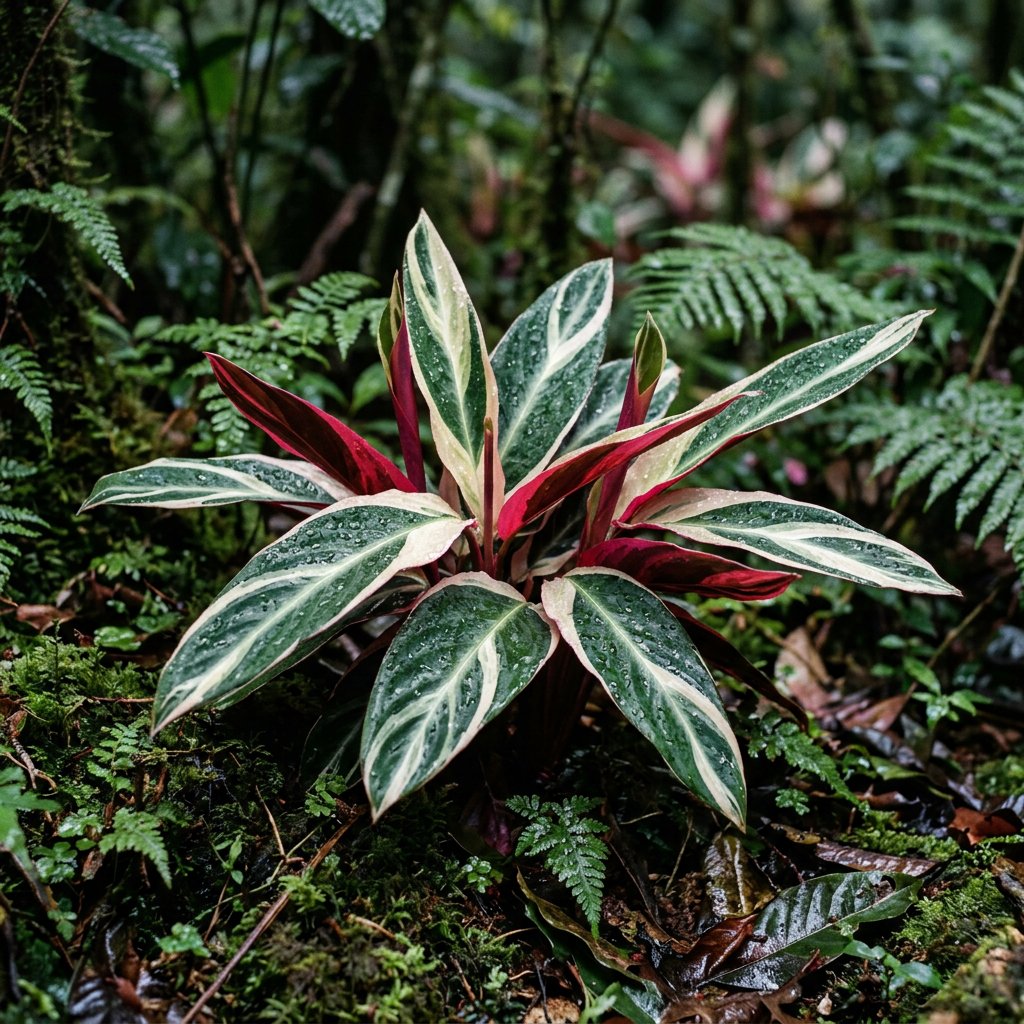
The Stromanthe Sanguinea, most famously known by the cultivar name 'Triostar,' is a living masterpiece of the Brazilian rainforest. Often called the "Never-Never Plant," it belongs to the prayer plant family and is celebrated for its dramatic, painterly foliage. In the wild, it carpets the shaded forest floor, but in the home, it acts as a vibrant, moving centerpiece that changes its silhouette from day to night.
🔍 How to Identify
- 🍃 Blade Shape: It features long, lance-shaped leaves that grow in a graceful, upright clumping habit, reaching about 2 to 3 feet tall indoors.
- 🎨 The Palette: The upper surface is a chaotic, beautiful mix of creamy white, emerald green, and pastel pink streaks.
- 🍷 Vibrant Undersides: Flip a leaf over to find a shocking, deep burgundy or "sanguine" red (hence the name Sanguinea), which glows when backlit by the sun.
🏡 In Your Garden
- 💧 Humidity is Non-Negotiable: Unlike hardier houseplants, the Triostar is a "humidity snob." It breathes through its large leaves and will develop crispy, brown "burnt" edges if the air is too dry or if the soil dries out completely.
- 🌦️ The Tap Water Nuance: This plant is sensitive to chemicals. If you notice yellowing edges despite good humidity, it is likely reacting to fluoride or chlorine in your tap water; it prefers distilled, rain, or filtered water.
- ☀️ Light Sensitivity: Because of its heavy white variegation, it lacks chlorophyll in large patches. It needs bright, indirect light to maintain its pink hues, but direct afternoon sun will scorch the leaves like paper.
⚠️ Safety & Toxicity
- ✅ Pet-Friendly: The Stromanthe is a fantastic choice for "pet parents." It is non-toxic to both cats and dogs.
- 👶 Child Safe: It is generally safe for curious toddlers, though its delicate leaves are easily bruised or torn by rough handling.
✨ Fun Fact
The Triostar is a "dancing plant." It uses a small organ at the base of each leaf called a pulvinus to move its foliage throughout the day. It spreads its leaves wide to soak up morning light and folds them vertically toward the sky at night (nyctinasty) to prevent water from sitting on the leaves and to protect its roots from getting too much evening dew.

Detailed Care Instructions
| Color | White |
| Soil Ph | Not Too Particular, But Generally Between 6 To 8 |
| Humidity | Normal |
| Lighting | Part Sun |
| Toxicity | Poisonous |
| Soil Type | Light, Well-Draining Soil |
| Bloom Time | Rarely Blooms, But If It Does It Will Be Between March And April |
| Difficulty | Easy |
| Plant Type | Tropical Perennial |
| Mature Size | 60 To 90 Cm |
| Native Area | Amazon Jungle In South America |
| Temperature | 16°C - 24°C |
| Sun Exposure | Part Sun |
| Hardiness Zones | 10 To 12 |
To grow a Stromanthe Sanguinea plant, follow these steps:
- Choose a suitable location: Stromanthe Sanguinea plants prefer bright, indirect sunlight. Avoid placing them in direct sunlight as it can scorch the leaves. They also thrive in warm temperatures.
- Select a well-draining pot: Use a pot that has drainage holes to prevent overwatering. Stromanthe Sanguinea plants prefer slightly acidic soil. You can use a mix of peat moss, perlite, and potting soil to provide the ideal growing conditions.
- Watering: Keep the soil consistently moist, but not soggy. Water the plant when the top inch of soil feels dry. Avoid letting it sit in standing water, as this can lead to root rot.
- Humidity: Stromanthe Sanguinea plants enjoy high humidity. You can increase humidity by placing the pot on a tray of water with pebbles or using a humidifier. Misting the leaves regularly can also help.
- Fertilizer: During the growing season, feed the plant with a balanced, water-soluble fertilizer every two weeks. Reduce fertilization frequency during the winter months.
- Pruning: Trim any dead or yellowing leaves to maintain the plant's appearance and health. This will also promote new growth and prevent the plant from becoming leggy.
- Repotting: Stromanthe Sanguinea plants may require repotting every 1-2 years when they become root-bound. Choose a pot that is slightly larger than the current one and fill it with fresh potting soil.
- Pest control: Monitor the plant for pests such as spider mites, aphids, and mealybugs. If you notice any infestations, treat them immediately with an appropriate insecticide or by manually removing the pests.
By following these steps and providing the right care, your Stromanthe Sanguinea plant should thrive and grow beautifully.

Place in a window with dappled sun or a spot in the middle of a room. Or directly in a window facing west or east.

To water this plant, you will want to ensure that the top few inches of soil feel dry to the touch before watering. You can do this by sticking your finger into the soil to check the moisture level. When it's time to water, use room temperature water to thoroughly saturate the soil until water runs out the drainage holes in the bottom of the pot. Be sure to empty any excess water from the saucer underneath the plant to prevent root rot. Avoid letting the plant sit in standing water or allowing the soil to dry out completely. Watering once a week is typically sufficient, but adjust based on the plant's environment and individual needs.
To fertilize this plant, use a balanced soluble fertilizer during the growing season, which should be applied every two weeks. Ensure that the soil is moist before adding the fertilizer. Reduce the frequency of fertilization during the winter months, as the plant enters a dormant phase. Monitor the plant for any signs of salt buildup from the fertilizer and flush the soil regularly to avoid any damage.
When choosing soil for the plant commonly known as Stromanthe Sanguinea, it is important to select a well-draining soil type that provides the necessary nutrients for optimal growth. A mix of peat moss, perlite, and sand may be used to create an ideal soil for this plant. The soil should be kept slightly moist and the plant should be positioned in a location with moderate indirect light. Additionally, it is recommended to fertilize the plant every two to four weeks during the growing season with a balanced fertilizer.
To propagate this plant, first select a healthy, mature plant with several stems. Using a clean, sharp pair of scissors or shears, carefully cut off a stem section that is approximately 4-6 inches long. Make sure the section has at least one leaf and some aerial roots if possible.
Next, prepare a pot with well-draining soil that is moist but not wet. Make a hole in the soil with a pencil or similar tool, and insert the stem cutting into the hole. Firmly press down the soil around the cutting to ensure it is secure.
Cover the pot with a clear plastic bag or plastic wrap to create a humid environment for the cutting. Place the pot in a warm, bright location, but avoid direct sunlight as this can damage the delicate cutting.
Check the soil regularly and water when the top inch of soil feels dry, being careful not to overwater. After a few weeks, the cutting should start to develop new growth. At this point, gradually remove the plastic covering and increase the amount of light the cutting receives.
Once the cutting has established roots and new growth, it can be transplanted into a larger container or planted in the garden. With proper care, the new plant will continue to grow and thrive.
Common pests of the stromanthe sanguinea include Mealybugs, spider mites, thrips. Make a habit of checking your stromanthe sanguinea frequently for pests so that any infestations can be caught and managed early.







