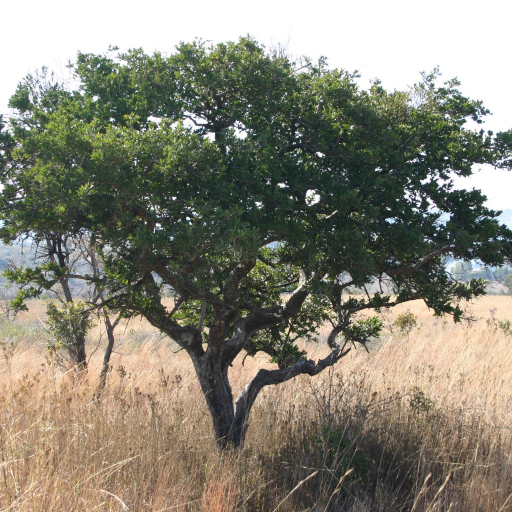
Plant Overview
Known as the Spiny Monkey Orange, Strychnos pungens is a rugged survivor of the African bushveld. This small, gnarly tree is famous for its "cannonball" fruits that look like bright orange ornaments scattered across its dark, prickly branches. While it serves as a vital food source for baboons and humans alike, it is a plant that demands respect—both for its defensive spines and its complex chemistry.
🔍 How to Identify
- 🍃 The "Stinging" Leaves: The leaves are thick, leathery, and dark green. The most defining feature is the sharp, rigid spine at the very tip of each leaf, which can easily prick an unsuspecting finger.
- 🟠 The Fruit: The fruits are large, perfectly round, and encased in a thick, woody shell. They start out a mottled green and ripen into a vibrant, deep orange.
- 🪵 Growth Habit: It typically grows as a dense, multi-stemmed shrub or a small tree with a "tangled" look. The bark is grey and often features a corky, cracked texture.
🏡 In Your Garden
- ☀️ Sun & Heat: This is a true sun-worshiper. It thrives in baking heat and is exceptionally drought-tolerant once established, making it a perfect candidate for "water-wise" or xeriscape gardens in warm climates.
- 🏜️ The Taproot Rule: Like many savanna species, it develops a deep, vertical taproot to find water. Because of this, it is notoriously difficult to transplant; it’s best to plant it in its permanent location while it is still a small sapling.
- 🧱 Soil Resilience: It isn't picky about nutrients and actually prefers sandy or rocky, well-draining soil where other plants might struggle to find a foothold.
⚠️ Safety & Toxicity
- 🚨 Status: Mixed Safety. While the fruit pulp is edible and often described as having a sweet, nutty flavor, the plant belongs to the genus famous for strychnine.
- ⚠️ The Seeds: The seeds and the skin of the fruit are highly toxic and should never be consumed. They contain alkaloids that can be dangerous if ingested. Always ensure children and pets are supervised around the fallen fruit.
- 🌵 Physical Hazard: The "pungent" leaf tips are sharp enough to puncture skin, so wear heavy gloves when pruning or handling.
✨ Fun Fact
The dried, rock-hard shells of the Monkey Orange are so durable that they are traditionally used to make "sound boxes" for musical instruments, such as the mbira (thumb piano), and are even used by children as naturally-grown spinning tops!

Detailed Care Instructions
| Humidity | Normal |
| Lighting | Full Sun |
| Toxicity | Poisonous |
| Difficulty | Medium |
| Hibernation | Cold Period |
| Temperature | 20°C - 32°C |
To grow Strychnos Pungens, also known as the spiny monkey orange or spiny-seeded monkey orange, you can follow these steps:
- Climate: Ensure that you are in a suitable climate for the plant. Strychnos Pungens is native to the arid and semi-arid regions of southern Africa, so it prefers warm and dry conditions.
- Seeds: Obtain fresh seeds from a reputable source or collect them from mature fruit. Soak the seeds in water for 24 hours to soften the hard seed coat and improve germination.
- Planting: Fill a pot or seed tray with well-draining soil mix. Plant the soaked seeds about 1 inch deep into the soil and cover them lightly. Water the soil gently.
- Location: Choose a sunny spot with good air circulation for the plant. Strychnos Pungens prefers full sun exposure.
- Watering: Water the plant regularly but avoid overwatering. Let the soil dry out between watering sessions to prevent root rot.
- Fertilizer: Apply a balanced slow-release fertilizer during the growing season to promote healthy growth. Follow the instructions on the fertilizer packaging for the appropriate dosage.
- Pruning: Prune the plant occasionally to maintain its shape and remove any dead or diseased branches. Be cautious of the spines when handling the plant.
- Pests and Diseases: Monitor the plant for common pests such as aphids or scale insects. Treat any infestations promptly using organic insecticides or miticides. Watch for signs of diseases, such as leaf spots or fungal issues, and address them appropriately.
- Transplanting: If you initially grew the plant in a pot, you can transplant it into a larger container or directly into the ground once it has grown a few inches. Choose a location with well-draining soil.
- Protection: Protect the young seedlings from extreme weather conditions such as strong winds, frost, or extreme heat. Provide shade or cover if necessary.
Remember, Strychnos Pungens is a woody plant, so it may take several years to reach maturity and produce fruit. Be patient and provide proper care to ensure its healthy growth.

Place in a bright room that is sun drenched almost all day. Or directly in a south-facing window.

Strychnos Pungens is a type of plant that requires sufficient watering in order to thrive. When watering this plant, it is important to ensure that the soil is moist but not overly saturated. This can be achieved by watering the plant deeply once a week and allowing the soil to dry slightly in between waterings.
To water Strychnos Pungens, you should begin by checking the soil moisture level. This can be done by inserting your finger into the soil up to the knuckle. If the soil feels dry to the touch, it is time to water the plant.
Next, you should water the plant slowly and thoroughly, ensuring that the water reaches the roots. This can be done by soaking the soil around the base of the plant, taking care not to overwater and create water pooling on the top.
After watering the plant, it is important to allow the soil to drain and avoid leaving the plant in standing water. This will prevent root rot and other issues that can arise from overwatering.
In addition to watering, Strychnos Pungens also benefits from regular fertilization and pruning to encourage healthy growth and flowering. With proper care, this plant can thrive and add beauty to any garden or landscape.
To fertilize this plant, use a balanced fertilizer with a ratio of 10-10-10 or 20-20-20 every 2-3 months. Fertilize during the growing season, which is typically from spring to fall. Avoid over-fertilizing, as this can damage the roots and leaves of the plant. Water the plant before and after fertilizing to help the fertilizer penetrate the soil and reach the roots. Use a slow-release fertilizer or liquid fertilizer mixed with water. Follow the manufacturer's instructions for application rates and frequency.
Strychnos Pungens plant requires well-draining soil that is rich in organic matter. It prefers a slightly acidic to neutral pH range of 6.0 to 7.0. Sandy loam soil with good drainage is ideal for this plant's growth and development. It is recommended to avoid heavy clay soils as they may retain too much moisture and restrict root growth. The soil should also be kept slightly moist, but not waterlogged or saturated, as this can lead to root rot. When planting the Strychnos Pungens plant, it is important to provide ample space for the roots to grow and spread out. Additionally, periodic fertilization with a balanced all-purpose fertilizer can help ensure healthy growth and flowering.
To propagate this plant, one method would be to collect seeds directly from the fruit as they ripen. After collecting, the seeds should be planted immediately in well-draining soil. Another way to propagate the plant would be to take cuttings from young, healthy stems, ensuring that there are at least two nodes on each cutting. The cuttings should be dipped in rooting hormone and then planted in a well-draining potting mix. The plant should be kept moist but not overly wet until the roots form and the plant begins to grow.








