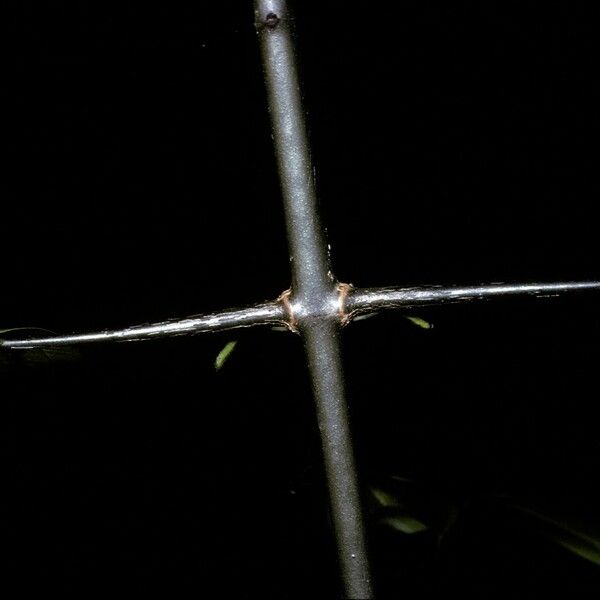
Plant Overview
Often called Wallich's Strychnine, Strychnos wallichiana is a powerful and mysterious woody climber native to the lush jungles of Southeast Asia. Named after the famed botanist Nathaniel Wallich, this plant belongs to a family notorious for producing some of the world's most potent natural toxins. While it looks like a harmless tropical vine, it carries a legendary reputation in traditional folklore as both a dangerous poison and a carefully guarded medicinal secret.
🔍 How to Identify
- 🌿 The Leaves: The glossy, oval-shaped leaves are arranged in opposite pairs and feature three to five distinct veins that run from the base to the tip—a classic "fingerprint" of the Strychnos genus.
- 🪝 The Climbing Hooks: As a "liana" or woody vine, it develops specialized woody hooks or tendrils that help it pull itself up toward the canopy of tall forest trees.
- 🟠 The Deceptive Fruit: It produces hard-shelled, round berries that start green and ripen into a vibrant orange or reddish hue, mimicking the appearance of a small, harmless citrus fruit.
🏡 In Your Garden
- 🌳 Growth Habit: This is not your typical trellis plant; it is a vigorous forest dweller that requires significant space and a sturdy structure, such as a large tree or heavy-duty pergola, to support its weight.
- 💧 Tropical Needs: It thrives in high humidity and well-draining, acidic soil. Because it is a jungle native, it prefers "filtered" sunlight rather than harsh, direct noon sun, which can scorch its waxy foliage.
- 🪵 Rarely Cultivated: Due to its extreme toxicity, you will rarely find this in a standard backyard. It is almost exclusively found in botanical conservatories or specialized tropical collections where safety can be strictly managed.
⚠️ Safety & Toxicity
- 🚫 STRICT WARNING: Every part of Strychnos wallichiana—especially the seeds and bark—contains lethal alkaloids like strychnine and brucine.
- 💀 Human & Pet Risk: Ingestion is life-threatening. The toxins attack the central nervous system, causing severe muscle spasms and respiratory failure. It should never be planted where children or pets can access the fallen fruit or chew on the stems.
- 🧤 Handling Safety: Even when pruning, it is wise to wear gloves, as the sap may cause irritation for those with sensitive skin.
✨ Fun Fact
Historically, various species of Strychnos were used by indigenous tribes to create "arrow poisons." A single scratch from a dart coated in the plant's concentrated extract was enough to paralyze prey, demonstrating the incredible (and terrifying) power of this jungle climber.

Detailed Care Instructions

Place in a window with dappled sun or a spot in the middle of a room. Or directly in a window facing west or east.

Water-loving plants flourish in wet or sloppy soil and near ponds. The extensive root system enables these plants to absorb plenty of water. The surface of the soil should be kept moist at all times. Place your pot in a container filled with water to guarantee that plants get enough water. If the ground becomes dry, it is recommended that you water it well. Plants in smaller pots will need to be watered more frequently. Water the soil in which the plant is standing thoroughly using a watering can.








