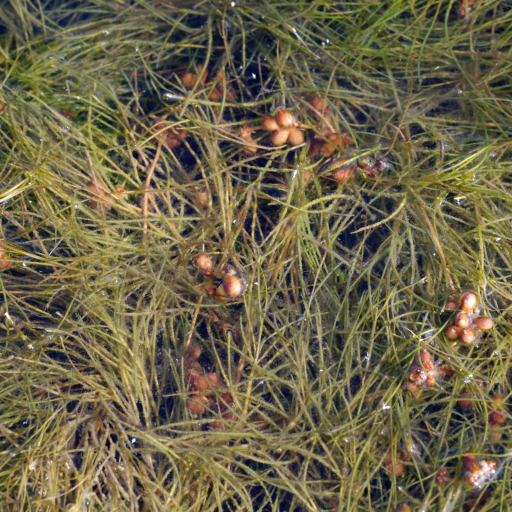
Plant Overview
Commonly known as Sago Pondweed, Stuckenia pectinata is a hidden architect of the underwater world. While it may look like simple submerged grass, it acts as a vital "pantry" for nature, particularly for migratory waterfowl who travel thousands of miles to feast on its nutritious tubers. Historically, it was grouped with the Potamogeton family, but its unique, fan-like branching eventually earned it its own botanical classification.
🔍 How to Identify
- 🍃 Slender Foliage: The leaves are exceptionally narrow and hair-like, tapering to a sharp point, often resembling a collection of dark green pine needles submerged in water.
- 🌿 Zig-Zag Stems: One of its most distinct features is the way the stems branch out in a distinct "zig-zag" or "fan" pattern, allowing the plant to spread wide across the water column.
- 🌾 Stipule Sheaths: At the base of the leaf, you’ll find a long, translucent sheath that wraps around the stem, a key feature that distinguishes it from similar-looking pondweeds.
- 🀄 Tuber Chains: If you were to pull it from the sediment, you’d find small, starchy nut-like tubers growing along the roots, which are the plant's primary way of overwintering.
🏡 In Your Garden & Pond
- 🦆 The Wildlife Magnet: If you are building a natural wildlife pond, this is a "must-have." It provides excellent cover for young fish and invertebrates while serving as a high-energy food source for ducks and swans.
- 💧 Water Purifier: This plant is an oxygenation powerhouse. It thrives in still or slow-moving water and is surprisingly tolerant of alkaline and brackish (slightly salty) conditions where other plants might wither.
- 🚜 Growth Management: Because it spreads via aggressive underground rhizomes and tubers, it can quickly dominate a small garden pond. It’s best used in larger "wild" settings or contained in submerged pots to prevent it from choking out more delicate neighbors.
⚠️ Safety & Toxicity
- ✅ Status: Non-toxic and safe for humans, pets, and livestock.
- 🦟 Ecology Note: While the plant itself is safe, dense mats can trap debris or provide a breeding ground for mosquitoes if the water remains too stagnant. Ensure some water movement or introduce natural predators like dragonflies to keep the pond balanced.
✨ Fun Fact
The "Sago" in its name refers to the starch-rich tubers that grow on its roots. These tubers are so calorie-dense that they are considered the single most important food source for Canvasback ducks during their long migrations across North America!

Detailed Care Instructions
| Humidity | High |
| Lighting | Full Sun |
| Difficulty | Easy |
To grow Stuckenia pectinata, also known as thread-leaved water starwort or pond starwort, follow these steps:
- Select a suitable location: Stuckenia pectinata is a water plant and thrives in shallow, calm freshwater bodies like ponds, lakes, or slow-moving streams. Ensure that the water is clean and free from pollutants.
- Obtain plant materials: You can purchase Stuckenia pectinata as seeds, bare-root plants, or rooted cuttings from nurseries specializing in aquatic plants or online retailers. Select healthy plants or seeds for better growth.
- Planting in a pond or water garden:
a. Prepare the planting area: Clear the area of any debris or weeds. Stuckenia pectinata prefers a sandy or muddy substrate. If the bottom is too rocky or filled with debris, consider using a planting basket or container filled with sandy soil or aquatic potting mix.
b. Plant seeds: If using seeds, scatter them over the prepared planting area, ensuring they are submerged in water. Lightly press them into the substrate.
c. Plant roots or cuttings: If using bare-root plants or cuttings, gently press them into the substrate. Ensure that the roots are fully covered with the substrate and that the plant is stable.
- Water requirements: Stuckenia pectinata prefers constantly moist conditions with at least 6 to 12 inches (15 to 30 cm) of water covering the top. However, it can tolerate water depths of up to 3 feet (1 meter).
- Sunlight requirements: Stuckenia pectinata thrives in full or partial sunlight. Ensure that the planting location receives at least 4 to 6 hours of direct sunlight daily. Too much shade may cause the plant to become leggy or grow weak.
- Maintenance:
a. Fertilization: Stuckenia pectinata typically does not require additional fertilizers as it absorbs nutrients from the water. However, if growth seems sluggish, you can use specialized aquatic plant fertilizers sparingly.
b. Water quality: Regularly monitor and maintain good water quality to prevent the growth of algae, which can compete with Stuckenia pectinata for nutrients. Consider adding beneficial bacteria to help manage organic waste.
c. Pruning: Trim any excessive overgrowth or yellowing foliage to maintain the plant's overall health and appearance.
- Protection from predators: Stuckenia pectinata is generally resistant to many pests and diseases. However, you may need to protect it from grazing animals like ducks or geese if they pose a threat. Using a protective mesh or barrier around the planting area can help deter these animals.
Remember that local regulations or restrictions may apply to the introduction of non-native aquatic plants. It's best to check with your local authorities before planting Stuckenia pectinata or any other aquatic species.

Place in a window with dappled sun or a spot in the middle of a room. Or directly in a window facing west or east.

Watering procedures for this aquatic plant require strict attention to detail to ensure optimal growth conditions. The key to successfully watering Stuckenia Pectinata involves providing the plant with constant access to clean, oxygen-rich water.
First, it is important to select a suitable container with ample drainage holes to prevent waterlogging. The container should be partially filled with a freshwater substrate that is rich in nutrients.
Next, the plant should be slowly submerged in water to a depth of at least six inches. After submerging the plant, continue filling the container with water until it reaches the desired level. Note that the water level should not be too high or too low, as this will negatively impact the plant's growth.
To prevent the accumulation of harmful chemicals and algae growth, Replacement of water should be done regularly on a weekly basis, to ensure that the water is fresh enough for it to thrive.
During hot summer weather, the frequency of watering should be increased to prevent the plant from drying out. Additionally, adding a weak solution of a suitable aquatic fertilizer can help promote healthy growth and development.
In conclusion, proper watering procedures are essential for maintaining healthy Stuckenia Pectinata plant. By following the steps outlined above and paying attention to its needs, you can successfully grow and enjoy this beautiful aquatic plant.
To fertilize this plant, use a fertilizer with a balanced ratio of nitrogen, phosphorus, and potassium. Apply the fertilizer once every two weeks during the growing season, which is typically in the spring and summer. Dilute the fertilizer according to the package instructions and water the soil around the plant thoroughly. Avoid getting fertilizer directly on the leaves or stems of the plant.
Stuckenia Pectinata plant requires a nutrient-rich soil that is well-drained and moderately fertile. The soil should be a mixture that contains a blend of sand, clay, and organic matter such as compost. Avoid using heavy, clay soils or soils that are too acidic. The ideal pH range for Stuckenia Pectinata plant is between 6.0 and 7.5. It is important to ensure that the soil is consistently moist but not waterlogged, as this can lead to root rot. Additionally, it is recommended to add a slow-release fertilizer to the soil in the spring to provide ongoing nutrients to the plant throughout the growing season.
Stuckenia Pectinata can be propagated through division during the plant's growing season, typically late spring to early summer.
- Choose a healthy, mature plant with strong roots.
- Carefully dig up the plant and gently tease apart the roots and shoots into smaller sections.
- Make sure each section has adequate roots and shoots for successful growth.
- Plant the sections into moist soil, making sure the roots are covered but the shoots are above the soil surface.
- Water the newly planted sections well and keep the soil moist until you see new growth.
- Stuckenia Pectinata can also be propagated from seeds, which can be collected from mature plants and planted in moist soil in early spring, indoors or outdoors.








