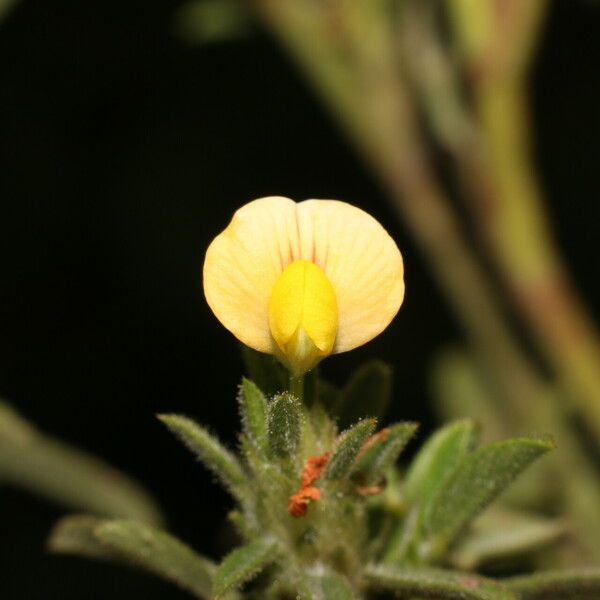
Plant Overview
Often called the Sticky Stylo or Poor Man’s Lucerne, this resilient legume is a master of survival in harsh, sun-baked landscapes. Native to the Americas, it has earned a reputation for being "tough as nails," thriving in soils so poor that most other plants would simply give up. Its most famous trait is its tacky, resinous texture, which gives the plant its botanical name, viscosa.
🔍 How to Identify
- 🌿 Sticky Foliage: The most defining feature is the presence of glandular hairs covering the stems and leaves. These secrete a sticky resin that feels tacky to the touch.
- 🌼 Pea-Like Blooms: It produces small, vibrant yellow flowers that resemble miniature sweet peas, often featuring a tiny reddish-orange "honey guide" at the center.
- 🍃 Leaf Pattern: The leaves are trifoliate, meaning they grow in sets of three, with a slightly elongated, elliptical shape and visible veins.
🏡 In Your Garden
- 🌱 Soil Improver: This plant is a nitrogen-fixer. It works with underground bacteria to pull nitrogen from the air and deposit it into the earth, naturally fertilizing the surrounding soil.
- ☀️ Drought Warrior: Because it develops a long, sturdy taproot, it is incredibly drought-tolerant. However, this root makes the plant hate being moved—once you plant it, it’s best to leave it in place.
- 🌾 Erosion Control: Due to its sprawling, prostrate growth habit, it is often used to stabilize sandy banks or "dead zones" in a landscape where nothing else will grow.
⚠️ Safety & Toxicity
- ✅ Generally Safe: Stylosanthes viscosa is non-toxic and is frequently used as a high-protein forage for livestock and horses.
- 🐾 Fur Warning: While safe to touch and eat, the sticky resin can act like a magnet for dust, seeds, and burrs. If you have long-haired pets, they might emerge from a patch of Sticky Stylo needing a thorough bath!
✨ Fun Fact
The sticky resin isn't just for show—it’s a biological defense! The plant’s "tackiness" can actually trap and immobilize small crawling insects, like certain species of ticks, preventing them from climbing up the stems to reach higher ground.

Detailed Care Instructions
To grow Stylosanthes Viscosa (also known as Stylo or Sticky Stylo), follow these steps:
- Select a suitable planting location: Stylo thrives in tropical and subtropical regions with well-drained soil. Choose an area with full sun exposure.
- Soil preparation: Stylo prefers slightly acidic to neutral soil with a pH range of 5.5 to 7.0. Prepare the planting area by removing weeds, rocks, and debris. Mix organic matter, like compost, into the soil to enhance fertility and drainage.
- Sowing seeds: Stylo seeds can be sown directly into the prepared soil or in seedling trays. If sowing directly, ensure the soil is moist and create furrows about 2 cm deep. Sow the seeds thinly along the furrows, and cover them with a thin layer of soil. If using seedling trays, plant the seeds 2 cm apart in each cell.
- Watering: Water the seeds regularly to maintain moist soil until germination occurs, usually within 7-10 days. After germination, gradually reduce watering frequency while ensuring the soil remains evenly moist.
- Thin out seedlings: If you have sown in trays, thin out the weaker seedlings to provide enough space for the remaining ones to grow. Alternatively, if directly sown, thin out overcrowded seedlings when they have grown to around 10-15 cm tall.
- Fertilization: Apply a balanced fertilizer (10-10-10) to provide essential nutrients to the plants. Follow the instructions on the fertilizer packaging for proper dosage. Repeat the application every 4-6 weeks during the growing season.
- Weed control: Regularly remove weeds around the Stylo plants to minimize competition for nutrients and sunlight. Mulching can also help to suppress weeds.
- Pruning: Prune the stems back to encourage bushier growth and enhance branching. This can be done during the growing season or after the plant has flowered.
- Pests and diseases: Monitor the plants for any signs of pests or diseases, such as aphids or powdery mildew. Apply appropriate insecticides or fungicides if necessary, following the instructions on the product label.
- Harvesting: Stylo can be harvested after about 70-90 days of growth when it reaches the flowering stage. Cut the plant approximately 10 cm above the ground to allow regrowth for future harvests.
Remember to research any specific regional or climate-based considerations for growing Stylo in your area, as these guidelines may vary depending on your location.

To water this particular plant, it is important to understand its water needs and requirements. It is recommended to water it deeply once or twice a week, rather than providing shallow or frequent watering. The soil should be allowed to partially dry out in between watering sessions to ensure proper drainage and prevent waterlogging. It is advisable to water the plant early in the morning or late in the evening to minimize water loss due to evaporation. Additionally, care should be taken not to water the leaves or foliage, as this can promote the growth of harmful fungal diseases. A watering can or a watering hose with a fine spray nozzle can be used to water the plant gently and evenly at the base of the stem.
To fertilize the Stylosanthes Viscosa plant, start by selecting a balanced slow-release fertilizer with an equal ratio of nitrogen (N), phosphorus (P), and potassium (K). Avoid using high nitrogen fertilizers as they may promote excessive foliage growth at the expense of flowering.
Apply the fertilizer during the plant's active growing season, which is typically in the spring and summer. Follow the manufacturer's instructions for the specific fertilizer, as application rates may vary. Generally, sprinkle the granules around the drip line of the plant, which is the area directly beneath the outermost edges of the plant's canopy.
Gently work the fertilizer into the soil using a garden fork or rake, being cautious not to disturb the plant's roots. After application, water the plant thoroughly to help distribute the nutrients throughout the root zone.
For best results, fertilize the Stylosanthes Viscosa plant every three to four months during the growing season. Observe the plant's growth and adjust the fertilizer application as needed to maintain healthy foliage and flowering.
The ideal soil for Stylosanthes Viscosa plant should have good drainage, a neutral pH level, and be rich in nutrients. It should have a loamy texture that can hold moisture without becoming waterlogged.
To create this type of soil, mix equal parts of sand, peat moss, and garden soil. Add a small amount of compost or well-rotted manure to boost the nutrient content of the soil.
If the soil in your area is naturally acidic, you may need to add lime to adjust the pH level. Alternatively, if the soil is too alkaline, you can add sulfur to lower the pH.
When planting Stylosanthes Viscosa, ensure that the soil is well-prepared and free from weeds or debris. Add a layer of mulch around the base of the plant to help retain moisture and suppress weeds.
Regular watering and fertilization are important to help Stylosanthes Viscosa thrive. Use a balanced fertilizer every few weeks during the growing season, and water deeply but infrequently to encourage deep root growth.
Stylosanthes viscose is a perennial legume plant known for its ability to fix nitrogen in the soil and provide valuable forage for livestock. Here are the details on how to propagate this plant:
- Seed collection: Wait for the plant to produce mature seeds. The seeds of Stylosanthes viscose are usually contained within small, rounded pods. Harvest the pods when they turn brown and slightly dry. Collect the pods and remove the seeds from inside.
- Seed treatment: Some gardeners prefer scarification or stratification to enhance seed germination. Scarification involves scratching or gently nicking the seed coat to allow water to penetrate better. Stratification, on the other hand, entails subjecting the seeds to cool temperatures for a specific period of time to break dormancy. While these methods are not always necessary for Stylosanthes viscose, they can potentially increase germination rates.
- Germination: Plant the seeds directly in well-draining soil in a location that receives full sun. Prepare the soil by removing any weeds or debris and loosening it with a garden fork or tiller. Sow the seeds at a depth of about 1/4 inch and cover them lightly with soil. Water the seeds gently to keep the soil consistently moist but not soaked.
- Transplanting: Once the seedlings have grown to a suitable size, typically around 3 to 4 inches tall with a well-established root system, they can be transplanted to their permanent location. Choose an area with good sunlight exposure and sufficient space for the plants to spread. Ensure the soil is fertile and well-draining.
- Dig holes: Dig holes in the ground that are deep and wide enough to accommodate the root ball of each seedling. Space the holes according to the desired planting distance, usually around 8 to 12 inches apart for Stylosanthes viscose.
- Planting: Carefully remove each seedling from its container or nursery bed, taking care not to damage the roots. Place the seedling in the prepared hole, ensuring that the topsoil of the root ball is level with the surrounding ground. Backfill the hole with soil, gently firming it around the plant.
- Watering and care: After planting, water the seedlings thoroughly to help settle the soil and provide moisture to the roots. Additionally, provide regular irrigation to establish the plants. Once established, Stylosanthes viscose is relatively drought-tolerant but will benefit from occasional watering during dry spells.
Remember to keep an eye out for pests and diseases such as aphids, leaf spots, or root rot, and take appropriate measures if any issues arise. With proper care, the propagated Stylosanthes viscose plants should thrive and provide valuable forage or ground cover in the garden or pasture.








