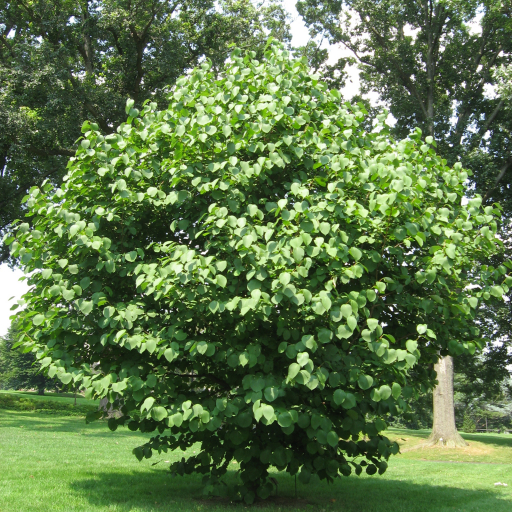
Plant Overview
Known as the Fragrant Snowbell or Large-leaf Snowbell, Styrax obassia is a poetic addition to any landscape. Hailing from the mountain forests of Japan, Korea, and China, this tree is celebrated for its dramatic, oversized leaves and pendulous clusters of blossoms that look like delicate porcelain bells. It is often described as the sophisticated cousin of the more common Japanese Snowbell, offering a bolder texture and a more intoxicating perfume.
🔍 How to Identify
- 🍃 The Foliage: Unlike many of its relatives, this tree features massive, nearly circular leaves that can reach up to 8 inches across. They are a deep forest green on top with a soft, velvety underside.
- 🔔 The Flowers: In late spring, the tree produces "racemes" (hanging chains) of fragrant white flowers. Each flower has five petals and a cluster of bright yellow stamens at the center, dangling gracefully below the leaves.
- 🩶 The Bark: The trunk is remarkably smooth and a cool slate-gray. As the tree matures, the bark may develop shallow, orange-tinted fissures that provide beautiful winter interest after the leaves have fallen.
🏡 In Your Garden
- 🌱 Root Sensitivity: The Fragrant Snowbell is a "homebody"—it hates being moved. Because it has a sensitive root system, you should choose its forever home carefully, as transplanting an established tree often leads to failure.
- 🌬️ Sheltered Beauty: While it is hardy, its large leaves can act like sails in high winds, leading to tattered edges. Plant it in a spot protected from heavy gusts, ideally in rich, acidic soil that mimics a woodland floor.
- 💧 Thirst for Consistency: This tree does not handle drought well. It prefers "cool feet," so applying a thick layer of organic mulch around the base will help keep the soil moist and the roots happy during summer heat.
⚠️ Safety & Toxicity
- ✅ Status: Generally considered non-toxic.
- 🐾 Details: There are no recorded reports of Styrax obassia being poisonous to dogs, cats, or horses. However, as with any ornamental plant, it is best to discourage pets from chewing on the wood or foliage to avoid minor digestive upset.
✨ Fun Fact
In Japan, the high-quality, fine-grained wood of the Styrax obassia was historically prized for crafting traditional "Kokeshi" dolls and sturdy umbrella handles!

Detailed Care Instructions
Growing Styrax obassia, commonly known as Fragrant Snowbell, involves several steps to ensure that the plant thrives. Here are some detailed steps on how to grow this beautiful ornamental tree:
1. Choosing the Right Location:
- Sunlight: Styrax obassia prefers partial shade to full sun. It thrives well in dappled sunlight.
- Soil: It grows best in well-drained, loamy soil that is rich in organic matter. The soil should be slightly acidic to neutral (pH 5.5 to 7.0).
- Space: Make sure there is enough space for the tree to grow to its mature size, which can be up to 20-30 feet tall and 15-20 feet wide.
2. Planting:
- Timing: The best time to plant Styrax obassia is in the early spring or fall when the weather is cooler.
- Digging the Hole: Dig a hole that is twice as wide and the same depth as the root ball of the plant.
- Planting: Place the root ball in the hole, ensuring the top of the root ball is level with the surrounding soil. Backfill the hole with the excavated soil, gently tamping it down to remove air pockets.
- Watering: Water the plant thoroughly after planting to help settle the soil and provide initial moisture.
3. Watering:
- Initial Watering: Keep the soil consistently moist but not waterlogged during the first growing season to establish a strong root system.
- Regular Watering: Once established, water the plant during dry periods. It prefers slightly moist soil, so avoid letting it dry out completely.
4. Fertilizing:
- Initial Fertilizer: A balanced, slow-release fertilizer can be applied when planting.
- Annual Fertilizer: Once established, you can fertilize the plant in early spring with a balanced fertilizer (e.g., 10-10-10) according to the manufacturer’s instructions.
5. Mulching:
- Apply a 2-3 inch layer of organic mulch, such as shredded bark or compost, around the base of the plant to help retain moisture, regulate soil temperature, and suppress weeds. Keep the mulch a few inches away from the trunk to prevent rot.
6. Pruning:
- Dead or Damaged Branches: Prune any dead, damaged, or diseased branches as needed.
- Shaping: Prune for shape and to remove any crossing branches in late winter or early spring before new growth begins.
7. Pest and Disease Management:
- Observation: Regularly check the plant for signs of pests or diseases. Styrax obassia is generally resistant to most pests and diseases, but aphids, scale, or fungal issues can occasionally occur.
- Treatment: If pests or diseases are detected, treat them promptly using appropriate methods, such as insecticidal soap for aphids or fungicides for fungal issues.
8. Protection:
- Winter Protection: In colder regions, young plants may benefit from some winter protection. Mulch around the base and consider using a tree wrap if severe cold is expected.
By following these steps, you can enjoy the beautiful, fragrant blooms and attractive foliage of Styrax obassia in your garden.

Place in a window with dappled sun or a spot in the middle of a room. Or directly in a window facing west or east.

Watering Styrax obassia, a deciduous tree, requires careful attention to ensure healthy growth. Here are key guidelines:
1. **Soil Moisture:** Keep the soil consistently moist, especially during its active growing season (spring and summer). Avoid waterlogging, which can cause root rot. Use well-draining soil to balance moisture retention and drainage.
2. **Watering Frequency:**
- **Young Trees:** Newly planted specimens need frequent watering, generally every 2-3 days, to establish a strong root system. Keep the root ball moist until the plant is well established.
- **Established Trees:** Once mature, water deeply but less frequently. Typically, watering once a week is adequate, but adjust based on local climate and soil conditions.
3. **Volume:** Ensure deep watering to penetrate the root zone. This encourages roots to grow deeply, improving drought tolerance. Aim for about 1-2 inches of water per week, provided naturally or supplemented.
4. **Mulching:** Apply a 2-3 inch layer of organic mulch around the base of the tree. This helps conserve moisture, regulate soil temperature, and reduce competition from weeds.
5. **Drought Conditions:** During dry spells, increase watering frequency to compensate for the lack of rainfall. Monitor the tree closely for signs of water stress, such as wilted or yellowing leaves.
6. **Avoid Overhead Watering:** Watering at the base helps minimize leaf wetness, reducing the risk of fungal diseases. A soaker hose or drip irrigation system works well.
By following these guidelines, you can ensure your Styrax obassia remains healthy and thrives.
Here are the fertilizing instructions for Styrax obassia:
- Soil Testing: Before applying any fertilizer, perform a soil test to determine nutrient deficiencies and pH levels. This helps in choosing the right type of fertilizer.
- Timing: Fertilize the plant in early spring before new growth starts. This ensures that the plant has the necessary nutrients during its active growing season.
- Type of Fertilizer:
- Use a balanced, slow-release granular fertilizer with an N-P-K (Nitrogen-Phosphorus-Potassium) ratio such as 10-10-10 or 14-14-14.
- Alternatively, you can use a fertilizer specifically formulated for acid-loving plants if your soil is not naturally acidic.
- Use a balanced, slow-release granular fertilizer with an N-P-K (Nitrogen-Phosphorus-Potassium) ratio such as 10-10-10 or 14-14-14.
- Application Rate:
- Follow the manufacturer's instructions on the fertilizer packaging for the precise application rate.
- A general guideline is to apply about 1 pound of fertilizer per 100 square feet of planting area.
- Follow the manufacturer's instructions on the fertilizer packaging for the precise application rate.
- Application Method:
- Evenly broadcast the granular fertilizer around the base of the plant, keeping it several inches away from the trunk to avoid fertilizer burn.
- Lightly rake the fertilizer into the top 1-2 inches of the soil to help it integrate.
- Evenly broadcast the granular fertilizer around the base of the plant, keeping it several inches away from the trunk to avoid fertilizer burn.
- Watering: After applying the fertilizer, water the area thoroughly to help the nutrients penetrate the soil and reach the plant roots.
- Mulching: Add a layer of mulch around the base of the plant to help retain moisture, regulate soil temperature, and gradually release nutrients as it breaks down. Keep the mulch a few inches away from the trunk to prevent rot.
- Monitoring: Monitor the plant's growth and health throughout the season. If the plant shows signs of nutrient deficiency (like yellowing leaves or poor growth), you might need to supplement with additional fertilizer in mid-summer.
By following these guidelines, you can ensure that Styrax obassia receives the necessary nutrients to thrive.
Styrax obassia, known for its attractive white flowers and pleasant fragrance, thrives best in well-draining, moderately fertile soil. Here are some detailed requirements to ensure optimal growth for this plant:
- pH Level: The soil should be slightly acidic to neutral, with a pH range from 5.5 to 7.0.
- Texture: A loamy soil enriched with organic matter is ideal. This type of soil provides good drainage and retains enough moisture without becoming waterlogged.
- Organic Matter: Incorporating compost or well-rotted manure can improve soil fertility and structure, ensuring the plant receives essential nutrients for healthy growth.
- Drainage: Proper drainage is crucial since waterlogged conditions can lead to root rot. If planting in heavy clay soil, consider amending it with organic matter or coarse sand to improve drainage.
- Moisture: The soil should be kept consistently moist, especially during dry periods. However, avoid excessive watering that could lead to soggy conditions, as this can harm the roots.
- Mulching: Applying a layer of mulch around the base of the plant can help retain soil moisture, regulate temperature, and reduce weed growth. Organic mulches like bark chips, leaf mold, or compost are good choices.
By following these soil guidelines, you'll create a conducive environment for the healthy growth and development of Styrax obassia.
Propagating Styrax obassia, a deciduous tree, can be done through both seeds and cuttings. Here’s a detailed guide to the propagation methods:
Propagation from Seeds:
- Seed Collection:
- Timing: Collect the seeds in autumn when they ripen and start to fall off the tree.
- Selection: Choose seeds that are healthy and free from visible damage or disease.
- Timing: Collect the seeds in autumn when they ripen and start to fall off the tree.
- Seed Preparation:
- Cleaning: Clean the seeds to remove any pulp or debris. This can be done by rinsing them in water.
- Stratification: Seeds typically require a period of cold stratification to break dormancy.
- Cold Stratification: Place the seeds in a moist medium such as sand or peat moss, and store them in the refrigerator at about 4°C (39°F) for 90-120 days.
- Cold Stratification: Place the seeds in a moist medium such as sand or peat moss, and store them in the refrigerator at about 4°C (39°F) for 90-120 days.
- Cleaning: Clean the seeds to remove any pulp or debris. This can be done by rinsing them in water.
- Sowing Seeds:
- Timing: After stratification, sow the seeds in late winter or early spring.
- Medium: Use a well-draining seed starting mix.
- Depth: Plant the seeds about 1/2 inch deep.
- Care: Keep the soil evenly moist and provide indirect light.
- Timing: After stratification, sow the seeds in late winter or early spring.
- Germination and Growth:
- Germination: Seeds may take several weeks to months to germinate.
- Transplanting: Once the seedlings are large enough to handle, they can be transplanted to individual pots and eventually to their permanent location.
Propagation from Cuttings:
- Germination: Seeds may take several weeks to months to germinate.
- Selection of Cuttings:
- Timing: Take semi-hardwood cuttings in late summer.
- Cuttings: Select healthy, disease-free branches. Each cutting should be about 4-6 inches long and include several nodes.
- Timing: Take semi-hardwood cuttings in late summer.
- Preparing the Cuttings:
- Trimming: Remove the leaves from the lower half of the cutting to reduce water loss and prevent rotting.
- Hormones: Dip the cut end of each cutting in rooting hormone to stimulate root growth.
- Trimming: Remove the leaves from the lower half of the cutting to reduce water loss and prevent rotting.
- Planting the Cuttings:
- Medium: Use a well-draining rooting medium, such as a mix of perlite and peat moss.
- Depth: Insert the cuttings about 1-2 inches deep into the medium.
- Environment: Place the cuttings in a humid environment. This can be achieved by covering them with a plastic dome or placing them in a greenhouse.
- Moisture: Keep the medium evenly moist but not waterlogged. Misting the cuttings regularly can help maintain humidity.
- Medium: Use a well-draining rooting medium, such as a mix of perlite and peat moss.
- Root Development:
- Timing: Rooting may take several weeks.
- Transplanting: Once the cuttings have developed a healthy root system, they can be transplanted into pots with a standard potting mix and grown on until they are large enough to be planted in their final location.
General Care Tips:
- Timing: Rooting may take several weeks.
- Location: Choose a site with partial shade to full sun and well-drained soil.
- Watering: Ensure the plants receive adequate water, especially during dry periods, but avoid waterlogging.
- Protection: Protect young plants from extreme weather conditions and pests.
By using these propagation techniques, you can successfully grow Styrax obassia and enjoy its beautiful foliage and blooms.








