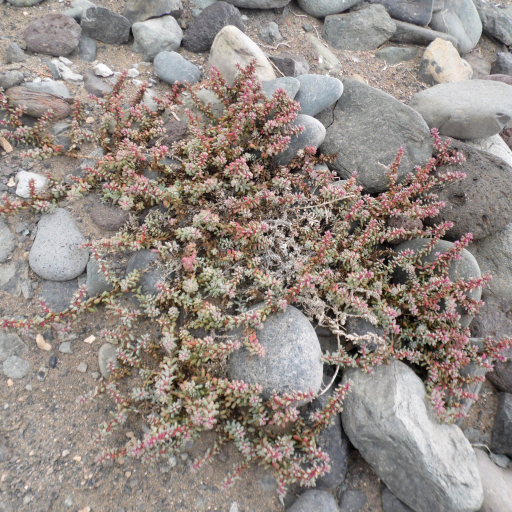
Plant Overview
Known as the Shrubby Seablite or the "Desert Succulent," Suaeda vermiculata is a master of survival in some of the harshest environments on Earth. Often found hugging the edges of salt marshes or thriving in scorched desert basins, this resilient shrub creates a striking visual with its transition from dusty green to deep crimson. In many arid regions, it serves as a vital anchor for soil, preventing erosion where few other plants dare to grow.
🔍 How to Identify
- 🌿 The Leaves: Small, fleshy, and cylindrical (almost like tiny sausages). Their shape is why the Latin name includes vermiculata, meaning "worm-like."
- 🎨 Color Shifting: While it starts as a glaucous or grayish-green, the foliage often turns a brilliant shade of purple or reddish-pink when exposed to intense sun or high salinity.
- 🌸 The Blooms: Its flowers are incredibly tiny and tucked into the leaf axils. They lack showy petals, appearing more like small, green-to-yellowish bumps along the stems.
- 🪵 Growth Habit: It typically grows as a low, spreading shrub with a woody base, forming dense mats that can reach about 1 to 2 feet in height.
🏡 In Your Garden
- 🧂 Salt Specialist: This plant is a halophyte, meaning it actually thrives in salty conditions. If you live near the coast or have "alkali" soil where nothing else grows, this is your champion.
- 💧 Drainage is Vital: Because it is adapted to dry, sandy habitats, it hates "wet feet." In a garden setting, it requires extremely gritty soil; standing water will lead to root rot almost instantly.
- 🏜️ Low Maintenance: Once established, it requires almost zero attention. It is incredibly drought-tolerant and rarely suffers from pests, as the high salt content in its tissues makes it unappealing to most bugs.
⚠️ Safety & Toxicity
- ✅ Status: Generally non-toxic and considered safe for humans and pets.
- 🧂 Salt Content: While not poisonous, the plant accumulates high levels of salt and oxalates. If consumed in large quantities by pets, it could cause mild stomach upset or thirst issues, but it is not a "danger list" plant.
- 👐 Skin Safety: The foliage is smooth and does not typically cause skin irritation.
✨ Fun Fact
Historically, Suaeda species were burned to produce "soda ash" (sodium carbonate). This ash was a critical ingredient in the ancient Mediterranean world for making soap and glass!

Detailed Care Instructions
To water this plant, gently saturate the soil around the base of the plant until water begins to drain from the bottom of the pot or the soil feels moist to the touch. Be careful not to over-water as this can lead to root rot. Monitor the soil moisture regularly and water the plant when the top inch of soil feels dry to the touch. It is also important to consider the plant's natural environment and watering needs. Suaeda Vermiculata typically grows in coastal salt marshes and can tolerate high levels of salt in the soil, so using a saline solution or adding small amounts of salt to the water may be beneficial. However, it is important to gradually introduce salt and monitor the plant's response to prevent damage.
The ideal soil for Suaeda Vermiculata plant should be well-draining, loose, and sandy. It should be slightly alkaline or neutral in pH, with a range of 7.0 to 8.5. It should have a good nutrient content, including nitrogen, phosphorus, and potassium, and a moderate level of organic matter. The soil should also be able to retain some moisture while allowing excess water to drain away easily. Additionally, the plant prefers a soil that is rich in minerals, such as calcium, magnesium, and iron. It is recommended to avoid using heavy clay or compacted soils, as they can lead to drainage problems and root rot.








