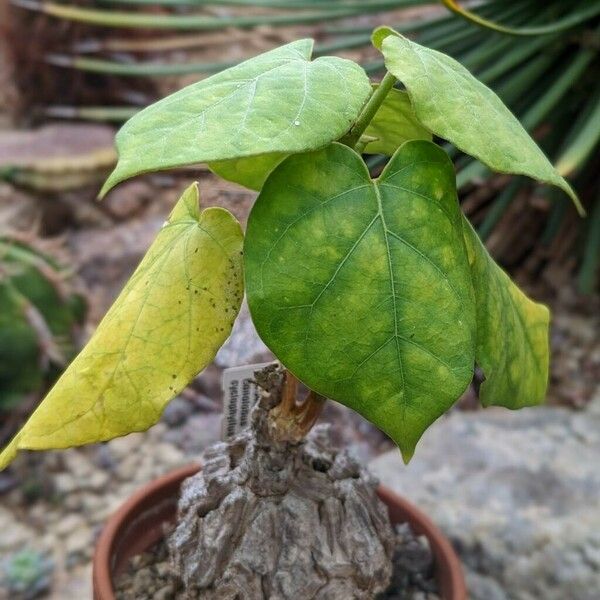
Plant Overview
Often referred to as the Silver Dollar Peperomia, this charming tropical perennial is a miniature masterpiece. Native to the lush environments of the West Indies and South America, it is a favorite among terrarium hobbyists and apartment gardeners alike. Its coin-shaped foliage and trailing habit give it a whimsical, "fairy-tale" aesthetic that brightens up any shelf or hanging basket.
🔍 How to Identify
- 🍃 Leaf Shape: Features perfectly round, button-like leaves (hence the name cyclophylla, meaning "circle leaf") that are typically less than an inch in diameter.
- 💧 Texture: The leaves are thick, fleshy, and succulent-to-the-touch, with a smooth, matte green finish.
- 🌱 Growth Habit: It produces thin, reddish-brown stems that creep along the ground or cascade elegantly over the edges of a pot.
🏡 In Your Garden
- ☁️ Humidity over Water: While it looks like a desert succulent, this plant is a child of the tropics. It thrives in high humidity—making it an ideal candidate for a closed terrarium or a steamy bathroom windowsill.
- 🪴 Drainage is Vital: It has a very shallow root system that is highly sensitive to "wet feet." Using a chunky, orchid-bark-heavy mix prevents the roots from suffocating and rotting.
- ☀️ Dappled Light: In the wild, it grows under the canopy of larger trees. In your home, it prefers bright, indirect light; direct afternoon sun will quickly scorch and "bleach" its delicate round leaves.
⚠️ Safety & Toxicity
- 🐾 Pet-Safe: Like most members of the Peperomia family, Suberogerens cyclophylla is non-toxic to cats and dogs.
- 👶 Child Friendly: It is generally safe to have around children, as it lacks thorns, irritants, or poisonous saps. However, the small leaves can be a choking hazard if plucked.
✨ Fun Fact
Peperomias are nicknamed "Radiator Plants" because they love warmth and stable temperatures. Interestingly, they are closely related to the plant that produces black pepper (Piper nigrum), though you won't get any spices from this ornamental variety!

Detailed Care Instructions

Place in a bright room that is sun drenched almost all day. Or directly in a south-facing window.

When the top few inches of soil dry out, water your plants. If the top few inches of soil are still moist, do not water your plant. Wait a few days, then poke your finger into the soil to see if anything has changed. Overwatering poses a disease risk, such as the development of fungal diseases in the roots. These plants have adaptations in there leaves that allow them to survive in low water supply.
These plants can thrive without taking help from any fertilizer. However, if the medium of growth is something other than soil for instance sand then you may need to add little fertilizer. The best way to know if your plants need fertilizer or not is to check for yellowing of leaves. If the leaves start to turn yellow it’s fertilizing time.
You may use Cactus Fertilizer for your Suberogerens Cyclophylla
Common pests of the suberogerens cyclophylla include Mealybugs, spider mites, aphids. Make a habit of checking your suberogerens cyclophylla frequently for pests so that any infestations can be caught and managed early.







