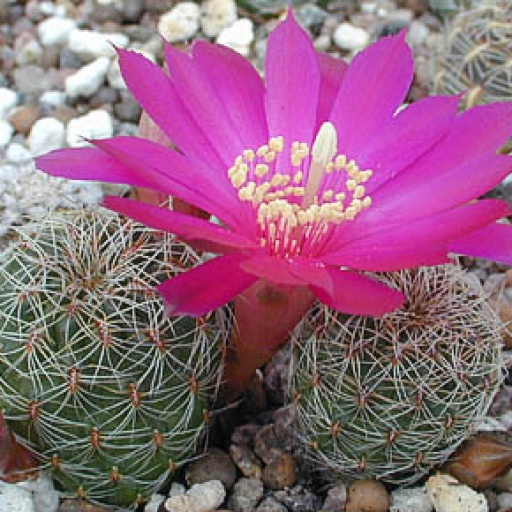
Plant Overview
Often called the "Violet Crown Cactus" or the "Pink Globe," Sulcorebutia rauschii is a miniature masterpiece from the high altitudes of Bolivia. It looks less like a plant and more like a cluster of polished neon gemstones tucked into the soil. Because of its striking purple-to-lime-green skin and geometric symmetry, it has become a "must-have" for succulent collectors seeking something that looks truly extraterrestrial.
🔍 How to Identify
- 🟣 The Body: A small, globose (spherical) cactus that stays low to the ground. It is famous for its dark violet or deep magenta skin, though apple-green variations exist.
- 🕷️ Pectinate Spines: Look closely at the "bumps" (tubercles). You will see tiny, dark, comb-like spines that are pressed flat against the body, resembling miniature black eyelashes.
- 🌸 Spring Blooms: When happy, it produces surprisingly large, funnel-shaped flowers in shades of deep magenta or rose-pink that emerge from the base of the plant.
🏡 In Your Garden
- ☀️ The Color Secret: To keep its signature deep purple hue, this cactus needs intense, bright light. If kept in too much shade, it will "fade" to green and begin to stretch, losing its tight, button-like appearance.
- 💧 Taproot Nuance: This species grows a thick, carrot-like taproot underground. Because this root holds so much moisture, the plant is incredibly prone to rot if the soil stays damp. It requires a very "gritty" mix (mostly pumice or lava rock) and a pot with excellent drainage.
- 🏔️ Winter Chill: Coming from the Andes, it is tougher than it looks. It actually enjoys a cool, dry dormancy in winter, which is the secret trick to getting it to flower profusely the following spring.
⚠️ Safety & Toxicity
- 🟢 Non-Toxic: This cactus is generally considered safe and non-toxic to both humans and household pets like cats and dogs.
- 🌵 Physical Irritation: While its spines are "pectinate" (lying flat) and not as aggressive as other cacti, they can still cause minor skin irritation if handled roughly. It’s always best to use tongs or thick gloves when repotting.
✨ Fun Fact
This plant was named after Walter Rausch, a legendary Austrian cactus explorer who spent his life traversing the rugged terrains of South America to discover hundreds of new species. Sulcorebutia rauschii remains his most famous namesake!

Detailed Care Instructions

Place in a bright room that is sun drenched almost all day. Or directly in a south-facing window.

When it comes to watering this particular plant, it's important to keep in mind that it prefers to dry out completely between watering sessions. This means that you should avoid watering it too frequently, as it may lead to root rot or other issues.
To water this plant, start by checking the soil moisture level. If the soil feels dry to the touch, it's time to water. Use a watering can or hose with a gentle flow to avoid damaging the plant or washing away the soil.
Apply water slowly and evenly over the entire surface of the soil, allowing it to soak in fully. Be careful not to let the water pool around the base of the plant or in any crevices or depressions in the soil.
Once you've finished watering, allow the excess water to drain away, and be sure to empty any catch trays or saucers to prevent the plant from sitting in standing water. Afterward, wait until the soil has completely dried out before watering again.
Overall, the key to watering this succulent plant is to strike a balance between providing enough moisture without overdoing it. With the right care and attention, your Sulcorebutia Rauschii plant should thrive and grow beautifully.
These plants can thrive without taking help from any fertilizer. However, if the medium of growth is something other than soil for instance sand then you may need to add little fertilizer. The best way to know if your plants need fertilizer or not is to check for yellowing of leaves. If the leaves start to turn yellow it’s fertilizing time.
You may use Cactus Fertilizer for your Sulcorebutia Rauschii
Sulcorebutia Rauschii plant prefers well-draining soil that is sandy and gritty. It requires a soil mix that contains a high proportion of coarse sand, pumice, or perlite. The soil should be loose and not compacted, allowing the roots to breathe and grow. The pH of the soil should be slightly acidic to neutral, around 6.0 to 7.0.
To prepare the ideal soil mix for Sulcorebutia Rauschii, start by mixing equal parts of coarse sand or pumice, perlite, and potting soil. Add a small amount of organic matter, such as humus or compost, to improve soil fertility and water retention. Mix the soil thoroughly before planting the plant.
It is important to avoid using heavy, clay or peat-based soils that retain water for too long. Such soils can cause root rot and other moisture-related problems that can damage the plant. Additionally, avoid using soils that contain high levels of salt, as Sulcorebutia Rauschii is sensitive to salt buildup.
Overall, Sulcorebutia Rauschii requires a well-draining soil mix that provides adequate drainage and aeration while retaining some moisture. The soil should be nutrient-rich and slightly acidic to support healthy growth and flowering. Regular fertilization and watering should also be provided to maintain the plant's health and vigor.
Common pests of the sulcorebutia rauschii include Scale insect, mealybugs, spider mites. Make a habit of checking your sulcorebutia rauschii frequently for pests so that any infestations can be caught and managed early.







