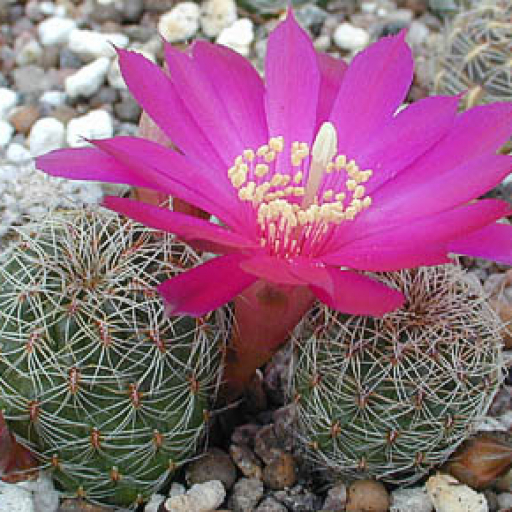
Plant Overview
Often called the "Tarabuco Gem," this tiny, treasure-like cactus is a high-altitude specialist hailing from the rugged, rocky terrains of Bolivia. It grows in tight, clumping clusters that resemble a collection of dark, prehistoric pebbles until it suddenly erupts into a brilliant crown of neon-bright flowers. It is a prized specimen for windowsill collectors who want maximum floral impact in a very small space.
🔍 How to Identify
- 🌵 The Body: Small, flattened globes that are usually dark green, often blushing with shades of bronze or deep purple when exposed to bright light.
- 🪮 Comb-like Spines: It features "pectinate" spines, which look like tiny white or tan combs pressed flat against the plant’s body, making it relatively smooth to the touch compared to "shaggy" cacti.
- 🌸 Low-Slung Blooms: Unlike many cacti that bloom from the crown, its vibrant red, orange, or magenta flowers emerge from the base or the sides of the stem.
🏡 In Your Garden
- ⛰️ The Taproot Secret: Beneath the soil, this plant hides a thick, carrot-like taproot. Because this root stores so much water, the plant is highly susceptible to rot; it requires "cactus gold" (a very gritty, inorganic soil mix) and a pot with excellent drainage.
- 🌬️ Mountain Breezes: It thrives on the "cool sun" philosophy. While it loves bright light to maintain its compact shape, it dislikes stagnant, humid heat. It performs best in a spot with plenty of fresh air circulation to mimic its breezy Andean home.
⚠️ Safety & Toxicity
- ✅ Status: Generally non-toxic to humans and common household pets.
- 🌵 Minor Irritant: While the spines are mostly flat and lack the "jumping" barbs of Chollas, they can still prick sensitive skin or curious paws. Always use tongs or thick gloves when repotting to protect the plant's delicate skin and your fingers.
✨ Fun Fact
In its native Bolivian habitat, Sulcorebutia tarabucoensis is a master of disguise; during the harsh dry season, the plant actually dehydrates and retracts into the ground, pulling itself level with the soil to hide from the sun and grazing animals!

Detailed Care Instructions

Place in a bright room that is sun drenched almost all day. Or directly in a south-facing window.

To water this plant, it is important to thoroughly soak the soil around the base of the plant. This should be done sparingly, as the plant prefers a dry environment and too much water can cause root rot and other issues. When watering, it is best to use room temperature water and avoid getting moisture on the plant's fuzzy exterior, as this can cause damage or disease. Wait until the soil has fully dried out before watering again, and consider using a well-draining soil mix to promote healthy growth. Avoid overwatering or letting the plant sit in standing water for extended periods of time.
Without the need of fertilizer, these plants can thrive and bloom. If a plant requires fertilization, it will display indicators of nutrient insufficiency, such as yellowing leaves. It is safe to apply slightly diluted fertilizers in these circumstances. Over fertilizing, on the other hand, should be avoided because excess nutrients might cause plant mortality. Slow-release fertilizers are therefore advised for these plants.
For Sulcorebutia Tarabucoensis plant, it is recommended to use a well-draining soil mix that is slightly acidic to neutral. The soil should be able to retain some moisture while also allowing excess water to drain easily. You can create a suitable soil mix by combining coarse sand, perlite or pumice, and a well-balanced cactus soil mix. Adding some organic matter such as coco coir or peat moss can also help to improve water retention and nutrient availability. It is important to avoid using heavy, clay-rich soil or soil mixes that contain high amounts of organic matter, as this can increase the risk of root rot and other diseases. Additionally, incorporating some beneficial microorganisms into the soil can help to keep the plant healthy and promote growth.








