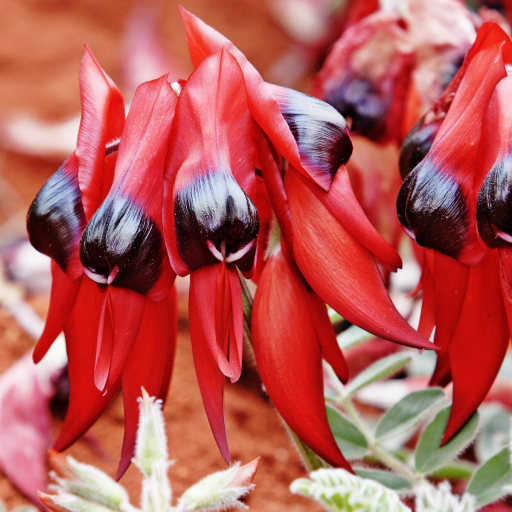
Plant Overview
Commonly known as Sturt's Desert Pea, this striking Australian native is arguably one of the most iconic and "alien-looking" wildflowers in the world. Named after the explorer Charles Sturt, it is the floral emblem of South Australia and is famous for its vibrant, blood-red petals that stand in stark contrast to the scorched earth of the Outback.
🔍 How to Identify
- 🔴 The Flower: Each flower cluster features multiple drooping, pea-like blossoms that are deep crimson or scarlet, often reaching up to 9 centimeters in length.
- 👁️ The "Boss": The most distinctive feature is the prominent, glossy black (or sometimes dark red) "eye" or boss at the center of the flower, which gives it a mysterious, watchful appearance.
- 🌿 Foliage: The leaves are greyish-green, pinnate, and covered in fine, soft white hairs that give the plant a velvety texture—a clever adaptation to reflect harsh desert sunlight.
- 🌱 Growth Habit: It is a prostrate plant, meaning it grows horizontally across the ground, creating a sprawling carpet of color rather than growing tall.
🏡 In Your Garden
- 🏜️ The Taproot Trap: This plant develops a long, sensitive taproot very early in its life. Because of this, it notoriously hates being transplanted; even a tiny bit of root damage can be fatal. It is best to sow seeds directly into their permanent home.
- 💧 Drainage is Vital: In its natural habitat, it lives in sandy, arid soils. To mimic this, use a very free-draining mix. It is prone to "wet feet" and root rot if kept in heavy, damp garden soil.
- ☀️ Sun Worshipper: This is not a plant for the shade. It requires full, intense sun to produce those legendary blooms and thrives in high-heat environments.
⚠️ Safety & Toxicity
- ✅ Status: Generally considered non-toxic to humans and common household pets.
- 🧪 Details: While not known for being poisonous, like many members of the legume family, the seeds are very hard and should not be ingested by children or pets. It is always best treated as an ornamental plant rather than an edible one.
✨ Fun Fact
In some Aboriginal Australian cultures, the Sturt's Desert Pea is known as the "Flower of Blood." One legend tells of a young woman who was transformed into the flower while waiting for her lover to return from battle, her red petals representing the sorrow and the blood shed on the earth.

Detailed Care Instructions
To grow Swainsona Formosa, also known as Sturt's Desert Pea, follow these steps:
- Choose a suitable location: Select a spot that receives full sun exposure and has well-drained soil. Swainsona Formosa requires a warm and sunny climate to thrive.
- Prepare the soil: Ensure the soil is loose, well-draining, and slightly acidic. Amend the soil with organic matter, like compost, to improve its fertility and drainage.
- Planting: Sow the seeds directly into the prepared soil in late spring or early summer, after the last frost has passed. Place the seeds about 1/4 inch deep into the soil, spacing them at least 12 inches apart. Gently cover the seeds with soil and water thoroughly.
- Watering: Keep the soil consistently moist but not waterlogged. Water the plants deeply whenever the top inch of soil feels dry to the touch. Avoid overwatering, as it can cause root rot.
- Fertilization: Feed your Swainsona Formosa plants with a balanced, water-soluble fertilizer once a month during the growing season. Follow the instructions on the fertilizer packaging for the appropriate dosage and frequency.
- Mulching: Apply a layer of organic mulch around the plants to help retain soil moisture, suppress weed growth, and regulate soil temperature.
- Support: As the plants start growing, provide support such as trellises, stakes, or cages to help them climb and prevent them from sprawling on the ground.
- Pruning: Trim back the plants after they finish flowering to maintain a compact shape and encourage new growth. Remove any dead or diseased foliage regularly.
- Pest and disease control: Swainsona Formosa is generally resilient to common pests and diseases. However, keep an eye out for aphids and spider mites. If infestations occur, control them using organic insecticidal soap or neem oil.
- Harvesting: Swainsona Formosa plants produce unique, scarlet flowers with black centers resembling birds in flight. Allow the flowers to mature and form seed pods. Harvest the seeds once the pods dry out and turn brown. Collect the seeds for future planting or to share with other gardening enthusiasts.
By following these steps, you can successfully grow Swainsona Formosa plants and enjoy their beautiful flowers. Remember to provide proper care, and the plants will reward you with vibrant blooms.

Place in a bright room that is sun drenched almost all day. Or directly in a south-facing window.

To properly water this plant, the first step is to check the soil moisture. Stick your finger about an inch or two into the soil and see if it feels dry. If it does, then it's time to water. When watering, make sure to saturate the soil until water starts to trickle out of the drainage holes at the bottom of the pot. It's important not to let the plant sit in standing water, so make sure to empty the saucer underneath the pot after watering. In general, this plant prefers evenly moist soil, but it's important not to overwater as this can lead to root rot. Watering once a week or when the soil feels dry to the touch is a good rule of thumb.
To promote healthy growth of this plant, apply a balanced fertilizer containing equal amounts of nitrogen, phosphorus, and potassium every four to six weeks during the growing season. Before fertilizing, make sure the soil is moist. Use a water-soluble fertilizer and mix it according to the instructions on the package. Apply the fertilizer evenly to the soil around the base of the plant, being careful not to get any on the leaves or stem. Water immediately after applying the fertilizer to help distribute it into the soil. Avoid over-fertilizing, which can lead to burnt roots and damage to the plant.
The optimal soil for Swainsona Formosa plants is a well-draining and sandy loam soil with a pH of 6.5 to 7.5. The soil should be rich in nutrients and organic matter, but not too fertile as excessive fertilization can lead to the growth of vegetative tissue at the expense of flowering. It is important that the soil is not waterlogged as this can lead to root rot. Adding gypsum to the soil can help to improve drainage and prevent salt buildup. Regular mulching can also help to maintain moisture levels in the soil and suppress weed growth.
- Collect seeds: Wait for the plant to produce seed pods. Once the pods are dried and yellow, collect them by gently shaking them over a container or paper bag.
- Scarify the seeds: Rub the seeds gently with sandpaper or a small file to break the hard seed coat. This process will help the seed to absorb water more easily.
- Soak the seeds: Place the scarified seeds in a container of warm water, and let them soak for 24 hours. This step will help soften the seeds and speed up the germination process.
- Prepare seed-starting mix: Fill a tray or pot with a sterile seed-starting mix. You can make your own by mixing equal parts peat moss and coarse sand.
- Sow the seeds: Sow the seeds on top of the soil, and press them gently into the surface. Do not cover the seeds with soil.
- Water the seeds: Water the seeds gently, being careful not to dislodge them. Keep the soil consistently moist by misting it regularly.
- Provide enough light: Put the tray or pots in a bright, sunny location where the seedlings will receive at least 6-8 hours of direct sunlight. If the light is insufficient, use a grow light as a supplement.
- Keep the temperature ideal: Swainsona Formosa prefers warmer temperatures and will not germinate well in cooler conditions. The ideal temperature for germination is around 18-22°C.
- Repot the seedlings: Once the seedlings have grown to a height of 5-7 cm and developed a few sets of true leaves, transplant them into individual pots filled with rich, well-draining soil.
- Provide care: Continue to provide regular watering, plenty of sunlight, and a warm environment while the seedlings continue to grow. Fertilize with a balanced fertilizer after the first month.
- Transplant: After the plants have matured to a height of 20-30 cm, they are ready to be transplanted to their permanent location outdoors. Choose a sunny location with well-draining soil.








