Plant Overview
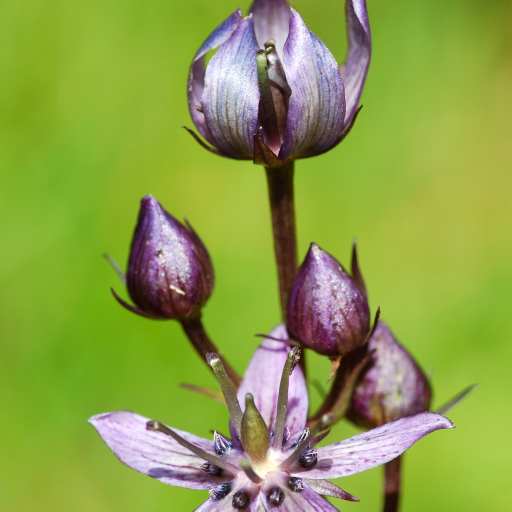
Often called the Marsh Felwort or Star Swertia, this elegant perennial is a hidden gem of high-altitude wetlands and damp alpine meadows. A member of the Gentian family, it carries the same jewel-toned sophistication as its cousins but with a unique, geometric twist. In the wild, it acts as a quiet sentinel of pristine water sources, often found nodding over the edges of icy mountain springs.
🔍 How to Identify
- ✨ The Blooms: Its flowers are striking, five-petaled stars that range from a moody slate-blue to deep violet, often decorated with dark purple dots or streaks.
- 💧 Nectary Pits: If you look closely at the base of each petal, you will see two fringed, greenish pits; these are specialized glands that produce nectar to lure specific mountain pollinators.
- 🍃 Leaf Structure: The plant features smooth, spoon-shaped basal leaves that form a tidy rosette, while the stem leaves are narrower and arranged in pairs.
- 📏 Growth Habit: It grows on a single, sturdy, unbranched upright stem, typically reaching between 10 and 20 inches in height.
🏡 In Your Garden
- 🌊 The "Wet Feet" Rule: This plant is a true hydrophyte, meaning it thrives in saturated conditions. In a home landscape, it is only happy in a dedicated bog garden or at the very edge of a permanent pond. It will quickly wither if the soil dries out even for a day.
- 🏔️ Cool Climate Specialist: Because it originates from alpine and subalpine zones, it struggles in intense summer heat. It prefers "cool heads and wet feet," making it a perfect choice for high-latitude gardeners or those with shaded, damp pockets of land.
- 🌱 Slow and Steady: Swertia Perennis is not an invasive spreader. It grows from a short, thick rhizome and takes its time to establish, so it requires patience and protection from faster-growing "bully" weeds.
⚠️ Safety & Toxicity
- 🟢 Status: Generally non-toxic, but not for consumption.
- 👅 Bitter Defense: Like most members of the Gentian family, the plant contains bitter glycosides. While not considered "poisonous" to pets or children, eating it would be an incredibly unpleasant, bitter experience that may lead to a mild stomach ache.
- 🧤 Skin Contact: There are no reported issues with skin irritation, making it safe to handle during planting or maintenance.
✨ Fun Fact
The genus name Swertia was chosen to honor Emanuel Sweert, a 17th-century Dutch botanist and artist who famously created one of the world's first illustrated "Florilegium" (flower catalogs) in 1612.

Detailed Care Instructions
Swertia Perennis, also known as British Columbian Columbo, is a herbaceous perennial plant that can be grown in gardens or containers. Here are some tips on how to grow Swertia Perennis successfully:
- Choose a location with well-drained soil that receives partial shade to full sun. Swertia Perennis prefers moist, humus-rich soil.
- Plant the seeds or transplants in the spring after the last frost date in your area. Sow the seeds on the soil surface and cover lightly with a thin layer of soil.
- Water the plant regularly, keeping the soil consistently moist but not waterlogged. Mulch around the plant to help retain moisture and suppress weeds.
- Fertilize the plant with a balanced, slow-release fertilizer in the spring and summer to promote healthy growth.
- Prune the plant occasionally to remove dead or damaged growth and encourage new growth.
- Protect the plant from pests and diseases by inspecting regularly and treating if necessary.
- In colder climates, protect the plant from frost by mulching in the fall and winter.
By following these tips, you can successfully grow Swertia Perennis in your garden or container. Happy gardening!

Place in a bright room that is sun drenched almost all day. Or directly in a south-facing window.

To water this plant, make sure the soil is completely dry before watering. Check the soil by sticking your finger about 1-2 inches into the soil. If it feels damp, wait a few more days before watering. When it's time to water, give the plant a deep soak, making sure the water reaches the roots. Avoid getting water on the leaves as this can cause fungal diseases. Allow the soil to drain completely after watering, and don't let the plant sit in standing water. Water this plant regularly, but don't over-water as this can lead to root rot.
To fertilize Swertia Perennis plants, apply a balanced, organic fertilizer in the spring as new growth begins. Use a slow-release fertilizer and follow the manufacturer's instructions for application rates. Avoid over-fertilizing as this can damage the plant. Water the plant thoroughly after fertilizing to help the nutrients penetrate the soil and reach the plant's roots. Repeat the fertilization process every 4-6 weeks during the growing season to encourage healthy growth and blooming.
The Swertia Perennis plant prefers nutrient-rich, well-draining soil that is slightly acidic and moist but not waterlogged. It does not tolerate alkaline soil or dry conditions. A recommended soil mix for this plant would be a combination of organic compost, peat moss, and sand or perlite to improve drainage. Adding a slow-release fertilizer can also provide necessary nutrients for healthy growth. It is important to avoid using soil that has not been sterilized, as this can introduce harmful pathogens and pests to the plant.
Swertia perennis can be propagated through division or by taking stem cuttings.
To propagate through division, carefully dig up the plant and gently separate the roots into smaller clumps, making sure each division has enough roots and shoots to survive on its own. Replant the divisions in well-draining soil and water thoroughly.
To propagate through stem cuttings, choose a healthy, non-flowering stem and cut it just below a node. Remove any lower leaves and dip the cut end in rooting hormone. Plant the cutting in a pot of moist, well-draining soil and keep it in a warm, bright location. Keep the soil consistently moist, but not soggy, until roots develop and the cutting can be transplanted into a larger container or directly into the garden.
Both methods of propagation should be done in the spring or early summer when the plant is actively growing. It is important to provide the newly propagated plants with proper care, including regular watering, fertilization, and protection from harsh weather conditions, to help them establish and thrive.








