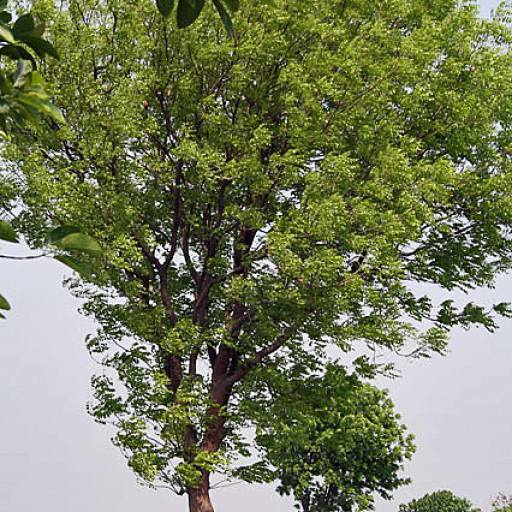
Plant Overview
Known as the "King of Woods," the West Indian Mahogany is the legendary source of some of the world’s most exquisite furniture. Native to the sun-drenched Caribbean and South Florida, this regal hardwood is steeped in history and is prized for its shimmering, deep-red grain. While it was once harvested to the point of scarcity, it now reigns as a majestic shade tree in large tropical landscapes and coastal gardens.
🔍 How to Identify
- 🍃 The Leaflets: Features glossy, leathery green leaves that are "even-pinnate," meaning the leaflets grow in matching pairs along a central stem, creating a delicate, feathery canopy.
- 🧱 The Bark: Young trees start with smooth, greyish skin, but as they mature, the bark transforms into a rugged landscape of reddish-brown scales and deep, vertical fissures.
- 🍐 Sky Fruit: It produces large, woody, pear-shaped seed capsules that point upward toward the sun; when they ripen, they burst into five sections to release "winged" seeds.
🏡 In Your Garden
- 🏗️ Room to Roam: This is not a tree for tight spaces. Its root system is incredibly powerful and wide-reaching; it needs to be planted far from sidewalks, pipes, or foundations to prevent the roots from lifting the pavement.
- 🌊 Salt & Wind: Unlike many hardwoods, the Mahogany is highly salt-tolerant and wind-resistant, making it a "hurricane-hardy" choice for gardeners living near the ocean.
- ✂️ Natural Architecture: It is a "self-pruning" species that naturally sheds its lower limbs as it grows, eventually forming a massive, umbrella-like crown that provides deep, cooling shade for the ground below.
⚠️ Safety & Toxicity
- ✅ General Status: Swietenia mahagoni is considered non-toxic to humans, dogs, and cats under normal circumstances.
- 💊 Seed Caution: The seeds within the woody pods are very bitter and contain high concentrations of alkaloids. While they aren't considered "deadly," they should not be ingested by pets or children, as they can cause significant stomach upset or vomiting.
✨ Fun Fact
The seeds of the Mahogany tree are nature’s original gliders. Each seed is equipped with a thin, papery wing that allows it to spin like a helicopter blade when released, traveling hundreds of feet away from the parent tree on a simple breeze.

Detailed Care Instructions
To grow a Swietenia mahagoni plant, follow these steps:
- Propagation: Obtain seeds from a reliable source or harvest them from mature mahogany trees. Soak the seeds in water for 48 hours to help with germination.
- Soil preparation: Choose a location with well-draining soil that is rich in organic matter. The pH level should be between 6.0 and 7.5. Clear any weeds or grass from the planting area.
- Planting: Dig a hole that is twice as wide and deep as the mahogany seedling's root ball. Place the seedling in the hole and backfill it with soil, ensuring that the top of the root ball is level with or slightly above the soil surface.
- Watering: Water the newly planted seedling thoroughly, making sure the soil is consistently moist but not waterlogged. Reduce watering once the plant becomes established.
- Sunlight: Swietenia mahagoni plants thrive in full sun, so choose a sunny location for planting.
- Fertilization: Apply a balanced slow-release fertilizer to the soil in spring and summer to provide necessary nutrients for growth. Follow the instructions on the fertilizer package for application rates.
- Pruning: Prune the mahogany tree as needed to maintain its shape and remove dead or diseased branches. However, avoid excessive pruning, as it can hinder the plant's growth.
- Mulching: Apply a layer of organic mulch around the base of the plant to help retain moisture, suppress weed growth, and regulate soil temperature.
- Protection: Protect the young Swietenia mahagoni plant from strong winds and extreme temperatures until it becomes established.
- Regular Care: Monitor the plant regularly for any signs of pests or diseases. Remove any affected parts and treat with appropriate measures as necessary.
Remember to check your specific region's climate suitability for growing Swietenia mahagoni plants, as these trees are native to tropical and subtropical regions.

Place in a bright room that is sun drenched almost all day. Or directly in a south-facing window.

Swietenia Mahagoni is a type of tropical plant that typically grows in warm, humid environments. When it comes to watering this plant, it is important to ensure that it receives enough moisture without overwatering it.
To water Swietenia Mahagoni, you should first make sure that the soil is evenly moist. This can be done by checking the soil with your finger to make sure that it is not too dry or too wet. If the soil is dry, you can water the plant by slowly adding water to the base of the plant until the soil is evenly moist.
It is important to avoid overwatering Swietenia Mahagoni, as this can lead to root rot or other issues that can harm the plant's health. To prevent overwatering, you should allow the soil to dry out slightly between watering sessions.
Additionally, it is important to ensure that Swietenia Mahagoni is planted in well-draining soil, as this will help to prevent water from pooling around the roots of the plant. If you notice that the soil is not draining properly, you may need to adjust the planting location or amending the soil to improve drainage.
Overall, the key to watering Swietenia Mahagoni is to maintain consistent moisture levels without overwatering. By following these guidelines and ensuring that the plant is planted in the right location with the right soil, you can help to ensure that your Swietenia Mahagoni plant thrives and remains healthy over time.
To fertilize this plant, use a balanced fertilizer with a 10-10-10 NPK ratio. Apply the fertilizer every three months during the growing season, which is from spring to fall. Water the plant thoroughly before applying the fertilizer to prevent burning the roots. Follow the manufacturer's instructions for the application rate. Avoid overfertilizing, as it can lead to salt buildup and damage the plant.
The ideal soil for Swietenia Mahagoni plant should be well-draining, with a pH of 6.0 to 7.0. The soil should be rich in organic matter and should have good water holding capacity. Peat moss, perlite, vermiculite, and coconut coir are all excellent components to include in the soil mix. The soil should be loose and airy to allow for adequate oxygenation of the roots. Heavy clay soil should be avoided as it can lead to root rot. Additionally, it is important to ensure that the soil is free from any contaminants or pollutants that may adversely affect the plant's growth and health.
Swietenia Mahagoni plant can be propagated through several methods including seed propagation, stem cuttings, and air layering. However, the most commonly used methods are seed propagation and stem cuttings.
Seed Propagation:
- Collect fresh seed pods from the mature Swietenia Mahagoni plant.
- Remove the seeds from the pods and clean them thoroughly.
- Soak the seeds in water for 24 hours.
- Sow the seeds in a propagation tray filled with a well-draining potting mix.
- Keep the tray in a warm, humid place with indirect sunlight.
- Water the seeds regularly and avoid letting the soil dry out completely.
- When the seedlings are large enough, transplant them to individual pots.
Stem Cuttings: - Select a healthy stem from the Swietenia Mahagoni plant that is about 6-8 inches long.
- Cut a section of the stem at a 45-degree angle, just below a node.
- Remove all the leaves except for the top two or three.
- Dip the bottom end of the cutting in a rooting hormone powder.
- Insert the cutting into a well-draining potting mix and firm the soil around it.
- Place the pot in a warm, humid place with indirect sunlight.
- Water the cutting regularly and keep the soil moist but not waterlogged.
- After a few weeks, the cutting should start developing roots. Once it has developed a good root system, transplant it to a bigger pot.
Air Layering: - Make a small cut on the stem of the Swietenia Mahagoni plant, about 8-10 inches from the tip.
- Wrap a ball of moist sphagnum moss around the cut area and cover it with plastic wrap.
- Secure the plastic wrap with a twist tie and make sure it's sealed well.
- Wait for a few weeks until roots start to develop from the cut area.
- Once the roots have developed, cut the stem just below the new root ball.
- Plant the stem in a well-draining potting mix in a pot that is large enough for the root ball to fit snugly.
- Keep the soil moist and place the pot in a warm, humid place with indirect sunlight.








