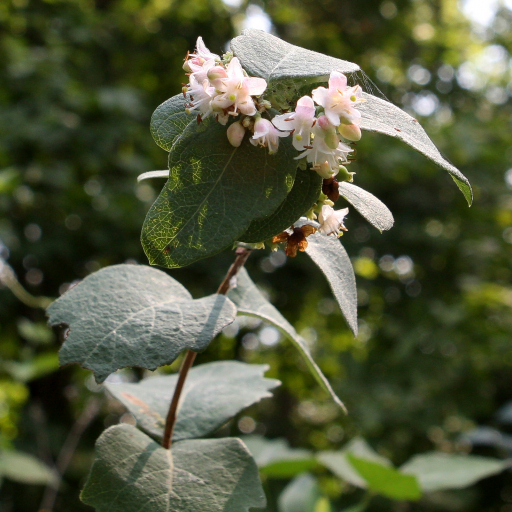
Plant Overview
Often called the Western Snowberry or Wolfberry, this resilient native shrub is a champion of the North American prairie. While it might look like a delicate ornament with its wax-like white berries, it is a tough-as-nails survivor that thrives where other plants falter. In the wild, it forms dense, protective thickets that serve as "wildlife apartments" for nesting birds and small mammals.
🔍 How to Identify
- 🍃 The Foliage: Look for simple, oval-shaped leaves arranged in opposite pairs along the stem. They have a slightly leathery texture and a muted, grayish-green color that doesn't shy away from the sun.
- 🌸 Bell-Shaped Blooms: In mid-summer, the plant produces clusters of tiny, pinkish-white flowers. They are shaped like miniature bells and are surprisingly fragrant if you get close enough.
- ⚪ Waxy Berries: The most iconic feature is the clusters of greenish-white fruit. These berries persist well into the winter, eventually turning a dark, "bruised" purple or black as they age on the branch.
🏡 In Your Garden
- 🧱 Erosion Control: Because this plant spreads via vigorous underground runners (rhizomes), it is an expert at holding soil together. It’s a go-to choice for stabilizing slopes or filling in large, difficult-to-mow areas.
- 🦋 Wildlife Value: It is a vital nectar source for honeybees and a primary host plant for the beautiful Clearwing Hawkmoth. If you want a garden buzzing with life, this is a top-tier candidate.
- ✂️ Growth Habit: Be aware that it loves to wander. In a small garden, you may need to prune the suckers annually to prevent it from turning your flower bed into a private thicket.
⚠️ Safety & Toxicity
- 🚫 Toxicity Status: Mildly toxic to humans and common pets.
- 🐾 Details: The berries contain saponins, which give them a bitter, soapy taste. If ingested by children or pets, they can cause nausea, vomiting, and mild sedation. While the bitter flavor usually prevents anyone from eating more than one, it is best kept away from play areas.
✨ Fun Fact
The common name "Wolfberry" is thought to have originated from early settlers who noticed that while birds feasted on most fruits, these bitter berries were often left untouched until the dead of winter—leading to the folklore that they were "only fit for wolves."

Detailed Care Instructions
To grow Symphoricarpos occidentalis, also known as Western Snowberry, follow these steps:
- Obtain seeds or nursery-grown plants: You can usually find Western Snowberry seeds or plants at local nurseries or online suppliers. Seeds are relatively easy to germinate, but plants can provide a head start.
- Choose the planting location: Western Snowberry prefers full sun to partial shade and well-draining soil. It can tolerate a variety of soil types but thrives in moist, fertile soil.
- Prepare the soil: Remove any weeds or grass from the planting area. Loosen the soil with a garden fork or tiller, and amend it with organic matter, such as compost, to improve drainage and fertility.
- Planting seeds: If using seeds, sow them directly in the ground in early spring. Scatter the seeds over the prepared soil and lightly press them into the surface. Keep the soil consistently moist until germination, which usually takes 2-3 weeks.
- Planting nursery-grown plants: Dig a hole slightly larger than the plant's root ball. Place the plant in the hole, ensuring the top of the root ball is level with or slightly above the soil surface. Backfill the hole with soil, gently firming it around the plant. Water deeply after planting.
- Watering and maintenance: Keep the soil evenly moist but not overly saturated, especially during the plant's first year. Water deeply whenever the top inch of soil feels dry to the touch. Additionally, provide a layer of mulch around the base of the plant to retain moisture and suppress weed growth.
- Pruning: Symphoricarpos occidentalis benefits from occasional pruning to maintain its shape and promote healthy growth. Prune after the plant has finished flowering or during late winter or early spring before new growth begins. Remove dead or damaged branches and thin out crowded areas to improve air circulation.
- Fertilizing: Snowberries generally don't require much fertilizer, but a balanced slow-release fertilizer can be applied in early spring. Follow the manufacturer's instructions for appropriate dosage.
- Pest control: Snowberries are generally not plagued by severe pest or disease problems. However, keep an eye out for common garden pests like aphids or spider mites. If needed, you can control them with insecticidal soap or an appropriate organic pesticide.
- Propagation: If you wish to propagate more Snowberry plants, you can collect seeds from mature fruit in the fall and sow them in a seed tray. Alternatively, you can take semi-hardwood cuttings during summer and root them in a well-draining rooting medium.
Remember that Western Snowberry can spread through rhizomes, so monitor its growth and consider containment if necessary.

Place in a bright room that is sun drenched almost all day. Or directly in a south-facing window.

When watering this plant, it is important to ensure that the soil is moist but not waterlogged. It is recommended to water deeply and infrequently, allowing the soil to dry out slightly between watering to encourage healthy root growth. When watering, it is best to aim for the soil around the base of the plant rather than watering from the top, which can often lead to water runoff. Additionally, it is important to avoid getting water on the leaves or stems of the plant, as this can lead to fungal growth and damage to the plant. It is recommended to water early in the morning or in the evening to avoid water evaporating too quickly in the heat of the day. Finally, it is important to adjust watering frequency depending on weather conditions and the moisture levels of the soil to ensure the plant stays healthy.
To fertilize this plant, wait until the soil has thawed and then administer a slow-release, balanced fertilizer according to the package instructions. Apply the fertilizer evenly around the root zone, being careful not to let it come into direct contact with the stem or foliage. Water the plant thoroughly after fertilizing to help it absorb the nutrients. Avoid overfertilizing, as this can lead to excessive vegetative growth and reduced flowering.
When planting this particular plant, it's important to select the appropriate type of soil that will support healthy growth of the roots and foliage. The soil should ideally have a balance of both organic and inorganic components, allowing for proper moisture retention and drainage. A loamy soil with a slightly acidic pH is ideal for this type of plant. The soil should be well-draining as this plant cannot tolerate water-logged conditions. It is important to avoid using excessively sandy or heavy clay soils as these can cause root suffocation and hinder the growth of the plant. Additionally, adding compost or organic matter to the soil before planting can help to improve soil quality and add necessary nutrients for healthy growth.
Symphoricarpos Occidentalis can be propagated through stem cutting. First, prepare a potting mix with a mixture of equal parts of sand and peat moss. Then, select a stem that is healthy and has some foliage. Make a clean cut of the stem about 6 inches long. Remove any leaves from the bottom third of the cutting.
Dip the cut stem into rooting hormone. Then, make a hole in the potting mix and insert the stem cutting into the hole. Press the mix firmly around the base of the cutting to ensure good contact.
Water the cutting and pot thoroughly, and place it in a warm, bright location. Keep the soil moist but not waterlogged. In about two weeks, roots should begin to grow from the cutting.
After two to three months, the cutting can be gently pulled from the potting mix to check for roots. Once roots are visible, transplant the cutting into a larger pot until it is established.








