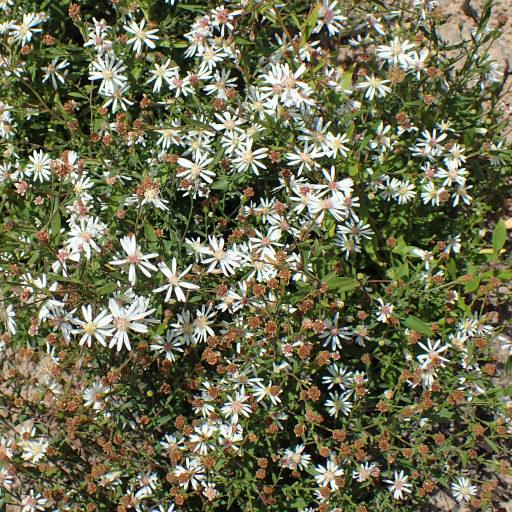
Plant Overview
Known as Tradescant’s Aster or the Shore Aster, this delicate wildflower is a tribute to the golden age of plant exploration. Named after John Tradescant the Younger—the 17th-century gardener to King Charles I—this plant is a late-season hero that brings a cloud of white blooms to the garden just as other flowers begin to fade. It is a symbol of resilience, often found clinging to rocky shores and stream banks in the wild.
🔍 How to Identify
- 🌼 The Flowers: Tiny, daisy-like blossoms featuring snowy white ray petals and central discs that start yellow and transition to a deep reddish-purple after pollination.
- 🍃 The Foliage: Narrow, lance-shaped leaves that are smooth to the touch and arranged alternately along the stems, giving the plant an elegant, airy texture.
- 🌿 The Structure: A multi-branched, bushy habit that creates a "misty" appearance when in full bloom, typically reaching heights of 2 to 3 feet.
🏡 In Your Garden
- 💧 Moisture Lover: Unlike many of its drought-tolerant cousins, Tradescant’s Aster craves "wet feet." It is an ideal candidate for rain gardens, pond edges, or any low-lying spot in your yard that stays consistently damp.
- 🦋 Pollinator Magnet: This plant serves as a critical late-season "fueling station" for migrating Monarch butterflies and native bees, providing high-quality nectar when other food sources are scarce.
- ✂️ The Chelsea Chop: To prevent the plant from becoming too "leggy" or flopping over, you can pinch back the stems by half in early June. This encourages a sturdier, more compact shape with even more flower heads.
⚠️ Safety & Toxicity
- ✅ Status: Generally Safe and Non-toxic.
- 🐾 Details: Tradescant’s Aster is considered non-toxic to dogs, cats, and horses. It is a "worry-free" addition to family gardens, though as with any plant, it's best to discourage pets from grazing on large amounts to avoid minor stomach upset.
✨ Fun Fact
John Tradescant the Younger, the plant’s namesake, was one of the first Westerners to explore the flora of Virginia in the 1630s. He famously brought back so many "exotic" American treasures that his family collection became the foundation for the Ashmolean Museum in Oxford!

Detailed Care Instructions








