Plant Overview
Often called the Prickly Comfrey or Rough Comfrey, this resilient perennial is a hardy traveler from the Caucasus Mountains. It is a favorite among permaculture enthusiasts for its ability to act as a "living fertilizer factory," though its scratchy, sandpaper-like exterior demands a bit of respect when handling. While it looks like a soft garden herb, it is a powerhouse of growth that can easily take over a corner of the yard.
🔍 How to Identify
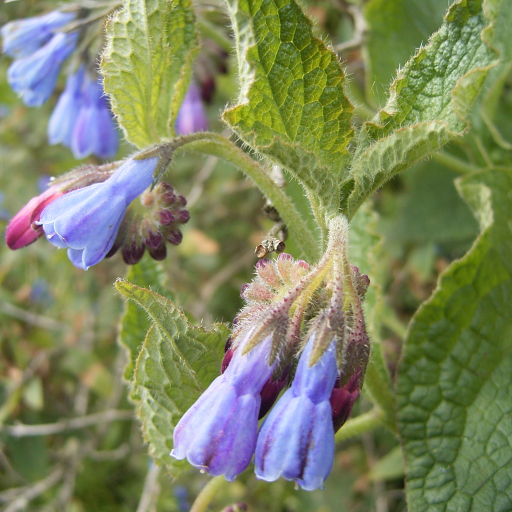
- 🪝 The Texture: True to its name, the entire plant is covered in stiff, hooked hairs. Touching the leaves feels like handling fine-grit sandpaper or a cat’s tongue.
- 🎨 Color-Shifting Blooms: The drooping, bell-shaped flowers perform a beautiful trick; they emerge as bright pink or purple buds and mature into a brilliant, sky-blue hue.
- 🍃 Sturdy Foliage: The leaves are large, broad, and elliptical. Unlike common comfrey, these leaves do not "run down" the stem as much, giving the plant a slightly more organized, upright appearance.
🏡 In Your Garden
- ⛏️ The Deep Miner: Prickly Comfrey has a massive taproot that can dive several feet into the earth. It "mines" minerals like potassium and nitrogen from deep soil layers, making it a "dynamic accumulator" that enriches the topsoil.
- 🛡️ Permanent Residency: Because of that deep root, this plant is nearly impossible to remove once established. Even a tiny fragment of root left in the soil will sprout a new plant, so place it in a spot where it can stay forever.
- 🐝 Pollinator Magnet: It is one of the best plants for long-tongued bees. You will often see bumblebees "nectar robbing" by poking holes in the top of the bells to get to the sweet treats inside.
⚠️ Safety & Toxicity
- 🚫 Toxic if Ingested: Warning. Prickly Comfrey contains pyrrolizidine alkaloids, which are known to cause severe liver damage if eaten. It should never be consumed by humans or livestock.
- 🐕 Pet Safety: Keep curious dogs and cats away. Ingestion can lead to vomiting and long-term internal issues.
- 🧤 Skin Irritation: The stiff hairs can cause "contact dermatitis" or itchy red rashes on sensitive skin. It is highly recommended to wear gardening gloves when pruning or harvesting.
✨ Fun Fact
🧪 Stinky Liquid Gold: Gardeners create a potent organic fertilizer called "Comfrey Tea" by soaking the leaves in a bucket of water for several weeks. It smells like a swamp, but it provides a massive nutrient boost to tomato and pepper plants!

Detailed Care Instructions
To grow Symphytum asperum, also known as comfrey, you can follow these steps:
- Choose a suitable location: Comfrey prefers full sun or partial shade. It can tolerate a wide range of soil conditions but prefers moist, well-draining soil.
- Prepare the soil: Clear any weeds or grass from the area where you want to plant comfrey. Loosen the soil by using a garden fork or tiller to a depth of about 8-10 inches. Add organic matter, such as compost or aged manure, to enrich the soil.
- Planting: Comfrey can be propagated by seeds, root cuttings, or crowns. Seeds can be sown directly into the soil in early spring or fall, but root cuttings or crowns are the preferred methods. Dig a hole large enough to accommodate the roots and place the root cutting or crown with the crown bud at ground level. Space the plants about 2-3 feet apart as comfrey can spread quickly.
- Watering: Keep the soil consistently moist but not waterlogged. Water deeply whenever the top inch of soil feels dry.
- Mulching: Apply a layer of organic mulch, such as straw or wood chips, around the base of the plant to help retain moisture and suppress weeds.
- Fertilizing: Comfrey does not require much fertilization but benefits from a balanced organic fertilizer once a year in early spring.
- Pruning: Trim comfrey plants in early spring or late fall to maintain their shape and prevent them from becoming too leggy. Cut the plant back to about 6 inches above the ground.
- Harvesting: Comfrey leaves can be harvested throughout the growing season. For medicinal purposes, harvest the leaves before the plant flowers for the highest concentration of beneficial compounds. Use the leaves fresh or dried for making teas, poultices, or compost.
- Dividing: Every few years, divide comfrey to control its spread and rejuvenate the plant. Dig up the root clump, separate it into smaller sections, and replant them.
Remember, comfrey can become invasive, so it's essential to keep it contained if you want to prevent it from spreading beyond your desired area.

Place in a window with dappled sun or a spot in the middle of a room. Or directly in a window facing west or east.

Symphytum asperum is a plant that requires regular watering to thrive. To water this plant, it is important to take note of the soil moisture level, as well as the weather and temperature conditions. The best way to water this plant is to provide it with sufficient water, without overwatering it.
One effective way to water this plant is to check the soil moisture level before watering it. Insert a finger or wooden stick into the soil to check for dryness. If it feels dry, then it is time to water the plant.
When watering, make sure to use a watering can or a hose with a gentle flow to avoid damaging the plant's roots or washing away the soil. Water the plant slowly, making sure that the water penetrates deep into the soil.
Additionally, it is important to avoid getting the leaves wet, as this can lead to fungal growth or damage to the plant's foliage. To prevent this, direct the water towards the base of the plant, aiming for the soil instead of the leaves.
Finally, it is important to monitor the weather and temperature conditions, as these can affect the frequency of watering. During hot and dry periods, water the plant more frequently to compensate for the water loss due to evaporation. Alternatively, during cooler and wetter periods, water the plant less frequently to avoid overwatering and waterlogged soil.
To fertilize the Symphytum Asperum plant, you will need to choose a balanced fertilizer that has an equal ratio of nitrogen, phosphorus, and potassium. It is best to apply this fertilizer in the spring or fall when the plant is actively growing. Begin by diluting the fertilizer with water according to the package instructions. Next, carefully pour the fertilizer solution around the base of the plant, making sure to avoid getting any on the leaves. Finally, water the plant thoroughly to help the fertilizer soak into the soil. Repeat this process every two to four weeks during the growing season to support healthy growth.
Symphytum asperum is a perennial flowering plant that belongs to the Boraginaceae family. When it comes to choosing soil for this plant, it is best to opt for a moderately fertile, well-draining soil that is slightly acidic. Avoid using heavy soils that tend to become waterlogged.
You can mix the soil with organic matter such as compost or well-rotted manure to improve drainage and provide the plant with essential nutrients. It is also important to ensure that the soil is not too sandy, as this can cause the plant to dry out more quickly.
Additionally, Symphytum asperum prefers soil that is rich in nitrogen. Therefore, adding nitrogen-rich fertilizers or using a soil mix that contains high levels of nitrogen can help promote healthy growth and blooming of the plant.
Overall, the key to growing Symphytum asperum successfully is to provide it with well-draining, moderately fertile soil that is slightly acidic and rich in nitrogen.
To propagate this plant, you will need to take a cutting from a healthy parent plant. Choose a stem that is at least 4 inches long with a few leaves and nodes. Use a sharp, sterilized blade to make a clean cut just below a leaf node.
Remove the lower leaves from the stem, leaving only a few at the top. Dip the cut end in rooting hormone powder to help encourage root growth. Plant the cutting in a pot or container filled with well-draining potting soil.
Water the cutting thoroughly and place it in a warm, humid location with bright, indirect light. Make sure to keep the soil moist but not waterlogged. In about 4-6 weeks, you should see new roots forming and the cutting starting to grow.
Once the new plant has established itself in the soil and is growing well, you can transplant it into a larger pot or to an outdoor location with similar growing conditions.








