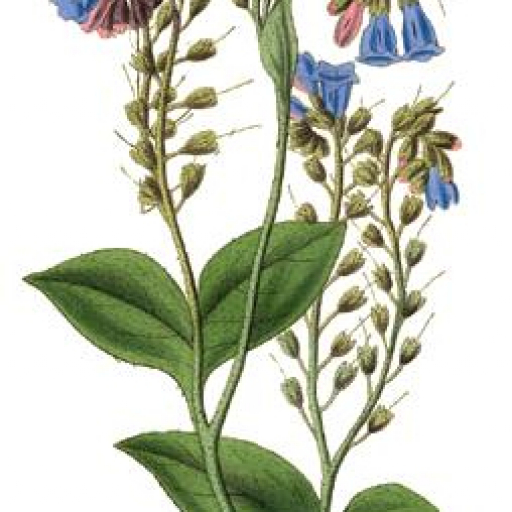
Plant Overview
Often called the Caucasian Comfrey, this hardy perennial is the vibrant, sky-blue cousin of the common garden comfrey. Originating from the misty slopes of the Caucasus Mountains, it is beloved by "wild" gardeners for its ability to transform shady, difficult corners into a sea of azure bells. It is a legendary "dynamic accumulator," mining nutrients from deep within the soil to share with its neighbors.
🔍 How to Identify
- 🔔 The Flowers: Drooping, bell-shaped clusters that perform a color-changing act—starting as soft pink or purple buds before opening into a brilliant, clear sky blue.
- 🌿 The Foliage: Large, lance-shaped leaves that are medium green and covered in stiff, bristly hairs, giving them a rough, sandpaper-like texture.
- 📏 Growth Habit: A vigorous, clump-forming plant that spreads via underground rhizomes to create a dense, weed-smothering carpet.
🏡 In Your Garden
- 💪 Hardy Groundcover: This plant is nearly indestructible; it thrives in dappled shade and heavy clay soils where other plants struggle, making it perfect for stabilizing slopes or filling gaps under large trees.
- 🐝 The Bee Magnet: Its tubular flowers are a high-value nectar source specifically evolved for long-tongued bumblebees, making your garden a buzzing hub of activity from late spring through summer.
- ✂️ Chop and Drop: Gardeners often prune it back hard after the first flowering; it regrows rapidly, providing "green manure" (nutrient-rich leaves) that can be used to mulch other hungry plants like tomatoes.
⚠️ Safety & Toxicity
- 🚫 Ingestion Warning: Like all members of the Symphytum genus, it contains pyrrolizidine alkaloids, which are toxic to the liver if eaten. Keep it away from curious pets (dogs, cats, horses) and children.
- 🧤 Skin Irritation: The bristly hairs on the stems can cause "comfrey rash" or mild skin irritation on sensitive hands. It is best to wear gloves when pruning or dividing the clumps.
✨ Fun Fact
In traditional folklore, Comfrey was nicknamed "Knitbone" because its leaves were mashed into poultices to help heal fractures. While modern science warns against using it internally, it remains a "superfood" for the garden, capable of pulling potassium and minerals from deep in the earth that other plants can't reach!

Detailed Care Instructions
To grow a Symphytum Caucasicum plant, you can follow these steps:
- Choose a suitable location: Select a spot in your garden or yard that receives partial to full sunlight. Symphytum Caucasicum prefers moist, well-draining soil.
- Prepare the soil: Ensure the soil is loose, rich in organic matter, and has good drainage. You can mix in compost or well-rotted manure to improve soil fertility.
- Planting: Dig a hole slightly larger than the root ball of the plant. Place the plant in the hole at the same depth it was in the nursery container. Backfill the hole with soil and gently firm it around the base of the plant.
- Watering: Initially, water the plant thoroughly to settle the soil and promote root establishment. After that, water regularly to keep the soil consistently moist but not waterlogged. Avoid letting the soil dry out completely.
- Mulching: Apply a layer of organic mulch, such as wood chips or straw, around the base of the plant. Mulching helps to retain moisture, suppress weeds, and regulate soil temperature.
- Fertilization: Symphytum Caucasicum generally doesn't require heavy fertilization. However, you can apply a balanced, slow-release fertilizer in spring to provide essential nutrients. Follow the manufacturer's instructions for proper dosage.
- Pruning: Regular pruning helps to maintain the plant's shape and remove any dead or diseased foliage. Perform pruning in early spring or after the flowering period.
- Propagation: You can propagate Symphytum Caucasicum through division or by taking stem cuttings. Division is typically done in spring or fall, while stem cuttings can be taken during the growing season.
- Pests and diseases: Keep an eye out for common garden pests like slugs and snails, as they may feed on the foliage. Additionally, practice good garden hygiene to prevent the spread of diseases.
- Winter care: In regions with severe winters, apply a layer of mulch around the plant to protect the roots from frost damage. However, Symphytum Caucasicum is generally considered hardy and can tolerate cold temperatures.
Remember to check the specific care requirements for Symphytum Caucasicum in your region, as environmental conditions may vary.

Place in a bright room that is sun drenched almost all day. Or directly in a south-facing window.

To water this plant, fill a watering can with room temperature tap water and pour it slowly and evenly around the base of the plant until the soil is adequately moistened. Avoid watering the leaves or getting water on the foliage as this can encourage fungal growth. Water when the top inch of soil feels dry to the touch. Be careful not to over-water, as this can lead to root rot. It is also important to provide adequate drainage and avoid leaving the plant sitting in standing water.
Symphytum Caucasicum plants should be fertilized once every two weeks during the growing season. Use a balanced fertilizer with equal amounts of nitrogen, phosphorus, and potassium. Dilute the fertilizer to half strength and water the plants thoroughly before applying the fertilizer. Avoid getting the fertilizer on the leaves or stems. Keep the soil moist but not waterlogged to avoid over-fertilization. Stop fertilizing during the winter when the plant is dormant.
The ideal soil for Sympytum Caucasicum plant should be well-draining and fertile. It should be rich in organic matter and have a pH level between 6.0 and 7.5. A loamy soil with good texture and structure that retains moisture but doesn't become waterlogged is recommended. The soil should be loose and crumbly, allowing for good air circulation and root development. Adding compost or aged manure to the soil before planting can help improve nutrient content and texture. It is also important to avoid using heavy clay soils, which can lead to poor drainage and root rot.
Symphytum Caucasicum plant can be propagated through various methods such as division, cuttings, and seeds.
Division method involves separating the plant's rhizomes and transplanting them into separate containers or soil. This method is best done in the spring or fall.
Cutting method involves taking a stem cutting with 2-3 leaves and planting it in a pot with well-draining soil. The cutting should be kept moist and in a warm, bright location.
Seeds can be collected from the plant's flowers once they have dried out and turned brown. The seeds can be directly sown into soil in the spring.
Regardless of the propagation method used, it is important to keep the new plant well-watered and in a suitable growing location with plenty of sunlight.








