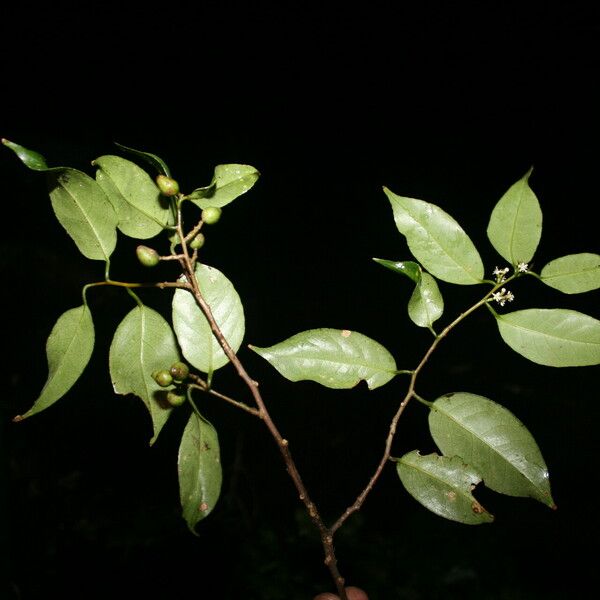
Plant Overview
Often referred to as the White Hazelwood or simply Symplocos, this elegant evergreen is a hidden gem of the Indo-Pacific region. From the humid rainforests of Southeast Asia to the coastal gullies of Australia, it is celebrated for its glossy foliage and its most striking feature: clusters of berries that look like polished sapphires. In many cultures, it isn’t just a pretty face; its leaves have been used for centuries in traditional dyeing and herbal practices.
🔍 How to Identify
- 🍃 The Foliage: Look for leathery, elliptical leaves with finely toothed (serrated) edges. They have a bright, waxy sheen that reflects sunlight beautifully.
- ☁️ The Blooms: In spring and summer, the plant produces dense, fluffy spikes of tiny white or cream-colored flowers that carry a subtle, sweet fragrance.
- 💎 The Fruit: The most recognizable trait is the small, egg-shaped drupe. As it matures, it turns from green to a vivid, metallic blue or deep purple, appearing almost artificial in its brilliance.
🏡 In Your Garden
- 💧 Shelter and Shade: This plant thrives as an "understory" species. It prefers a spot that mimics the rainforest floor—dappled sunlight and protection from harsh, drying winds that can brown its leaf tips.
- 🐦 A Bird Magnet: If you want to invite wildlife into your space, this is the perfect choice. The sapphire-colored berries are a favorite snack for many fruit-eating birds, who will frequent your garden to feast on them.
⚠️ Safety & Toxicity
- 🟢 Status: Generally considered non-toxic, but caution is advised.
- 👶 Details: While there are no records of the plant being deadly, the berries are not considered an edible fruit for humans. Ingesting them may cause mild stomach upset in curious toddlers or pets. It is best treated as an ornamental plant rather than a food source.
✨ Fun Fact
The leaves of the Symplocos family are biological "aluminum accumulators." Historically, they were harvested and dried to be used as a natural mordant—a substance that helps dyes "stick" to fabric—making them vital to the traditional textile industries of Indonesia.

Detailed Care Instructions

Place in a window with dappled sun or a spot in the middle of a room. Or directly in a window facing west or east.

Water-loving plants flourish in wet or sloppy soil and near ponds. The extensive root system enables these plants to absorb plenty of water. The surface of the soil should be kept moist at all times. Place your pot in a container filled with water to guarantee that plants get enough water. If the ground becomes dry, it is recommended that you water it well. Plants in smaller pots will need to be watered more frequently. Water the soil in which the plant is standing thoroughly using a watering can.








