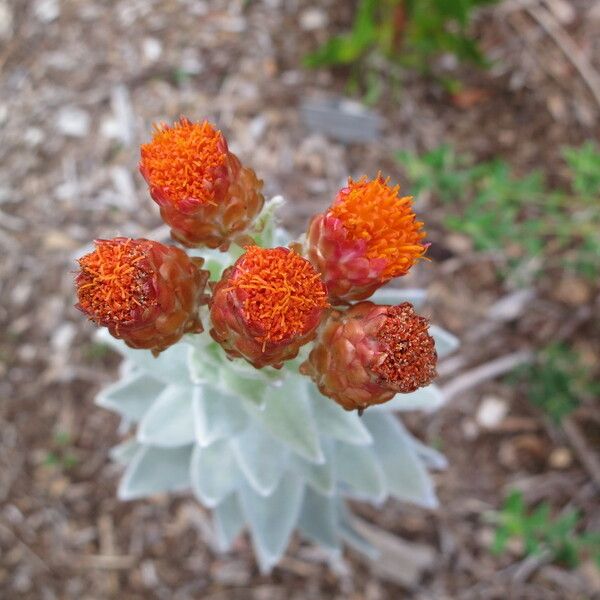
Plant Overview
Known as the "Strawberry Everlasting," this striking South African gem looks like a cluster of sun-drenched berries frozen in time. Native to the fynbos slopes of the Western Cape, its vibrant crimson bracts are famous for their "everlasting" quality, often appearing more like intricate craftwork than living flora. It is a symbol of the rugged beauty found in the Cape’s mountainous heart.
🔍 How to Identify
- 🍓 The "Fruit" Bracts: The most iconic feature is the nodding, dark red or deep pink flower heads that resemble strawberries before they fully open.
- 🥈 Woolly Foliage: The leaves are a soft, silver-grey and covered in fine, velvety hairs that help the plant trap moisture and reflect intense sunlight.
- 📜 Papery Texture: Unlike soft petals, the colorful parts of the flower are dry, papery bracts (modified leaves) that rustle when touched and do not wither easily.
🏡 In Your Garden
- ⛰️ The Drainage Dilemma: Because it originates from rocky mountain slopes, this plant is highly sensitive to "wet feet." It requires extremely gritty, well-draining soil; if the roots sit in stagnant water, the plant will decline rapidly.
- 🚫 Hands Off the Roots: This species is notoriously difficult to transplant. It develops a delicate root system that hates being disturbed, so it is best to plant it in its "forever home" while it is still a young seedling.
- ☀️ Sun Seeker: To maintain that brilliant silver sheen on the leaves and encourage blooming, it needs a position with maximum UV exposure. In shade, the plant becomes leggy and loses its compact, berry-like charm.
⚠️ Safety & Toxicity
- ✅ Safe for Households: Syncarpha eximia is generally considered non-toxic to humans, dogs, and cats.
- 🌵 Physical Texture: While not poisonous, the dried bracts and woody stems can be quite stiff and scratchy. Curious pets might find the texture unappealing to chew on, which serves as a natural deterrent.
✨ Fun Fact
The flowers are biologically designed to last forever! Because the colorful bracts are low in moisture and high in silica, they retain their brilliant red color and structural shape for years after being cut, making them a legendary choice for "everlasting" dried floral arrangements.

Detailed Care Instructions

Place in a bright room that is sun drenched almost all day. Or directly in a south-facing window.

1. Determine the ideal soil moisture level: Syncarpha Eximia plants prefer well-drained soil that is moist but not waterlogged. Before watering, feel the soil to determine how dry or moist it is.
2. Water in the morning: It is best to water your Syncarpha Eximia plant in the morning as this gives it time to dry off before nightfall. Watering in the evening can cause water to sit on the leaves and cause diseases.
3. Water deeply: When watering your Syncarpha Eximia plant, water deeply until the water drains out of the bottom of the pot or container. This ensures that the water penetrates the root zone.
4. Do not overwater: Overwatering can cause the roots of your Syncarpha Eximia plant to rot. It is better to slightly under-water than to over-water. Allow the soil to dry out slightly before watering again.
5. Use room temperature water: Cold water can shock the roots of your Syncarpha Eximia plant. Use room temperature water instead.
6. Water consistently: Try to water your Syncarpha Eximia plant consistently, preferably on the same day and time each week. This helps the plant establish a routine and ensures that it receives a consistent supply of water.
7. Monitor the soil moisture level: Regularly check the soil to ensure that it is not too dry or too moist. Adjust your watering schedule accordingly.
The ideal soil for Syncarpha Eximia plant should be well-draining and rich in organic matter. A sandy loam or a mixture of peat moss and perlite is recommended to ensure proper drainage and moisture retention. The soil pH should be slightly acidic, ranging from 5.5 to 6.5. It is important to avoid using heavy clay or compacted soils, as they may hinder root growth and water absorption. Additionally, regular fertilization with a balanced fertilizer can promote healthy plant growth and blooming.








