Plant Overview
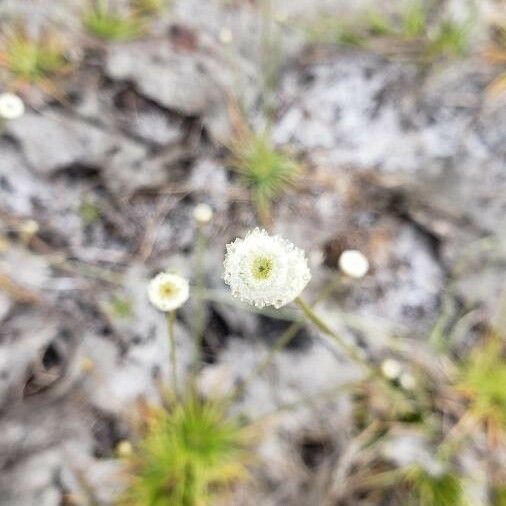
Often called "Yellow Hatpins," this charming perennial looks like a collection of tiny golden buttons scattered across a damp meadow. Native to the coastal plains of the Southeastern United States, these plants are famous for their perfectly spherical flower heads that bob atop wiry, slender stalks. They are the "jewelry" of the bog world, providing a whimsical, fairy-tale aesthetic to wet, sandy landscapes.
🔍 How to Identify
- 📍 The "Hatpin" Bloom: The most distinct feature is the small, round, yellowish-white flower head (capitulum) sitting at the very tip of a long, leafless stem.
- 🌿 Basal Rosette: At the base, you’ll find a tight cluster of narrow, grass-like leaves that radiate outward, hugging the ground closely.
- 🌀 Spiral Stalks: If you look closely at the stems (scapes), they often have a slight vertical twist or ribbing, making them surprisingly sturdy despite their thin appearance.
🏡 In Your Garden
- 💧 The Bog Specialist: Yellow Hatpins are "obligate wetland" plants. This means they don't just like water—they need it. They are perfect for the edges of a garden pond or a specialized bog container.
- 🏜️ Acidic Soul: These plants crave acidic, sandy soil. If your garden soil is heavy clay or alkaline, they will struggle. They thrive best in a mix of peat moss and sand that stays consistently damp.
- ☀️ Sun Seeker: To keep those "hatpins" standing tall and bright, they need plenty of direct sunlight. In the shade, the stems tend to become weak and the flowers lose their vibrant golden hue.
⚠️ Safety & Toxicity
- ✅ Safe Profile: Syngonanthus flavidulus is generally considered non-toxic to humans and common household pets.
- 🌸 Delicate Nature: While not poisonous, the stems are quite brittle. They are best placed in areas where they won't be stepped on by dogs or brushed against frequently by passersby.
✨ Fun Fact
Yellow Hatpins are closely related to the "Pipeworts." In the world of high-end aquascaping, their cousins are some of the most sought-after and difficult-to-grow underwater plants, prized for their unique geometric shapes.

Detailed Care Instructions
To grow Syngonanthus Flavidulus, also known as the Yellow Flame Sword, you can follow these steps:
- Obtain the plant: Purchase a healthy Syngonanthus Flavidulus plant from a reputable nursery or online seller. Make sure you obtain a plant with well-established roots.
- Choose the right container: Select a spacious container that will allow the plant to grow and develop its root system. It should have good drainage holes at the bottom to prevent waterlogging.
- Soil and substrate: Syngonanthus Flavidulus prefers a well-draining substrate. You can use a mix of aquarium soil, sand, and peat moss to create a nutrient-rich yet well-draining substrate.
- Planting: Gently remove the plant from its container and massage the roots to separate them slightly. Plant the Syngonanthus Flavidulus in the substrate, making sure the roots are fully buried and the crown of the plant is slightly above the substrate surface.
- Lighting: Syngonanthus Flavidulus requires bright lighting to thrive. Provide it with a high-intensity light source, such as LED aquarium lights, that can be kept on for 10-12 hours a day.
- Watering: Keep the substrate lightly moist but not waterlogged. Syngonanthus Flavidulus prefers slightly acidic water, so you may need to use RO water or add some peat moss to lower the pH if needed.
- Fertilization: Syngonanthus Flavidulus benefits from regular fertilization. You can use a liquid fertilizer formulated for aquatic plants, following the instructions on the label. Be careful not to over-fertilize, as it can lead to algae growth.
- CO2 supplementation: Adding a source of carbon dioxide (CO2) can promote healthy growth and vibrant colors in Syngonanthus Flavidulus. You can use a CO2 system specifically designed for planted aquariums.
- Pruning: Regularly prune Syngonanthus Flavidulus to maintain its shape and prevent overcrowding. Trim any yellow or dying leaves and trim back excessive growth to encourage healthy new shoots.
- Maintenance: Regularly check the water parameters (temperature, pH, and hardness) to ensure they are within the preferred range for Syngonanthus Flavidulus. Perform routine water changes to keep the water quality optimal.
By following these guidelines, you can successfully grow and maintain a healthy Syngonanthus Flavidulus plant.

Place in a window with dappled sun or a spot in the middle of a room. Or directly in a window facing west or east.

To properly water this plant, it is important to first consider its natural habitat and growth habits. This plant thrives in wetland environments with high humidity and constantly moist soil.
When watering, it is important to use filtered or distilled water that is free from chemicals and impurities. This will prevent the buildup of minerals and salts in the soil, which can harm the plant's roots and overall health.
Watering should be done regularly, but not to the point of waterlogging or oversaturation. The soil should be moist but not excessively wet, with the top few inches of soil allowed to dry out slightly between waterings.
To ensure proper drainage and prevent root rot, it is important to use a well-draining soil mix with plenty of organic matter and perlite or sand added for improved drainage.
In addition to regular watering, this plant will also benefit from periodic misting or humidification to mimic its natural humid environment. This will help prevent dryness and damage to the leaves and foliage.
Overall, proper watering and care will help ensure the health and vitality of this unique and beautiful plant.
Syngonanthus Flavidulus plant prefers nutrient-rich soil. Fertilize with a balanced fertilizer once every four to six weeks during the growing season (spring and summer). Be sure to dilute the fertilizer to half-strength as over-fertilization may harm the plant. Water the plant thoroughly after fertilizing. In the dormant season (fall and winter), reduce or stop fertilizing as the plant requires less nutrients.
Syngonanthus Flavidulus plant is a type of plant that requires specific soil conditions to thrive. The soil type should be well-draining and have a pH level of 5.5 to 6.5.
The recommended soil type for this plant is a mixture of peat moss, perlite, and vermiculite. These components will provide the necessary drainage and aeration that the plant needs. Well-draining soil is essential for the plant as it can be prone to root rot in overly moist soil.
It's also crucial to ensure that the soil is moist but not waterlogged. The plant should never be left in standing water, as this can cause drowning and damage to the roots. Proper watering techniques such as allowing the soil to dry out slightly before watering again is recommended.
Overall, a well-draining soil mix with a slightly acid to neutral pH is suitable for Syngonanthus Flavidulus plant's optimal growth.
- First, select a healthy and mature plant from which to take cuttings. Look for a plant with strong, green stems and vibrant foliage.
- Using sharp and sterile scissors or pruning shears, cut a 3-5 inch stem from the parent plant just below a node or leaf. The cutting should have at least 2-3 leaves attached.
- Remove the lower leaves from the cutting, leaving only a few at the top to help the plant retain moisture.
- Optional: Dip the cut end of the stem into a rooting hormone powder or gel to promote root growth.
- Place the cutting into a vase, jar, or container filled with distilled or purified water. The water should cover the bottom 2 inches of the stem.
- Place the container in a bright and warm location but avoid direct sunlight.
- Change the water every few days to ensure it stays fresh and oxygenated.
- After 2-3 weeks, tiny white roots should start to appear at the base of the stem. Once the roots have reached at least an inch long, the cutting is ready to be transplanted into soil.
- Prepare a well-draining soil mix for the new plant by combining potting mix, perlite, and sand in equal parts.
- Plant the cutting in the prepared soil, burying the stem up to the base of the leaves.
- Water the newly planted cutting thoroughly and keep it in a bright and warm location, avoiding direct sunlight.
- As the plant grows, it can be propagated further by taking additional cuttings and repeating the process.








