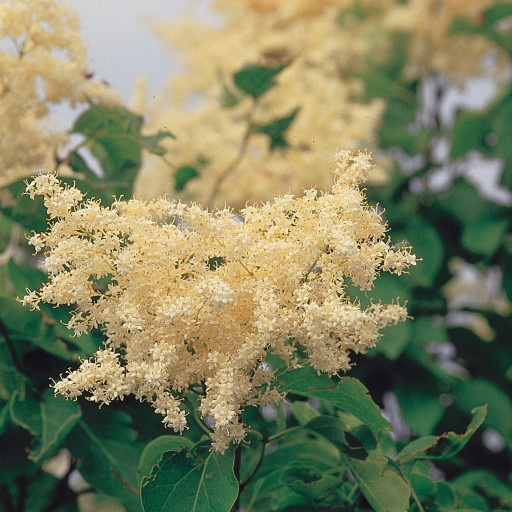
Plant Overview
Often called the "Ivory Silk" tree, the Japanese Tree Lilac is the sophisticated, giant cousin of the common garden lilac. While most lilac bushes fade by early June, this tree waits its turn to burst into massive, creamy-white plumes that smell like honey and fresh-cut grass. It is a favorite for urban gardeners who want the classic beauty of a lilac but in a stately, tree-formed package that resists the diseases often found in smaller shrubs.
🔍 How to Identify
- 🌸 The Blooms: Large, airy clusters (panicles) of tiny, creamy-white flowers that can reach up to 12 inches long and 10 inches wide.
- 🍃 The Foliage: Broad, dark green, ovate leaves with a pointed tip and a slightly leathery texture that remains attractive all summer.
- 🪵 The Bark: On younger trees, the bark is smooth and reddish-brown with horizontal "slashes" (lenticels), looking remarkably like the bark of a Cherry tree.
🏡 In Your Garden
- ☀️ Sun & Air: This tree thrives in full sun. Good air circulation is its best friend; because it grows in a tidy tree shape rather than a dense thicket, it naturally avoids the powdery mildew that plagues common lilac bushes.
- 🏙️ Urban Toughness: It is highly prized for its "tough-as-nails" nature. It tolerates urban pollution, compacted soil, and even road salt better than almost any other ornamental flowering tree.
- ✂️ Pruning Patience: It requires very little pruning compared to shrubs. If you do need to shape it, wait until immediately after the flowers fade to avoid cutting off next year's "flower power."
⚠️ Safety & Toxicity
- ✅ Non-Toxic: The Japanese Tree Lilac is considered non-toxic to humans, dogs, and cats.
- 🐾 Pet Friendly: It is a very safe choice for households with curious pets who might enjoy lounging in its shade or sniffing fallen blossoms.
✨ Fun Fact
The Japanese Tree Lilac is a member of the Olive family (Oleaceae). This explains why its fragrance is uniquely musky and herbal, rather than the "powder-sweet" scent associated with traditional French lilacs!

Detailed Care Instructions
These lilac trees can live for 40 to 50 years if properly cared for and maintained.
How much do Japanese lilac trees grow a year?
These are moderate growing trees and will grow approximately 12 to 24 inches per year, reaching 20 feet tall or higher at maturity.
Does the Japanese lilac tree attract butterflies?
Butterflies and other pollinators, including hummingbirds and bees, are attracted to the flowers on the Japanese lilac tree.
| Color | Creamy White |
| Soil Ph | Neutral To Slightly Acidic |
| Soil Type | Well-Drained, With Average Moisture And Average Fertility |
| Bloom Time | June |
| Plant Type | Tree |
| Mature Size | 20 To 30 Feet Tall And 15 To 20 Feet Wide |
| Native Area | East Asia |
| Sun Exposure | Full Sun To Partial Sun |
| Hardiness Zones | 3 To 7 |
To grow a Syringa Reticulata plant, also known as Japanese tree lilac, follow these steps:
- Location: Choose a sunny spot in your garden with well-draining soil. Syringa Reticulata can tolerate a wide range of soil types, but they prefer alkaline to neutral soil.
- Planting time: Plant the tree lilac in spring or early fall, when the weather is mild and the soil is easy to work with.
- Dig a hole: Dig a hole that is two to three times wider and slightly deeper than the root ball. Make sure the hole is deep enough to accommodate the entire root system without bending or circling the roots.
- Soil amendment: Mix well-rotted organic matter, such as compost or aged manure, with the existing soil. This will help improve the soil structure and provide necessary nutrients.
- Planting: Gently place the root ball in the hole, making sure that the top of the root ball is level with or slightly above the soil surface. Backfill the hole with the amended soil and pat it down gently to eliminate air pockets.
- Watering: Give the newly planted tree lilac a thorough watering, making sure the soil is evenly moist. Afterward, water regularly, especially during the first year, to keep the soil consistently moist but not waterlogged.
- Mulching: Apply a layer of organic mulch, such as wood chips or shredded bark, around the base of the plant. This will help retain soil moisture, suppress weeds, and regulate soil temperature.
- Pruning: Prune Syringa Reticulata in late winter or early spring before new growth appears. Remove any dead, diseased, or crossing branches. Thin out crowded areas to improve air circulation and reduce the risk of diseases.
- Fertilization: Feed the tree lilac once a year with a balanced slow-release fertilizer in early spring. Follow the package instructions for application rates.
- Maintenance: Keep the area around the plant clean by removing fallen leaves, debris, or weeds. Regularly monitor for pests or diseases and take appropriate action if necessary.
By following these steps and providing proper care, your Syringa Reticulata plant should grow and thrive, eventually producing beautiful clusters of fragrant white flowers.

Place in a window with dappled sun or a spot in the middle of a room. Or directly in a window facing west or east.

To water this plant, it is important to check the soil moisture level before adding water. Touch the soil with your fingers to determine if it feels dry or damp. If the soil is dry, provide enough water to thoroughly moisten the root zone without causing waterlogged conditions. This can be achieved by watering slowly and deeply, allowing the water to penetrate the soil gradually. Avoid getting water on the leaves of the plant, as this can lead to fungal diseases. It is important to water this plant regularly, especially during dry periods, to promote healthy growth and flowering.
To fertilize the Syringa Reticulata plant, apply a balanced fertilizer in early spring before new growth begins. Use a slow-release or organic fertilizer, and apply according to the instructions on the label. Be sure to water the plant well after fertilizing. Avoid fertilizing in late summer or fall, as this can stimulate new growth that may not have time to harden off before winter.
The soil recommended for Syringa Reticulata should have good drainage and be rich in organic matter. A pH of 6.0-7.5 is preferable. The soil should not be overly compacted or too sandy, as this can affect drainage and nutrient retention. It is important to maintain consistent moisture levels in the soil, but not to overwater as this can lead to root rot. Adding a layer of mulch around the plant can help retain moisture and regulate temperature fluctuations in the soil. Testing the soil periodically and adjusting the pH and nutrient levels as needed can also help promote healthy growth.
To propagate this plant, first choose a healthy, mature stem cutting from the mother plant. Cut the stem at a 45-degree angle using a sharp, clean pair of pruning shears. Remove any leaves or flowers from the bottom third of the stem.
Prepare a rooting hormone solution according to the package instructions and dip the cut end of the stem into the solution. Shake off any excess hormone powder.
Insert the cutting into a well-draining soil mix or rooting medium, such as perlite or vermiculite. Water the cutting thoroughly and place it in a warm, humid location without direct sunlight.
Keep the cutting moist and in a stable environment with consistent temperatures. Within a few weeks, roots should start to form. Once the cutting has established roots, gradually introduce it to brighter light and less humidity.
After a few months, the cutting can be transplanted into a larger pot or into the ground in a suitable location. Be sure to keep the young plant well-watered and protected from extreme temperatures.
Common pests of the japanese tree lilac include Spider mites, aphids, thrips, larvae. Make a habit of checking your japanese tree lilac frequently for pests so that any infestations can be caught and managed early.








