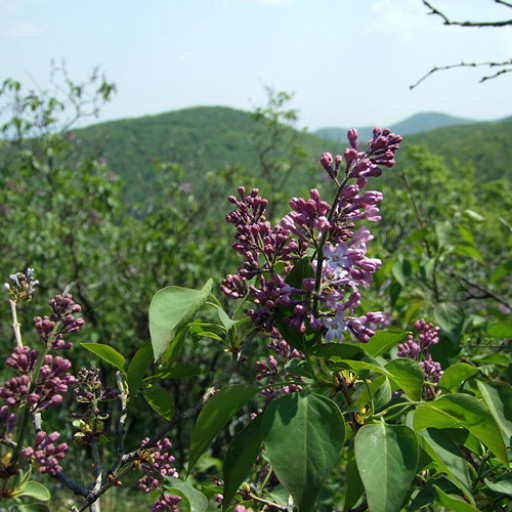
Plant Overview
Commonly known as the "Common Lilac" or "French Lilac," Syringa vulgaris is the undisputed herald of spring. Originating from the rocky hills of the Balkan Peninsula, these deciduous shrubs have traveled across the globe to become a staple of the cottage garden. In the Victorian language of flowers, giving a purple lilac symbolized the first emotions of love, a sentiment inspired by their intoxicating, nostalgic fragrance.
🔍 How to Identify
- 🌿 Heart-Shaped Leaves: The foliage consists of smooth, dark green leaves that are distinctively heart-shaped (cordate) and grow in opposite pairs along the stems.
- 🌸 Conical Panicles: The flowers grow in dense, pyramid-shaped clusters called panicles. While most famous for their namesake "lilac" hue, they also bloom in shades of white, cream, pink, and deep burgundy.
- 👃 Intense Fragrance: Each tiny, tubular blossom features four petals and emits a heavy, sweet perfume that is strongest on warm, sunny afternoons.
🏡 In Your Garden
- ☀️ Sun Seekers: Lilacs are true sun-worshippers. To produce a heavy "carpet" of blooms, they require at least six to eight hours of direct sunlight. Planting them in the shade often leads to leggy growth and powdery mildew.
- ✂️ The Pruning Rule: These shrubs bloom on "old wood" (growth from the previous year). To ensure flowers for next year, you must prune them immediately after the current flowers fade; pruning in late winter will accidentally remove all the flower buds.
- 🌬️ Air Circulation: Because they are prone to powdery mildew (a white, flour-like fungus on the leaves), they prefer well-drained soil and plenty of space for air to move through their branches.
⚠️ Safety & Toxicity
- ✅ Pet & Child Friendly: Syringa vulgaris is widely considered non-toxic to humans, dogs, cats, and horses.
- 🍽️ Edible Accents: The flowers are technically edible and are often used to make floral syrups or "lilac sugar." However, ensure they haven't been treated with chemical pesticides before tasting.
✨ Fun Fact
Lilac flowers are actually members of the Olive family (Oleaceae)! While you can't get olive oil from them, their wood is incredibly dense and fine-grained, historically used to craft small musical instruments and knife handles.

Detailed Care Instructions
| Color | Lavender-Blue, White, Burgundy, Deep Purple, Lilac |
| Soil Ph | Neutral (Ph Near 7.0) |
| Humidity | Normal |
| Lighting | Part Sun |
| Soil Type | Loamy |
| Bloom Time | Spring |
| Difficulty | Medium |
| Plant Type | Deciduous Shrub |
| Mature Size | 6 To 16 Feet Tall And 8 To 12 Feet Wide |
| Native Area | Southeastern Europe |
| Temperature | 10°C - 30°C |
| Sun Exposure | Full Sun |
| Hardiness Zones | 3, 4, 5, 6, 7 |
To grow Syringa vulgaris, commonly known as Lilac, you can follow these steps:
- Location: Choose a spot in your garden that receives full sun to partial shade. Lilacs prefer at least 6 hours of direct sunlight each day.
- Soil: Lilacs prefer a well-draining soil with a slightly acidic pH level (around 6.5). Amend the soil with organic matter, such as compost or aged manure, to improve drainage and fertility.
- Planting: Dig a hole twice as wide and deep as the root ball of the lilac plant. Place the plant in the hole, making sure the top of the root ball is level with or slightly above the soil level. Backfill the hole with soil and gently firm it around the plant.
- Watering: Water the lilac thoroughly after planting and provide regular watering during the first year. After establishment, lilacs are relatively drought-tolerant and do not require excessive watering.
- Mulching: Apply a layer of organic mulch, such as wood chips or shredded bark, around the base of the lilac plant. Mulching helps retain moisture, suppress weed growth, and moderate soil temperature.
- Pruning: Lilacs benefit from regular pruning to maintain their shape and promote healthy growth. Prune immediately after flowering by removing old or dead wood and cutting back any overly long branches. Avoid heavy pruning, as it can reduce flowering in the following year.
- Fertilizing: Apply a balanced slow-release fertilizer in early spring, before new growth begins. Follow the instructions on the fertilizer package for application rates.
- Pests and diseases: Monitor the lilac plant for common pests such as aphids, powdery mildew, or lilac borers. Treat any infestations promptly using appropriate insecticides or organic pest control methods.
- Propagation: Lilacs can be propagated by taking softwood cuttings in early summer or hardwood cuttings in late fall. Alternatively, you can grow lilacs from seeds, although this method takes longer to establish.
Remember, lilacs generally require patience as they can take a few years to reach their full blooming potential. However, with proper care and maintenance, Syringa vulgaris can provide beautiful and fragrant blooms for years to come.

Place in a window with dappled sun or a spot in the middle of a room. Or directly in a window facing west or east.

To water this plant, ensure that the soil around it is moist but not waterlogged. You can water it deeply once a week, allowing the water to penetrate 6-8 inches into the soil. Be careful not to water the foliage or flowers directly, as this can cause leaf burn or damage to the flowers. Additionally, make sure that the soil is well-draining to prevent water from stagnating around the roots. If the plant is in a container, make sure there are drainage holes to allow excess water to escape. Watering should be adjusted based on the amount of rainfall in the area and the plant's moisture needs.
To fertilize this plant, you should use a granular fertilizer that is high in nitrogen. Apply the fertilizer in the spring, just as new growth is starting to emerge. Be sure to follow the manufacturer's instructions for application rates and methods. Water the plant well after fertilizing to help distribute the nutrients throughout the soil. Avoid fertilizing later in the season, as this can promote new growth that may not have time to harden off before winter.
The ideal soil for this plant should be well-drained and loamy with a pH range of 6.0 to 7.5. The soil should be nutrient-rich and have good water retention capabilities. Organic matter such as compost or aged manure can be mixed into the soil to improve its fertility. It is important to avoid using heavy clay soil as it can lead to poor drainage and root rot. Additionally, the soil should be moist but not overly saturated, as this can also lead to root problems. Regular soil testing can help ensure the correct soil pH level and nutrient balance for healthy plant growth.
One way to propagate this plant is through cuttings. Find a healthy and established branch that is about 6-8 inches long and cut it at a 45-degree angle using clean and sharp pruning shears. Remove all the leaves except for the topmost two pairs. Dip the cut end into a rooting hormone powder and plant it in a well-draining soil mixture. Keep the soil moist and place the cutting in a location that receives indirect light. The cutting should root within a few weeks and can be transplanted into a larger pot or moved outside once it is well-established.
Common pests of the common lilac include Spider mites, aphids, larvae. Make a habit of checking your common lilac frequently for pests so that any infestations can be caught and managed early.








