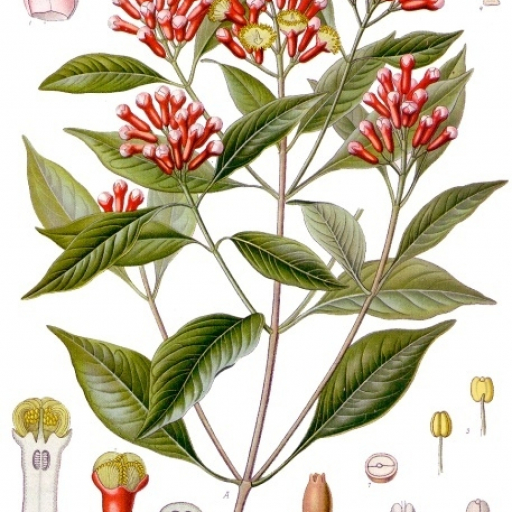
Plant Overview
Known worldwide as the source of the aromatic clove, Syzygium aromaticum is a tropical evergreen that literally smells like history. Originating from the legendary "Spice Islands" of Indonesia, this tree was once so valuable that it fueled the Age of Exploration and sparked global conflicts. Today, it remains a prized ornamental for those who can provide the warm, humid embrace of its ancestral home.
🔍 How to Identify
- 🍃 Glossy Foliage: The leaves are large, oval, and possess a deep green, waxy sheen. If you crush a fallen leaf, it releases a faint, spicy fragrance.
- 🌸 Budding Clusters: The "cloves" we use in the kitchen are actually the immature, unopened flower buds. They begin as pale green nubs and slowly transition to a vibrant, flushed red.
- 🌳 Pyramidal Form: In its youth, the tree grows in a tidy, conical shape with branches reaching upward, eventually maturing into a lush, rounded canopy that can reach impressive heights in the wild.
🏡 In Your Garden
- 🏝️ Tropical Dreams: This plant is a true child of the tropics. It thrives in high humidity and consistent warmth. If you live in a cooler climate, it will need a dedicated greenhouse or a very bright, humid indoor spot to survive the winter, as it cannot tolerate frost.
- 💧 The Drainage Dance: While it loves moisture, it hates "wet feet." The tree requires rich, loamy soil that drains quickly to prevent root rot. It is a slow-growing species, so patience is your best gardening tool—don't expect a harvest of home-grown spice for at least 5 to 7 years!
⚠️ Safety & Toxicity
- 🛡️ General Safety: The plant is generally safe for humans to handle. However, the concentrated essential oils (eugenol) found in the buds and leaves can cause mild skin irritation or allergic reactions in sensitive individuals.
- 🐾 Pet Watch: While not listed as a major toxin, the high essential oil content can cause digestive upset or liver stress in cats and dogs if they chew on the foliage. It is best to keep this aromatic beauty out of reach of curious pets.
✨ Fun Fact
- 🦷 The Ancient Dentist: Cloves contain a high concentration of eugenol, which is a natural anesthetic and antiseptic. For centuries, people have used whole cloves or clove oil to numb the pain of toothaches—a practice that some natural remedy enthusiasts still use today!

Detailed Care Instructions
| Color | White |
| Soil Ph | 6-7 |
| Soil Type | Rich, Loamy |
| Bloom Time | Summer |
| Plant Type | Spice, Tree |
| Mature Size | 15-30 Feet |
| Native Area | Spice Islands/Moluccas (Indonesia) |
| Sun Exposure | Full Sun |
| Hardiness Zones | 11-12 |
To grow Syzygium aromaticum, commonly known as the clove plant, you can follow these steps:
- Obtain clove seeds or cuttings: You can find clove seeds or obtain cuttings from an existing clove plant. Cuttings are generally easier to propagate.
- Planting seeds or cuttings: If using seeds, sow them in small pots filled with well-draining potting soil. Place the seed about 1 inch deep and cover it with soil. If using cuttings, remove any leaves from the bottom and plant them in well-draining potting soil, ensuring that at least two nodes are buried in the soil.
- Provide the right conditions: Clove plants thrive in warm, tropical climates. They prefer a well-draining soil mixture and partial shade. Keep the soil consistently moist but not soggy.
- Watering: Clove plants require regular watering. Water them deeply whenever the topsoil starts to feel dry, usually once or twice a week. Avoid overwatering, as it may lead to root rot.
- Fertilization: Apply a balanced, slow-release fertilizer during the growing season, usually in spring and summer. Follow the instructions on the fertilizer packaging for dosage.
- Pruning: Prune the plant to maintain its shape and promote bushiness. Pinch or trim back the tips of the branches to encourage branching. Pruning can be done throughout the year as needed.
- Harvesting: Clove plants typically take around 4-5 years to mature and produce flowers. Harvest the buds just before they open fully, as they are the clove spice. Dry the harvested buds in a cool, dry place for several days to weeks until they become firm and dark brown.
Remember, growing cloves requires patience and a suitable climate. If your climate doesn't meet the warm and tropical conditions required for clove plants, you might consider growing them indoors in containers. Additionally, it's worth noting that clove plants might not flower and produce cloves if grown outside their natural growing regions.
Syzygium Aromaticum plant, also known as a spice plant, requires adequate watering to thrive. Ensure that the soil is consistently moist but not waterlogged to prevent root rot. One way to determine if it needs moisture is to check the soil's top inch. If it feels dry, it is time to water. Allow the water to penetrate deep into the soil to encourage healthy root growth. Avoid getting water on the plant's leaves, as it can encourage fungal growth. Overwatering or underwatering may cause the plant's leaves to wilt, so it is best to maintain a consistent watering schedule. In general, watering once a week should be sufficient. However, it may require more frequent watering during hot and dry weather.
To fertilize this plant, use a balanced fertilizer with an NPK ratio of 10-10-10 or 12-12-12. Apply the fertilizer once every two months during the growing season (spring and summer). Use a half-strength solution and water thoroughly after application to prevent burning of the roots. Avoid over-fertilizing as this may cause damage to the plant.
Syzygium Aromaticum requires a well-draining soil that is rich in organic matter. It should contain sufficient amounts of nutrients and minerals such as nitrogen, phosphorus, potassium, calcium, and magnesium to support healthy growth.
The soil should also have a slightly acidic pH between 5.5 to 6.5 to ensure optimal nutrient uptake and overall health. A pH level that is too high or alkaline can lead to nutrient deficiencies and stunted growth.
It is recommended to use a mixture of peat moss, compost, and sand to create a suitable soil for Syzygium Aromaticum. This will provide the necessary organic matter, drainage, and nutrient levels to support healthy growth.
It is important to avoid using heavy clayey soils or those that do not drain well as they can lead to root rot and other fungal diseases. Regularly monitoring the soil moisture levels and providing adequate drainage can help prevent these issues.
To propagate the Syzygium Aromaticum plant, take stem cuttings that are around 4-6 inches in length from a healthy, mature plant. Cut the stem at a 45-degree angle using a sharp pair of pruning shears. Ensure the cutting has at least two nodes on it.
Remove any leaves from the bottom third of the cutting, as this is where the roots will grow from. Dip the bottom of the cutting in rooting hormone and insert it into a pot filled with well-draining soil mix. Ensure the soil stays moist but not waterlogged.
Cover the pot with a plastic bag to create a mini greenhouse and place it in a bright, warm spot with indirect sunlight. Keep the cutting in the bag until you see new growth, indicating that roots have formed. This can take a few weeks to a few months depending on the conditions.
Once substantial root growth has occurred, remove the plastic bag and continue to grow the plant in a bright, warm location. Water the plant regularly but be careful not to overwater it, as Syzygium Aromaticum is susceptible to root rot. Fertilize the plant with a balanced fertilizer every two weeks during the growing season.








