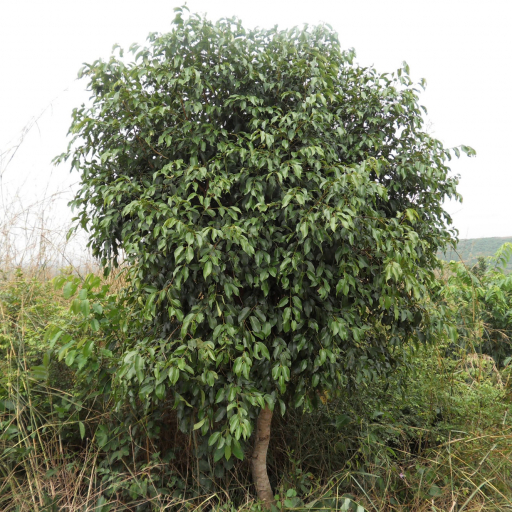
Plant Overview
Known across the African continent as the "Waterberry" or "Woodland Waterberry," Syzygium guineense is a versatile evergreen that transitions beautifully from wild riverbanks to managed backyard landscapes. Whether you know it as the Guinea Plum or the Bwater-pear, this tree is a favorite for those looking to create a lush, shaded sanctuary that invites local wildlife over for a feast.
🔍 How to Identify
- 🍃 The Leaves: Look for elliptical, leathery leaves that grow in opposite pairs. They have a glossy, dark green finish on top and a paler underside, often with a distinct mid-rib.
- 🌸 The "Puffball" Flowers: During blooming season, the tree is covered in creamy-white, honey-scented clusters. These flowers lack large petals but feature a dramatic spray of long stamens, giving them a fuzzy, starburst appearance.
- 🫐 The Fruit: The most recognizable feature is the fruit—small, oval berries that transition from green to a deep, royal purple or black when fully ripe, hanging in heavy, decorative bunches.
🏡 In Your Garden
- 💧 Thirsty Foundations: As the name suggests, the Waterberry thrives in moist environments. It is a "problem solver" for those soggy spots in the garden where other trees might suffer from root rot, though it is surprisingly hardy once it establishes a deep root system.
- 🦋 A Living Buffet: If you want a garden full of life, this is the tree for you. The nectar-rich flowers are a magnet for bees and butterflies, while the ripened berries will attract a symphony of fruit-eating birds to your yard.
⚠️ Safety & Toxicity
- 🍴 Edible Status: The ripe purple berries are safe and edible for humans, often described as having a pleasant, slightly acid flavor. They are frequently used to make jams, syrups, or traditional fermented drinks.
- 🐾 Pet Safety: While the fruit pulp is generally non-toxic, the large seeds inside should be kept away from pets. Like many stone fruits, the seeds can be a choking hazard or cause mild digestive distress if swallowed in large quantities.
✨ Fun Fact
🪵 The "Water-Proof" Wood: The timber of the Waterberry is so remarkably durable and resistant to water-rot that it has been used for centuries in traditional boat-building and to craft sturdy oars and fence posts that last for decades in damp soil.

Detailed Care Instructions
To grow a Syzygium Guineense plant, also known as African Cherry or Water Pear, you can follow these steps:
- Obtain seeds or young plants: You can buy Syzygium Guineense seeds from a reputable nursery or obtain a young plant from a fellow gardener.
- Choose the right location: Syzygium Guineense plants prefer full sun but can tolerate partial shade. Ensure that the location has well-drained soil and is protected from strong winds.
- Prepare the soil: Ensure the soil is well-drained and has a slightly acidic to neutral pH level (around 6.0-7.2). If the soil is heavy clay or sandy, consider amending it with organic matter like compost to improve its fertility and drainage.
- Plant the seeds or young plant: If planting seeds, they can be directly sown into the prepared soil at a depth of about 1 inch. If using a young plant, dig a hole slightly larger than the root ball and gently place the plant into the hole. Backfill the hole with soil, ensuring the plant is at the same depth as it was in the pot.
- Watering: Keep the soil consistently moist, especially during the establishment period. Water deeply but infrequently, allowing the soil to dry out slightly between waterings.
- Mulching and weed control: Apply a layer of organic mulch around the base of the plant to help retain moisture, suppress weed growth, and provide some protection during extreme temperatures.
- Fertilization: Syzygium Guineense plants generally do not require heavy fertilization. However, you can apply a balanced slow-release fertilizer once a year in early spring to promote healthy growth.
- Pruning: Pruning is not typically necessary for Syzygium Guineense plants, but you can remove any dead, damaged, or overcrowded branches to maintain a tidy appearance or encourage better airflow.
- Pests and diseases: Monitor the plant regularly for pests like aphids, scales, or caterpillars. If detected, treat with an appropriate insecticide or a homemade natural remedy like neem oil. Syzygium Guineense can also be susceptible to fungal leaf spots, so ensure good air circulation around the plant and avoid overhead watering if possible.
- Harvesting: Syzygium Guineense bears edible fruits. Harvest them when they are fully ripe, which is indicated by their deep red or purple color and a slight softness. The fruit is often used for cooking, jams, jellies, and beverages.
By following these steps, you should be able to successfully grow a Syzygium Guineense plant. Remember to regularly monitor and care for the plant to ensure its overall health and productivity.

Place in a bright room that is sun drenched almost all day. Or directly in a south-facing window.

To water this plant, ensure that the soil is dry to the touch before watering. When ready to water, slowly pour water onto the soil around the base of the plant, taking care not to get water on the leaves. It is important not to overwater the plant, as this can lead to root rot. Monitor the soil moisture regularly to ensure that it stays evenly moist, but not waterlogged. In periods of drought or high heat, the plant may require more frequent waterings to stay healthy.
To fertilize Syzygium Guineense, you should apply a balanced, slow-release fertilizer in the early spring or late winter. Use a fertilizer with a nitrogen-phosphorus-potassium ratio of 10-10-10 or 16-16-16. Spread the fertilizer evenly around the base of the plant, making sure not to get any on the leaves or stem. Water the plant thoroughly after applying the fertilizer. Repeat this process every six months for optimal growth.
Syzygium Guineense is a plant that requires well-draining soil with proper aeration. The soil needs to be rich in organic matter, with a pH level of about 5.5-6.5. It is recommended to use a mixture of garden soil, compost, and sand or perlite to ensure enough drainage. Avoid waterlogged soils, as they can cause root rot and hinder growth. It is also advisable to add slow-release fertilizers to the soil to provide adequate nutrients for the plant's growth.
There are different methods for propagating Syzygium Guineense plant. One way is to take stem cuttings from a healthy plant at the beginning of the growing season. The stems should be mature but not woody and should have at least two nodes. Remove the leaves from the bottom half of the stem, dip the cut end in rooting hormone, and plant in a mixture of sand and peat moss. Place the cutting in a warm, humid and shaded area, keeping the soil moist until it has rooted and new growth appears.
Another way to propagate Syzygium Guineense is by air layering. Choose a healthy branch and make a 1-2 inch (2.5-5 cm) cut on the underside of the branch. Cover the cut with moist sphagnum moss and wrap with plastic wrap or aluminum foil, securing it with a string or twist tie. Keep the moss moist and watch for roots to develop. Once roots have formed, cut the branch below the roots and plant in a pot with well-draining soil.
Propagation can also be done by seeds, which should be collected from mature fruits and soaked in warm water for 24 hours before planting in well-draining soil. Keep the soil consistently moist and in a warm area for germination, which can take up to a month.
Whatever propagation method is chosen, it is important to keep the new plant in a warm and humid environment until established. Provide adequate water and nutrients, and prune as necessary to maintain a healthy form.








