Plant Overview
Known as the Malay Apple or the Mountain Apple, Syzygium malaccense is one of the most stunning tropical trees you can encounter. When it blooms, it doesn't just flower—it explodes in a neon-magenta display that blankets the ground in a vibrant pink "snow." Native to Malaysia and Indonesia, this tree traveled with ancient Polynesians across the Pacific, earning its place as a legendary "Canoe Plant."
🔍 How to Identify
- 🌸 Explosive Blooms: The flowers are a brilliant magenta-pink with numerous long stamens, looking like tiny fireworks or pom-poms growing directly from the branches and trunk.
- 🍃 Lush Foliage: The leaves are large, oblong, and leathery with a deep glossy green finish, providing dense, year-round shade.
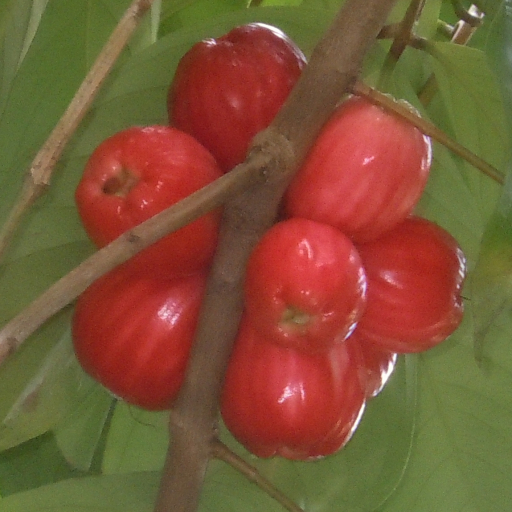
- 🍎 Bell-Shaped Fruit: The fruit is pear or bell-shaped, typically dark red when ripe (though some varieties are white or pink), with a crisp, waxy skin and snowy white, juicy flesh inside.
🏡 In Your Garden
- 💧 Thirsty Roots: This tree is a true child of the tropics; it thrives in high humidity and requires consistent moisture. Because its root system is relatively shallow, it can struggle during prolonged droughts and appreciates a heavy layer of mulch to keep its "feet" cool.
- ☀️ Space to Breathe: While it makes an excellent privacy screen or windbreak due to its dense canopy, it needs plenty of room to spread. It prefers slightly acidic soil; if the soil is too alkaline, you might notice the leaves turning yellow (chlorosis).
- 🌬️ Wind Protection: Despite its sturdy appearance, the large leaves and heavy fruit crops make it susceptible to damage in high-wind areas, so planting it in a sheltered spot is ideal for long-term health.
⚠️ Safety & Toxicity
- ✅ Safe for Humans: The fruit is widely enjoyed raw, stewed, or as a jelly. It has a mild, refreshing taste, often compared to a mix between an apple and a rose.
- 🐾 Pet Friendly: There is no known toxicity to cats or dogs regarding the fruit or leaves. However, the large central seed should be discarded to avoid any potential choking hazard or mild digestive upset.
✨ Fun Fact
In ancient Hawaii, the wood of the Malay Apple (called ‘Ōhi‘a ‘ai) was considered sacred. It was one of the few woods used to carve religious idols (Tiki) and was frequently used to construct the beams of traditional longhouses.

Detailed Care Instructions
To successfully grow a Syzygium malaccense plant, also known as Malay apple or rose apple, follow these steps:
- Climate and soil requirements:
- Syzygium malaccense thrives in tropical and subtropical climates.
- It prefers well-drained soil with good fertility.
- pH range of soil should ideally be between 5.5 and 6.5.
- Syzygium malaccense thrives in tropical and subtropical climates.
- Propagation:
- You can propagate the Malay apple plant using seeds or cuttings.
- If using seeds, soak them in water for about 24 hours before planting.
- For cuttings, take 4-6 inch (10-15 cm) semi-hardwood cuttings in spring or summer.
- You can propagate the Malay apple plant using seeds or cuttings.
- Planting:
- Choose a suitable location with full sun or partial shade.
- Dig a hole slightly wider and deeper than the root ball of the plant.
- Mix organic compost or well-rotted manure with the soil before planting.
- Place the plant in the hole, ensuring that the top of the root ball is level with the soil surface.
- Backfill the hole with soil and gently firm it around the plant.
- Water thoroughly after planting.
- Choose a suitable location with full sun or partial shade.
- Watering and fertilizing:
- Syzygium malaccense needs regular watering to maintain evenly moist soil. However, avoid overwatering, as it can lead to root rot.
- Water deeply once or twice a week during dry periods.
- Fertilize the plant every 2-3 months with a balanced or slow-release fertilizer, following the instructions on the packaging.
- Syzygium malaccense needs regular watering to maintain evenly moist soil. However, avoid overwatering, as it can lead to root rot.
- Pruning and training:
- Prune the plant to maintain desired shape and size. Trim away any dead or diseased branches.
- You can also train the plant to a specific form, such as a single trunk or multiple trunks.
- Pinch off the tips of the branches to encourage bushier growth.
- Prune the plant to maintain desired shape and size. Trim away any dead or diseased branches.
- Pests and diseases:
- Syzygium malaccense is generally resistant to pests and diseases.
- However, keep an eye out for common issues like aphids, scale insects, and fungal infections.
- Regularly inspect the plant for any signs of damage and treat accordingly.
- Syzygium malaccense is generally resistant to pests and diseases.
- Harvesting:
- Depending on the cultivar, Syzygium malaccense fruits can take 3-6 months to ripen after flowering.
- The fruits are usually harvested when they reach full color and are slightly soft to touch.
- Twist or cut the fruits from the tree to avoid damaging the plant.
Remember that specific growing conditions may vary based on your location, so it's always helpful to consult local gardening resources or experienced gardeners in your area for additional advice.
- Depending on the cultivar, Syzygium malaccense fruits can take 3-6 months to ripen after flowering.

Place in a bright room that is sun drenched almost all day. Or directly in a south-facing window.

The Syzygium Malaccense plant prefers well-draining soil and requires regular watering to maintain its health and growth. It is essential to keep the soil consistently moist, but not waterlogged, as standing water can lead to root rot.
One way to water the Syzygium Malaccense plant is to use a watering can or hose that has a showerhead nozzle. This will allow for a gentle stream of water that won't damage the plant or splash the soil out of the pot.
Another method is to water the plant deeply but infrequently, allowing the soil to dry out slightly between watering. This helps prevent overwatering and encourages the plant to establish a healthy root system.
It is also important to keep in mind the humidity levels in the surrounding environment. The Syzygium Malaccense plant thrives in high humidity and may require additional misting or humidity trays to maintain optimum growing conditions.
Lastly, it is essential to monitor the plant's soil moisture level regularly and adjust watering frequency accordingly, depending on factors such as temperature, humidity, and pot size.
To fertilize the Syzygium Malaccense plant, use a balanced fertilizer with equal amounts of nitrogen, phosphorus, and potassium. Apply the fertilizer to the soil around the base of the plant, avoiding contact with the foliage. Water the plant well before and after fertilizing. Repeat the application every 4-6 weeks during the growing season. Be careful not to over-fertilize, as this can lead to leaf burn and other problems.
Syzygium Malaccense plant prefers a well-draining soil mixture that is rich in organic matter. The soil should be loose and airy, allowing water and nutrients to flow freely through it. A mixture of compost, perlite, and sand is commonly recommended for this plant. It is important to ensure that the soil is not compacted and that it allows for good drainage to prevent waterlogging, which can cause root rot. The pH of the soil should be between 5.5 and 7.5. Regular fertilization with a balanced, slow-release fertilizer can also help to maintain healthy growth.
Propagation of this plant can be done through both sexual and asexual means. The most common method of asexual propagation is through stem cuttings. Select a healthy stem, remove any leaves from the lower 2/3 of the stem, and dip the cut end in rooting hormone. Place the cutting in a pot filled with a well-draining potting mix and keep the soil moist. Place the pot in a warm, humid place for several weeks while the roots develop.
Another method of propagation is through seed germination. Collect mature fruits, extract the seeds, clean them, and soak them in water for one day. Plant the seeds in trays or pots filled with a well-draining potting mix and place them in a warm, humid location with bright, filtered sunlight. Keep the soil moist but not soggy. The seeds will germinate within two to four weeks.
Propagation of this plant can also be done through air layering. Select a branch, make a cut on the stem, and wrap a moist moss around the cut. Cover the moss and the cut with plastic and secure the ends with tape or rubber bands. Roots will begin to form within a few weeks. Cut the branch below the new roots and plant in a pot with well-draining potting mix.
When propagating this plant, it is important to keep the soil moist and provide sufficient sunlight and warmth to ensure successful growth.








