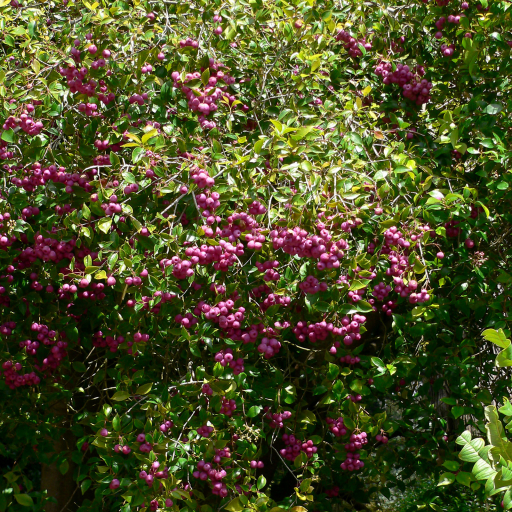
Plant Overview
Often called the "Lilly Pilly," Syzygium smithii is the quintessential Australian evergreen. With its shimmering bronze-to-green foliage and a festive display of pinkish-purple berries, it’s a garden staple that feels like a year-round celebration. Whether used as a towering rainforest giant or a tightly clipped suburban hedge, it is a tough-as-nails beauty that provides deep shade and feeds the local birdlife.
🔍 How to Identify
- 🍃 Glossy Foliage: The leaves are lance-shaped, dark green, and have a distinct waxy shine. New growth often emerges in stunning shades of bronze or copper before maturing.
- ☁️ Fluffy Flowers: In summer, the tree produces clusters of cream-white flowers that look like tiny, "fluffy" pom-poms made entirely of stamens.
- 🍒 Ornamental Berries: Following the flowers, the plant produces heavy clusters of fleshy, round berries ranging from pale white to vibrant magenta or deep purple.
🏡 In Your Garden
- 🧱 The Privacy Expert: This species is famous for its incredibly dense growth habit. It is the go-to choice for creating "living walls" or screens, though it requires regular pruning to prevent it from reclaiming the entire yard.
- 🐛 The Psyllid Battle: Many gardeners notice "pimple galls"—tiny bumps on the leaves. These are caused by tiny insects (psyllids). While they don't usually kill the plant, they can be unsightly; keeping the plant well-watered and healthy helps it resist these "pimples."
⚠️ Safety & Toxicity
- ✅ Edible Berries: The fruit is non-toxic and is a well-known "bush tucker" (native Australian food). While slightly tart or bland when eaten raw, the berries are frequently used to make delicious, vibrant pink jams and jellies.
- 🐾 Pet Friendly: Syzygium smithii is generally considered non-toxic to dogs and cats. The main "danger" is the mess—fallen berries can stain light-colored paving or outdoor rugs if not swept up.
✨ Fun Fact
In its native rainforest habitat, a single Syzygium smithii can grow over 60 feet (20 meters) tall, but it is such a versatile "shape-shifter" that gardeners can train it into a tiny 3-foot hedge or even a decorative topiary ball.

Detailed Care Instructions
| Humidity | Normal |
| Lighting | Part Sun |
| Difficulty | Medium |
| Hardiness Zones | 9 - 11 |
Here are some steps you can follow to grow a Syzygium smithii plant:
- Choose the right location: Syzygium smithii plants prefer a sunny or partially shaded location to thrive. Ensure that the area offers well-draining soil.
- Prepare the soil: The soil should be well-draining and ideally enriched with organic matter. You can incorporate compost or aged manure into the soil to improve its fertility and drainage.
- Planting: Dig a hole slightly larger than the root ball of your Syzygium smithii plant. Place the plant in the hole, ensuring that the top of the root ball is level with the soil surface. Backfill the hole with soil, gently pressing it down around the roots.
- Watering: Initially, water the plant thoroughly to ensure proper root establishment. After that, water regularly to maintain moist soil, but be cautious not to overwater as it can lead to root rot.
- Mulching: Apply a layer of organic mulch around the base of the plant to help retain moisture, suppress weed growth, and insulate the roots.
- Fertilization: Feed your Syzygium smithii plant with a slow-release, balanced fertilizer once or twice a year during the growing season. Follow the instructions on the packaging for dosage and application methods.
- Pruning: Prune your plant regularly to maintain shape and size, encourage bushier growth, and remove any dead or diseased branches. Pruning should be done after flowering.
- Protection: Protect your Syzygium smithii plant from extreme cold or frost by covering it with a frost cloth or moving it to a sheltered location during those times.
- Pest and disease control: Monitor the plant regularly for pests such as aphids or scale insects. If you notice any infestations, treat them promptly using appropriate organic or chemical insecticides. Additionally, keep an eye out for diseases such as leaf spot or powdery mildew and take appropriate measures if needed.
By following these steps, you should be able to successfully grow and maintain a healthy Syzygium smithii plant.

Place in a window with dappled sun or a spot in the middle of a room. Or directly in a window facing west or east.

To water this plant, first check the soil moisture by sticking your finger about an inch deep into the soil. If the soil feels dry to the touch, it's time to water. Use a watering can or hose to evenly saturate the soil around the base of the plant, making sure to avoid getting any water on the leaves. Allow the soil to drain for a few minutes before returning the plant to its normal location. Avoid overwatering, as this can lead to root rot or other issues. Aim for watering once a week or as needed based on the plant's individual needs and environmental conditions.
To fertilize this plant, it is recommended to use a balanced fertilizer with equal amounts of nitrogen, phosphorus, and potassium. Apply the fertilizer during the growing season, which is typically spring and summer. Follow the instructions on the fertilizer package for the recommended application rate and frequency. Over-fertilizing can harm the plant, so be sure to not exceed the recommended amount. Water the plant thoroughly after fertilizing to help distribute the nutrients throughout the soil.
The most suitable soil type for the plant is a well-draining soil that is slightly acidic. The soil should also be rich in organic matter and nutrients. It is important to avoid heavy or compacted soils that could limit root growth and drainage. The use of a soil mix that contains a good ratio of sand, perlite and organic matter can create the perfect growing environment for Syzygium Smithii. This will not only aid in healthy growth, but it will also prevent waterlogging, root rot, and other soil-borne diseases that can negatively impact the plant's health.
To propagate this plant, start by taking a healthy cutting from the parent plant that is at least 6 inches long and has a few leaves. Remove the lower leaves from the cutting, leaving only 2-3 leaves at the top.
Then, dip the cut end of the cutting into rooting hormone powder to encourage root growth. Plant the cutting in a well-draining potting mix and water it thoroughly.
Place the potted cutting in a bright, indirect light location and cover it with a plastic bag or a propagator lid to create a humid environment. Be sure to keep the soil moist but not waterlogged.
Check the cutting regularly for root growth by gently tugging on it. Once you feel resistance, it means roots have developed and the cutting has started to grow. At this point, gradually remove the cover and move the cutting to a larger pot as it grows and develops.
Common pests of the lilly-pilly include Scale insect, mealybugs, spider mites, aphids. Make a habit of checking your lilly-pilly frequently for pests so that any infestations can be caught and managed early.








