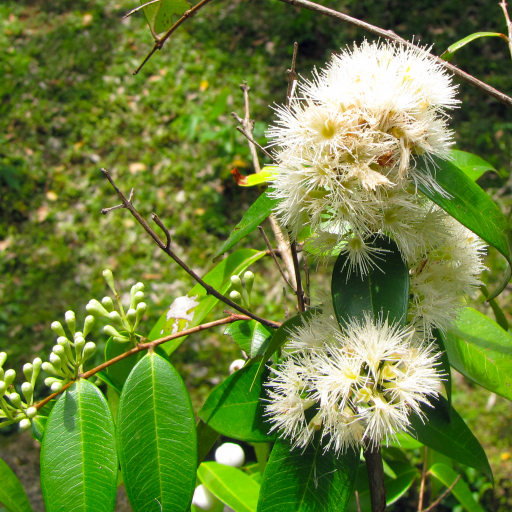
Plant Overview
Known affectionately as the "Wild Cinnamon" or the "Spunk Tree," Syzygium zeylanicum is a coastal gem that sparkles with delicate, needle-like flowers. While it shares a botanical family with the spice-bearing Clove tree, this species is prized by gardeners for its ornamental beauty and its "puffball" blooms that look like tiny fireworks frozen in time. In many Southeast Asian cultures, its resilient wood was historically used to craft tool handles, earning it a reputation for toughness.
🔍 How to Identify
- 🍃 The Leaves: Small, lance-shaped, and leathery. When held up to the light, you can often see tiny translucent oil glands, and they emit a faint, spicy aroma when crushed.
- ☁️ The Blooms: Its most striking feature is the clusters of white flowers that appear at the ends of branches. They are almost entirely made of long, wispy stamens, giving them a fuzzy, cloud-like appearance.
- ⚪ The Fruit: Following the flowers, the tree produces small, oblong berries that turn a brilliant, waxy white when ripe, resembling scattered pearls among the foliage.
🏡 In Your Garden
- 🌊 Coastal Warrior: This plant is incredibly salt-tolerant, making it a first-choice pick for seaside gardens where harsh winds and salt spray might kill more sensitive species.
- 🐦 Wildlife Magnet: If you want a "living bird feeder," this is it. The nectar-rich flowers attract sunbirds and honeyeaters, while the fleshy white berries are a favorite snack for local fruit-eating birds.
- ✂️ Versatile Shape: It responds beautifully to pruning. You can let it grow into a canopy-forming shade tree or shear it regularly to create a dense, flowering privacy hedge.
⚠️ Safety & Toxicity
- ✅ Status: Generally considered non-toxic.
- 🐾 Details: While the berries are technically edible (though often dry and bland), they are not a common food crop. There are no known major toxicity reports for cats, dogs, or horses, but as with any ornamental plant, it is best to discourage pets from chewing on the woody stems to avoid digestive upset.
✨ Fun Fact
The name "Wild Cinnamon" is a bit of a trick! While its leaves smell spicy and it belongs to the same order as many aromatic plants, it isn't actually related to the true cinnamon tree (Cinnamomum verum). It earned the nickname simply because early explorers thought its fragrant, crushed leaves smelled just like the expensive spice.

Detailed Care Instructions
To grow Syzygium zeylanicum (also known as Ceylon cinnamon), follow these steps:
- Obtain seeds or cuttings: Syzygium zeylanicum can be grown from seeds or cuttings. Seeds can be purchased from nurseries or online, or you can collect seeds from mature fruit. Alternatively, you can obtain stem cuttings from a healthy and mature plant.
- Select a suitable location: Syzygium zeylanicum prefers a warm and humid climate. Choose a location that receives partial shade to full sun. Ensure that the soil is well-draining and rich in organic matter.
- Prepare the soil: Before planting, prepare the soil by tilling it to loosen it up. Add compost or well-rotted manure to improve the soil's fertility and drainage.
- Plant seeds or cuttings: If using seeds, sow them in a seed tray or directly in the ground. Cover them lightly with soil and water gently. If using cuttings, dip the cut ends in a rooting hormone and plant them in well-drained potting soil. Water the cuttings lightly and provide them with a warm and humid environment.
- Watering: Keep the soil evenly moist but not waterlogged. Water the plant regularly, especially during dry periods. Avoid overwatering, as it can lead to root rot.
- Fertilization: Syzygium zeylanicum benefits from regular fertilization. Use a balanced, slow-release fertilizer or organic amendments to provide essential nutrients. Follow the manufacturer's instructions for application rates.
- Pruning: Prune Syzygium zeylanicum regularly to maintain its shape and promote bushier growth. Remove any dead or diseased branches and trim back excessive growth. Pruning also helps to stimulate cinnamon leaf production.
- Pest and disease control: Monitor the plant regularly for pests like aphids, mealybugs, or scale insects. Treat infestations promptly with natural or chemical insecticides. Syzygium zeylanicum is relatively resistant to diseases, but fungal infections can occur in humid conditions. Water the plant at the base to avoid wetting the foliage excessively.
- Harvesting: Ceylon cinnamon is typically harvested by removing the bark from mature branches. This process can be performed once the plant is around 2-3 years old. Dry the harvested bark in a warm, well-ventilated area until it becomes brittle.
With proper care and suitable growing conditions, you can successfully grow Syzygium zeylanicum and enjoy its aromatic cinnamon bark and foliage.

Place in a bright room that is sun drenched almost all day. Or directly in a south-facing window.

To water this plant, you should ensure that the soil is thoroughly hydrated but not overly saturated. You can check the moisture level of the soil by sticking your finger an inch deep into the soil. If it is dry, you should water the plant until it reaches the desired moisture level. However, if the soil is still moist, you should wait a few days before watering again. In general, this plant prefers to be constantly moist but should not be sitting in standing water. Additionally, you should avoid leaf splashing or wetting the foliage, as this can cause fungal diseases to grow. To promote healthy growth and development, you may also consider fertilizing the plant during the growing season.
To fertilize this plant, use a balanced fertilizer with equal amounts of nitrogen, phosphorus, and potassium. Apply the fertilizer during the growing season every 2-3 weeks, using a low dose to avoid burning the roots. Water the plant thoroughly before and after fertilizing to ensure proper absorption. Avoid fertilizing during the dormant season or when the plant is stressed.
Syzygium Zeylanicum is a flowering plant that requires appropriate soil for healthy growth. It prefers well-draining soil with good organic matter content, as it requires adequate moisture for growth. Soil that provides good aeration to roots, retains moisture without becoming waterlogged, and has the pH balance within the range of 5.5 to 6.5 is ideal for Syzygium Zeylanicum. It can also grow well in soils enriched with leaf mould or compost, which can improve soil quality and fertility. When planting Syzygium Zeylanicum, it is important to ensure that the soil is amended with appropriate nutrients and prepared well in advance. Proper soil preparation can help in establishing a healthy root system, which is essential for the plant's overall growth and development. Adequate fertilization and soil amendment practices are recommended periodically to maintain healthy soil and promote the plant's growth.
Syzygium zeylanicum plant can be propagated through cuttings. Take a mature stem cutting that is 4-6 inches long, preferably from a new growth. Remove the lower leaves leaving only two to three leaves on the top. Dip the cut end in a rooting hormone powder. Then, plant the cutting in a container with moist, well-draining soil. Cover the container with a plastic bag to create a greenhouse effect and keep it in a warm and bright place, but not in direct sunlight. After a few weeks, the cutting should form roots. Lift the bag to reduce humidity and after a week take it off completely. Keep watering the plant and wait for it to mature.








