Plant Overview
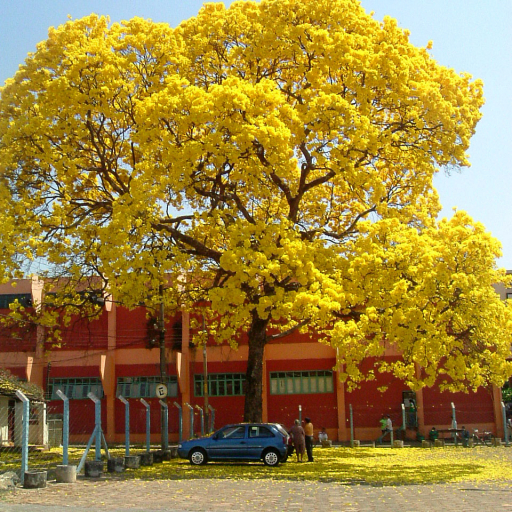
Known as the Golden Trumpet Tree or Yellow Ipe, Tabebuia ochracea is a breathtaking spectacle of the tropical world. When in full bloom, this tree sheds its leaves and replaces them entirely with a dense, shimmering canopy of bright yellow flowers. It is often celebrated as a herald of the changing seasons in South and Central America, turning entire streets and hillsides into "gold" overnight.
🔍 How to Identify
- 🌼 The Flowers: Large, trumpet-shaped blossoms that grow in dense clusters. They are a brilliant, saturated yellow with subtle reddish-brown nectar streaks inside the throat to guide pollinators.
- 🍃 The Foliage: When present, the leaves are "palmately compound," meaning they fan out like the fingers of a hand. The undersides often have a rusty, golden-fuzz (pubescent) texture, which gives the species its name ochracea.
- 🌳 The Bark: The trunk features a distinctive grayish-tan bark with deep ridges and furrows. Even when the tree is bare of leaves and flowers, its sculptural, rugged limb structure is easy to spot.
🏡 In Your Garden
- ☀️ Sun Seeker: This tree is a sun worshiper. To witness the famous "golden explosion" of flowers, it must be planted in a spot that receives full, unobstructed sunlight. Shady spots will result in sparse blooming and leggy growth.
- 💧 Drought Trigger: One of the most interesting aspects of its care is that it actually prefers a dry spell. In many regions, the most intense flowering is triggered by a period of drought. Once established, it is incredibly hardy and requires very little supplemental watering.
- 🏗️ Room to Grow: While it starts as a manageable ornamental, it can grow quite large. Avoid planting it too close to sidewalks or pipes, as its root system is vigorous and the falling flowers, while beautiful, can create a slippery "yellow carpet" on walkways.
⚠️ Safety & Toxicity
- 🐾 Pet Safety: The Golden Trumpet Tree is generally considered non-toxic to dogs, cats, and horses. It is a popular choice for pet-friendly landscapes.
- 👶 Child Safety: There are no known toxicities associated with touching or being near the tree. However, as with any ornamental plant, it is best to discourage children from ingesting the fallen flowers or seeds.
- 🧤 Wood Dust: While the living tree is safe, the sawdust from its extremely dense wood (often used in construction) can cause skin and respiratory irritation for some woodworkers.
✨ Fun Fact
The wood of the Tabebuia family is so incredibly dense and heavy that it is nicknamed "Ironwood." It is one of the few types of wood that will actually sink in water rather than float! This density makes it naturally resistant to rot, insects, and even fire.

Detailed Care Instructions








