Plant Overview
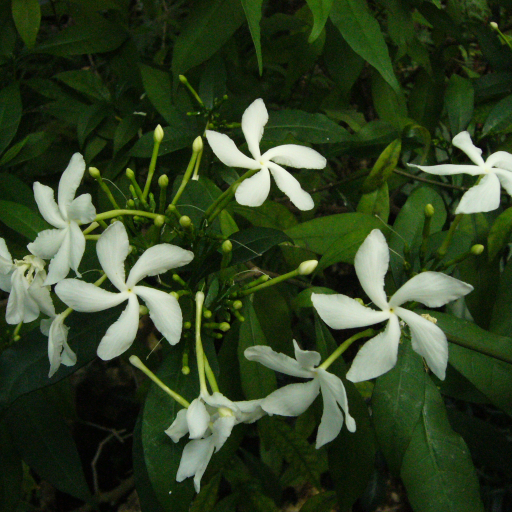
Often dubbed the "Flower of Love" or the "Sweet Love" plant in Southeast Asia, Tabernaemontana corymbosa is a lush, tropical evergreen that transforms any space into a fragrant sanctuary. With its pure white blooms and deep emerald foliage, it looks like a collection of tiny, spinning pinwheels frozen in time. It is a favorite for those looking to add a touch of "moonlight garden" elegance to their landscape.
🔍 How to Identify
- 🌸 The Pinwheel Bloom: Pure white, five-petaled flowers that twist slightly at the base, resembling a miniature windmill or a star.
- 🍃 Lush Foliage: Large, elliptical leaves with a shiny, waxy finish and prominent "ribbed" veins that give the plant a rich, textured appearance.
- 🪵 Growth Habit: Usually grows as a dense, multi-stemmed shrub or a small tree. When a stem is broken, it will leak a thick, milky white sap.
🏡 In Your Garden
- 💧 Humidity Lover: This plant thrives in "steamy" environments. If you are growing it indoors or in a dry climate, frequent misting or a pebble tray is essential to prevent the leaves from turning brown at the edges.
- ✂️ Pruning for Shape: It has a tendency to get "leggy" or sparse if left to its own devices. Regular "pinching" of the tips during the growing season encourages a much bushier, more flower-filled silhouette.
- ☀️ Light Nuance: While it loves the sun, intense, direct midday heat can scorch the glossy leaves. It performs best in "dappled" sunlight, mimicking its natural life under a tropical forest canopy.
⚠️ Safety & Toxicity
- 🚫 Toxic Status: Generally considered toxic to humans and animals if ingested.
- 🐾 Pet & Skin Warning: The milky latex (sap) contains alkaloids that can cause skin irritation or rashes upon contact. If pets chew on the leaves, it may lead to nausea, drooling, or digestive upset. Always wear gloves when pruning.
✨ Fun Fact
The genus name Tabernaemontana is quite a mouthful! It was named to honor the 16th-century German botanist Jacobus Theodorus, who Latinized his name to "Tabernaemontanus"—which literally translates to "Tavern in the Mountains."

Detailed Care Instructions
To grow a Tabernaemontana Corymbosa plant, also known as the coffee gardenia, follow these steps:
- Obtaining seeds or cuttings: You can obtain Tabernaemontana Corymbosa seeds from a reliable seed supplier or collect them from mature plants. Alternatively, you can take stem cuttings from a healthy, mature plant to propagate new plants.
- Soil preparation: The coffee gardenia prefers well-draining soil. Prepare a potting mix using equal parts of sand, peat moss, and perlite or a good quality potting soil. Ensure the soil pH is slightly acidic, around 6 to 6.5.
- Planting the seeds or cuttings: If using seeds, soak them in water for 24 hours before planting to increase germination rates. Sow the seeds in the potting mix by making shallow holes and lightly covering them. If using cuttings, dip the cut end in rooting hormone and plant it in moist potting mix until it develops roots.
- Germination and growth: Place the pots in a warm location with indirect sunlight. The seeds should germinate within 2-4 weeks, while the cuttings may take 4-8 weeks to root. Keep the soil consistently moist but not waterlogged. Mist the plants regularly to provide humidity.
- Transplanting: Once the plants have grown to a suitable size (around 6-8 inches), you can transplant them into larger containers or outside in a sunny spot if the climate permits. Maintain a spacing of about 2-3 feet between plants.
- Care and maintenance: The Tabernaemontana Corymbosa plant prefers bright, indirect sunlight. Water the plant when the top inch of soil feels dry. Ensure good drainage to prevent waterlogging. Fertilize every 2-4 weeks during the growing season with a balanced, soluble plant food.
- Pruning: To maintain a desirable shape and size, trim back any overgrown or leggy branches. Regular pruning will also encourage bushier growth.
- Pest and disease control: Monitor your plants for common pests such as aphids, mealybugs, and spider mites. If detected, treat the infestation with insecticidal soap or neem oil. Inspect the leaves regularly for signs of disease like leaf spot or powdery mildew and take appropriate measures to prevent further spread.
By following these steps and providing the necessary care, your Tabernaemontana Corymbosa plant should thrive and grow into a beautiful specimen.
- Tabernaemontana Corymbosa plant is a tropical plant that requires a consistent and adequate water supply to thrive.
- The watering schedule for this plant may vary depending on factors such as climate, season, and indoor/outdoor placement. However, a general rule of thumb is to keep the soil evenly moist but not waterlogged.
- Before watering, it is important to check the moisture level of the soil. Stick your finger about an inch deep into the soil; if it feels dry, it is time to water the plant.
- Use room temperature or lukewarm water to avoid shocking the plant's root system. Cold water can negatively affect the plant's overall health.
- Slowly pour the water onto the soil around the base of the plant. Ensure that water is reaching the roots and not just running off the surface. Watering from the bottom by placing the pot in a saucer of water for a few minutes can also be effective.
- Avoid overwatering the plant, as it can lead to root rot and other diseases. Always allow the topsoil to dry out slightly before watering again.
- Pay attention to the plant's leaves for signs of over or underwatering. If the leaves are turning yellow or drooping excessively, it may indicate an issue with the watering routine.
- During the winter months or if the plant is placed in an air-conditioned environment, watering frequency may need to be reduced, as the plant's water requirements are reduced during periods of dormancy.
- Additionally, humidity levels can affect the water needs of Tabernaemontana Corymbosa. If the environment is dry, consider misting the plant occasionally to increase humidity around its foliage.
- Lastly, it is important to provide proper drainage for the plant to prevent water from accumulating at the roots. Ensure that the pot has drainage holes and use a well-draining potting mix to promote healthy root growth.
To fertilize Tabernaemontana Corymbosa, also known as [common name], follow these instructions:
- Choose a balanced, water-soluble fertilizer with equal amounts of nitrogen (N), phosphorus (P), and potassium (K), such as 10-10-10 or a similar ratio.
- Dilute the fertilizer according to the manufacturer's instructions. Usually, a dilution ratio of 1 tablespoon per gallon of water is recommended, but check the product label for specific instructions.
- Water the plant thoroughly a day before applying fertilizer to ensure the soil is moist and ready for absorption.
- Use the prepared fertilizer solution to water the plant's soil. Pour the solution slowly and evenly around the base of the plant, avoiding direct contact with the foliage.
- If the plant is potted, ensure that excess fertilizer solution drains out completely. Empty the saucer or tray below the pot afterward to prevent the plant from sitting in standing water.
- Repeat the fertilization process every two to four weeks during the growing season, typically from spring to fall. However, always check the specific fertilizer's instructions for recommended frequency.
- During the dormant period in winter, reduce or halt fertilization as the plant's growth slows down. Resume regular fertilization when the plant starts showing signs of new growth.
- Monitor the plant's response and adjust fertilization frequency or strength if necessary. Avoid overfeeding, as excessive fertilizer can damage the plant's roots and hinder its growth.
- Regularly water and maintain proper moisture levels in the soil to ensure efficient nutrient absorption and overall plant health.
- Additionally, consider supplementing with organic matter, such as compost or well-rotted manure, to enrich the soil and provide slow-release nutrients over time. Apply these organic amendments around the base of the plant, avoiding direct contact with the stem.
Remember to perform regular soil testing to determine if any specific nutrient deficiencies or imbalances need to be addressed. Adjust the fertilizer formulation or consult with a horticulturist or gardening expert if required.
Tabernaemontana Corymbosa, commonly known as [common names], is a tropical plant that requires a suitable soil mix to thrive. The ideal soil for this plant should have specific characteristics to support its growth and overall health.
Firstly, Tabernaemontana Corymbosa prefers well-draining soil to prevent waterlogging and promote healthy root development. This means using a soil mix that allows excess water to drain away, preventing the roots from sitting in damp conditions for too long. A mix with good drainage can be achieved by combining organic matter, such as peat moss or compost, with a coarse medium like perlite or sand.
Secondly, the soil for Tabernaemontana Corymbosa should be slightly acidic to neutral in pH. Aim for a range between 5.5 to 7.0 on the pH scale. This acidity level ensures the plant can effectively absorb nutrients from the soil and prevents nutrient deficiencies or toxicity. You can measure the pH of soil using a testing kit, and if needed, adjust it by adding organic matter or soil amendments like sulfur or lime.
Additionally, this plant benefits from a soil mix that retains some moisture while allowing excess water to drain away. A slightly loamy texture is desirable, meaning the soil has a balanced mix of sand, silt, and clay. Loamy soil retains sufficient moisture for the plant's needs without becoming waterlogged.
Lastly, it is crucial to choose a well-aerated soil mix for Tabernaemontana Corymbosa. The roots need oxygen to respire and function properly. Incorporating materials like perlite or vermiculite into the soil can increase its porosity, enhancing oxygen circulation to the roots.
By providing a well-draining, slightly acidic to neutral, slightly loamy, and well-aerated soil mix, you can create an optimal growing environment for Tabernaemontana Corymbosa. It is important to regularly monitor the plant's response to the soil conditions and make any necessary adjustments to ensure its health and vitality.
Tabernaemontana Corymbosa is a perennial plant that can be propagated through various methods such as seeds, cuttings, and layering. Here is a detailed guide on how to propagate Tabernaemontana Corymbosa:
- Seeds:
- Collect ripe fruits from a mature Tabernaemontana Corymbosa plant. The fruits will appear green initially and turn yellowish or orange when ripe.
- Extract the seeds from the fruits by cutting them open.
- Clean the seeds by removing any flesh or pulp from the surface.
- Soak the seeds in warm water for 24 hours to soften the seed coat, which will enhance germination.
- Fill a seed tray or small pots with a well-draining seed-starting mix.
- Place the seeds on top of the soil and lightly press them in.
- Mist the soil lightly with water to moisten it without making it soggy.
- Cover the tray or pots with a clear plastic bag or propagate cover to create a humid environment.
- Place the tray or pots in a warm location receiving bright, indirect sunlight.
- Maintain the moisture level in the soil by misting it regularly.
- Germination typically takes around 3-4 weeks. Once the seedlings have developed a few leaves, they can be transplanted into larger pots or containers.
- Collect ripe fruits from a mature Tabernaemontana Corymbosa plant. The fruits will appear green initially and turn yellowish or orange when ripe.
- Cuttings:
- Select a healthy and mature Tabernaemontana Corymbosa plant to take cuttings from.
- Use a clean and sharp pair of garden shears or scissors to take a 4-6 inch cutting from the tip of a non-flowering stem.
- Remove any lower leaves from the cutting, leaving only a few sets of leaves at the top.
- Dip the cut end of the stem in a rooting hormone powder to promote root development.
- Fill a pot or container with a well-draining potting mix.
- Make a small hole in the soil using a pencil or finger.
- Insert the cutting into the hole, ensuring that at least half of the stem is buried in the soil.
- Firmly press the soil around the cutting to provide stability.
- Mist the cutting with water and cover it with a clear plastic bag or propagating dome to retain moisture.
- Place the pot or container in a warm and bright location, avoiding direct sunlight.
- Check the moisture level regularly and mist the cutting as needed to keep the soil damp but not waterlogged.
- After a few weeks, roots will start to develop. You can gently tug on the cutting to check for resistance, indicating that roots have formed.
- Once the cutting has established roots, it can be transplanted into a larger pot or directly into the garden.
- Select a healthy and mature Tabernaemontana Corymbosa plant to take cuttings from.
- Layering:
- Identify a low-growing branch on a mature Tabernaemontana Corymbosa plant that is flexible enough to be bent to the ground.
- Remove any leaves from a section of the branch approximately 6-8 inches long.
- Dig a shallow hole in the soil next to the parent plant where the branch can be buried.
- Gently bend the selected branch down into the hole and cover it with soil, leaving the tip above the ground.
- Use stakes or rocks to hold the branch in place if necessary.
- Ensure that the buried part of the branch is in contact with the soil.
- Water the layered branch thoroughly and keep the soil consistently moist.
- Once roots have formed, which may take several weeks or months, the rooted branch can be severed from the parent plant and transplanted into a separate pot or desired location in the garden.
Remember to provide proper care and attention to the propagated Tabernaemontana Corymbosa plants by providing adequate sunlight, water, and well-draining soil to promote their healthy growth.
- Identify a low-growing branch on a mature Tabernaemontana Corymbosa plant that is flexible enough to be bent to the ground.








