Plant Overview
Often hailed as the "Crown Jewel" of the succulent world, Tacitus bellus (also known as Graptopetalum bellum) is a showstopper native to the rugged mountains of Northern Mexico. While many succulents are prized for their leaves, this species is famous for its disproportionately large, neon-pink flowers that look almost too vibrant to be real. It remained a secret of the wild until its discovery in the 1970s, and it has since become a "must-have" for collectors who want a desert plant with a tropical flair.
🔍 How to Identify
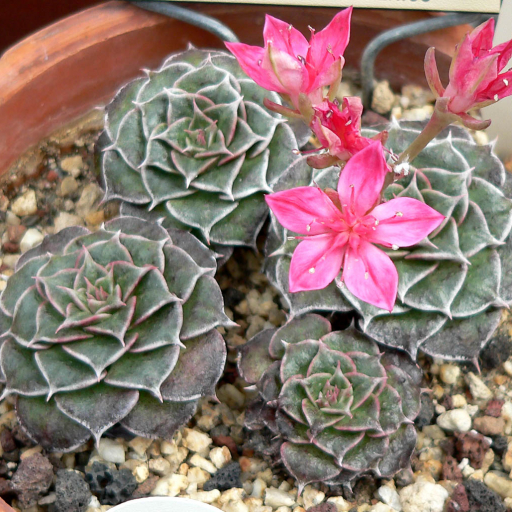
- 🌸 The Bloom: Star-shaped, five-petaled flowers in a shocking shade of magenta or deep rose, featuring tiny white anthers that look like glowing sparks in the center.
- 📐 Geometric Rosettes: Flat, low-growing rosettes of fleshy, triangular leaves that overlap in a tight, symmetrical pattern, rarely growing more than 3 inches tall.
- 🎨 Dusty Foliage: The leaves are a muted, matte grey-green or bronze-purple, providing a subtle, earthy contrast to the brilliant neon flowers.
🏡 In Your Garden
- ☀️ Light for Color: To see those famous flowers, this plant needs very bright, indirect light. While it can handle some direct morning sun, the harsh afternoon heat may scorch its delicate, matte leaves.
- 💧 Sensitive Roots: It has a more delicate root system than many of its "tough" succulent cousins. It is highly susceptible to root rot, so it requires exceptionally gritty soil and a pot with excellent drainage.
- 🌡️ The Winter Rest: For a spectacular spring display, give the plant a "cool" rest period in winter with very little water; this temperature drop signals to the plant that it’s time to prepare its flower buds.
⚠️ Safety & Toxicity
- ✅ Non-Toxic: Tacitus bellus is generally considered safe and non-toxic for both humans and household pets like cats and dogs.
- 🌿 Physical Fragility: While not chemically dangerous, the leaves are quite brittle and can snap off at the slightest touch. It is best placed on a high shelf or a stable surface where it won't be accidentally bumped.
✨ Fun Fact
Despite its widespread popularity today, this plant was completely unknown to the botanical world until 1972, when it was discovered growing on a nearly vertical cliff face in Chihuahua, Mexico, by explorer Alfred Lau.

Detailed Care Instructions
Growing a Tacitus bellus (commonly known as Graptopetalum bellum or "Beautiful Graptopetalum") can be a rewarding experience due to its stunning appearance and relatively low maintenance needs. Here are detailed steps to help you grow this succulent successfully:
Light
- Provide Bright Light: Tacitus bellus thrives in bright, indirect sunlight. It can also tolerate direct sunlight, especially morning sun. If grown indoors, place near a south or east-facing window. Outdoors, ensure it has some shade during the hottest part of the day to avoid sunburn.
Soil
- Well-Draining Soil: Use a well-draining cactus or succulent potting mix. You can also create your own by mixing regular potting soil with sand or perlite for increased drainage.
Watering
- Water Sparingly: This succulent is drought-tolerant and prefers to dry out completely between waterings. Water thoroughly but infrequently. Overwatering can lead to root rot. In summer, this might mean watering every 1-2 weeks, while in winter, water even less.
Temperature
- Moderate Temperatures: Tacitus bellus prefers temperatures between 60-80°F (15-27°C). It can tolerate occasional dips below freezing but should be protected from prolonged cold.
Humidity
- Low Humidity: These plants do well in low-humidity environments. High humidity can encourage fungal diseases.
Fertilizing
- Fertilize Sparingly: Feed the plant with a diluted cactus or succulent fertilizer during the growing season (spring and summer). Once a month is usually sufficient. Avoid fertilizing in the dormant period (fall and winter).
Potting
- Proper Pot: Use a pot with drainage holes to prevent water from accumulating at the bottom. A shallow pot is often adequate due to the plant’s shallow root system.
Repotting
- Repot When Necessary: If the plant outgrows its pot or the soil becomes compacted, repot in the spring. Choose a slightly larger pot and refresh the soil.
Propagation
- Propagate Easily: Tacitus bellus can be propagated by leaf cuttings, offsets, or seeds.
- Leaf Cuttings: Gently twist off a healthy leaf and let it callous over for a day or two. Place it on well-draining soil and water sparingly until new roots and rosettes form.
- Offsets: If the plant produces offsets (small rosettes), carefully remove them and replant in their own pots.
Pests and Problems
- Leaf Cuttings: Gently twist off a healthy leaf and let it callous over for a day or two. Place it on well-draining soil and water sparingly until new roots and rosettes form.
- Monitor for Pests: Keep an eye out for common pests like mealybugs and spider mites. Treat infestations promptly with insecticidal soap or neem oil.
- Avoid Overwatering: Root rot is a common issue caused by overwatering. Ensure the soil dries out between waterings and avoid leaving the plant in standing water.
By following these care guidelines, you can maintain a healthy and attractive Tacitus bellus that can be a delightful addition to your succulent collection.

Place in a window with dappled sun or a spot in the middle of a room. Or directly in a window facing west or east.

Watering a Tacitus Bellus plant requires careful attention due to its succulent nature, which means it stores water in its fleshy leaves. Here is a detailed guide on how to properly water this plant:
1. **Soil Conditions:** Ensure the soil is well-draining. A cactus or succulent mix is ideal, which usually contains components like perlite, sand, and coarse material to facilitate quick drainage and prevent water retention.
2. **Watering Frequency:**
- **Growing Season:** During the active growing season, which typically spans from spring to early fall, water the plant more frequently. This can be approximately once every one to two weeks, but always wait until the soil is completely dry before the next watering.
- **Dormant Period:** In the dormant period, which generally occurs in winter, drastically reduce the watering frequency. You might need to water just once a month or even less, depending on the indoor humidity and temperature.
3. **Watering Technique:**
- **Thorough Soak:** When you water, do it thoroughly. Water the soil until it drains out of the bottom of the pot. This ensures that all roots have access to moisture.
- **Drainage:** Always use pots with drainage holes to prevent water from pooling at the bottom, which can lead to root rot.
- **Avoid Overhead Watering:** Try to avoid splashing water on the leaves, especially in cooler climates, as this might lead to fungal problems.
4. **Signs of Improper Watering:**
- **Overwatering:** Signs include mushy, translucent leaves, or leaves that fall off easily. This condition may also lead to root rot.
- **Underwatering:** The plant will show signs of drought stress, such as wrinkled leaves that may appear thinner due to water loss. The plant will recover as long as it’s not excessively desiccated.
5. **Environmental Factors:** Consider the temperature, humidity, and light conditions of the environment, as these can affect the plant's water needs. Higher temperatures and increased sunlight may increase the rate of evaporation and transpiration, thus requiring more frequent watering.
By following these guidelines and adjusting based on the specific conditions of your environment, you can maintain the health and vitality of your Tacitus Bellus plant, ensuring it remains a vibrant and attractive part of your collection.
Sure, here are some fertilizing instructions for your Tacitus Bellus plant:
- Type of Fertilizer: Use a balanced, water-soluble fertilizer with an N-P-K ratio of 10-10-10 or 20-20-20. Alternatively, you can choose a fertilizer formulated specifically for cacti and succulents.
- Dilution: Dilute the fertilizer to half or quarter strength to avoid over-fertilizing, which can harm the plant.
- Frequency: Fertilize the plant during its active growing season, which is typically in the spring and summer. Apply the diluted fertilizer once a month during this period.
- Application Method: Water the plant thoroughly before applying the fertilizer to ensure the roots are moist. Then, apply the diluted fertilizer solution to the soil, avoiding contact with the leaves to prevent damage.
- Rest Period: Do not fertilize during the plant's dormant period in the fall and winter months, as it doesn't require additional nutrients when it's not actively growing.
- Observation: Monitor the plant for any signs of nutrient deficiency or over-fertilization, such as yellowing leaves or stunted growth, and adjust your fertilizing routine accordingly.
- Organic Option: If you prefer organic fertilizers, you can use a compost tea or a diluted liquid fish emulsion, but still, apply it at half strength and follow the same frequency guidelines.
By following these instructions, you should help your Tacitus Bellus thrive and maintain its health throughout the growing season.
Tacitus Bellus, a charming succulent, thrives best in well-draining soil that replicates its native arid environment. A succulent or cactus potting mix from a garden center works excellently. If you prefer to create your own mix, combine regular potting soil with inorganic components like perlite, coarse sand, or pumice in a ratio of about 1:1. This will ensure good aeration and prevent the roots from sitting in water, which can lead to rot. Adding a small amount of gritty material such as small gravel can further enhance drainage. Additionally, avoid using heavy clay soils or those that retain too much moisture.
It’s beneficial to use a pot with drainage holes to allow excess water to escape. Water the plant thoroughly when the soil is completely dry, rather than keeping it consistently moist. Lastly, maintaining slightly acidic to neutral pH conditions in the soil, typically around 6.0 to 7.0, helps in promoting optimal growth.
Propagating a Tacitus Bellus plant can be accomplished through various methods such as leaf cuttings, offsets, and seeds. Below are detailed steps for each method:
Leaf Cuttings:
- Select a Healthy Leaf: Choose a mature, healthy leaf from the plant. Ensure that it is free from any signs of disease or damage.
- Remove the Leaf: Gently twist the leaf from the stem using clean hands or sterilized scissors. Ensure the leaf comes off cleanly with a bit of stem tissue attached to it.
- Allow to Callus: Place the leaf in a dry, shaded area for a few days to allow the cut end to callus over. This helps to prevent rot when it's planted.
- Prepare the Soil: Use a well-draining mix, such as a cactus or succulent mix.
- Plant the Leaf: Place the callused end of the leaf into the soil. It doesn't need to be buried deeply; just place it on top or slightly pressed into the soil.
- Water Sparingly: Mist the soil lightly every few days to keep it slightly moist but not waterlogged. Overwatering can cause the leaf to rot.
- Wait for Rooting: Within a few weeks to a few months, roots will begin to form, and eventually, new plantlets will grow from the base of the leaf.
Offsets (Pups):
- Locate Offsets: Check around the base of the plant for small offsets or "pups." These are smaller plants that are growing from the main one.
- Carefully Remove Offsets: Gently separate the offsets from the main plant, ensuring they have some roots attached. If necessary, use a clean, sharp knife to cut them away.
- Allow to Callus: Just like leaf cuttings, let the offsets sit in a shaded area for a day or two to allow any cuts to callus over.
- Plant Offsets: Prepare a pot with well-draining soil. Place the callused offset into the soil. Ensure it is stable and upright.
- Water Sparingly: Water the soil lightly initially, then only water when the soil is completely dry. Keeping the soil too wet can lead to rot.
- Observe Growth: The offsets will establish themselves in the new soil and start growing independently.
Seeds:
- Collect Seeds: If the plant flowers and sets seeds, collect them once they have matured. Seeds are typically very tiny.
- Prepare Soil: Use a fine, well-draining seed-starting mix.
- Plant Seeds: Scatter the seeds over the surface of the soil. Do not bury them too deep; just press them gently into the soil.
- Water Lightly: Moisten the soil with a gentle spray or mist. Keep the soil consistently moist but not waterlogged.
- Provide Light: Place the seed tray in a well-lit area, but not in direct sunlight, which can be too intense for seedlings.
- Germination: Seeds should germinate within a few weeks. Once seedlings are large enough to handle, they can be transplanted into individual pots.
General Tips:
- Temperature and Light: Tacitus Bellus prefers bright, indirect light and temperatures between 65-75°F (18-24°C).
- Avoid Overwatering: It is crucial to avoid waterlogged soil as this can lead to root rot. Ensure the soil is thoroughly dry before watering again.
- Avoid Frost: Being a succulent, it is sensitive to frost and should be protected from extreme cold.
By following these propagation steps, you can successfully grow new Tacitus Bellus plants and expand your collection.
Common pests of the chihuahua flower include Scale insect, mealybugs, thrips. Make a habit of checking your chihuahua flower frequently for pests so that any infestations can be caught and managed early.








