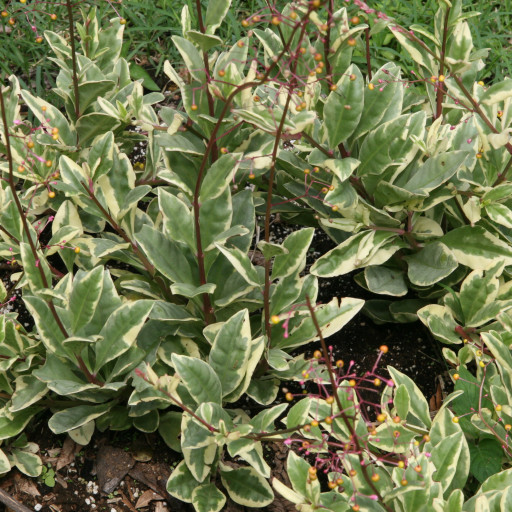
Plant Overview
Commonly known as the Jewels of Opar or Fameflower, this delightful succulent is a hidden treasure for any garden. Its name evokes the mystery of the fictional lost city in the Tarzan novels, likely because of its shimmering, ruby-like seed pods that dangle like precious gems. Native to the tropical Americas, it’s a hardy survivor that brings a touch of airy elegance to sunny borders.
🔍 How to Identify
- 🍃 The Foliage: Look for fleshy, bright green, teardrop-shaped leaves. They are thick and succulent-like, growing in a lush rosette pattern near the base.
- 🌸 The Blooms: High above the leaves, thin and wiry stems produce a "cloud" of tiny, star-shaped pink or lavender flowers that usually open in the late afternoon.
- 📿 The "Jewels": After flowering, the plant develops its most famous feature: small, spherical seed pods that transition from gold to a deep, glistening ruby red.
🏡 In Your Garden
- 🌱 Root Resilience: This plant develops a thick, tuberous taproot. This makes it incredibly drought-tolerant once established, but it also means it hates being moved—pick a permanent spot where it can stretch out.
- 🌬️ The Wanderer: Be aware that the "jewels" are full of tiny seeds. It is a prolific self-seeder and will happily pop up in sidewalk cracks or neighboring pots, making it perfect for a "low-effort" cottage garden style.
⚠️ Safety & Toxicity
- 🟢 Status: Generally considered non-toxic and even edible in many cultures.
- 🥗 Details: In parts of Asia and Brazil, the leaves are cooked and eaten like spinach. However, like spinach, it contains oxalic acid. While safe for most humans in moderation, it should be kept away from pets with known kidney issues, as high amounts of oxalates can be irritating.
✨ Fun Fact
The "Opar" in its name refers to the ancient city of gold and jewels in Edgar Rice Burroughs’ Tarzan of the Apes. The plant’s glowing red seed pods were thought to look exactly like the rubies described in the legendary treasure vaults!

Detailed Care Instructions
| Lighting | Full Sun |
| Hardiness Zones | 7A - 11 |
To grow Talinum paniculatum, also known as Jewels of Opar or Pink Baby's Breath, follow these steps:
- Choose a suitable location: Talinum paniculatum prefers full sun to partial shade. Select a spot that receives at least 4-6 hours of direct sunlight per day.
- Prepare the soil: Ensure the soil is well-draining and rich in organic matter. If the soil is heavy clay or sandy, consider amending it with compost or well-rotted manure to improve its fertility and drainage.
- Start from seeds: Talinum paniculatum plants can be propagated from seeds. Sow the seeds directly into the prepared soil after the last frost date in your area. Lightly cover the seeds with a thin layer of soil or compost.
- Watering: Keep the soil consistently moist but avoid overwatering, as Talinum paniculatum prefers slightly drier conditions. Water deeply when the top inch of soil feels dry, and allow excess water to drain away.
- Fertilization: Supplement the soil with a balanced, slow-release fertilizer every 6-8 weeks during the growing season to promote healthy growth. Follow the manufacturer's instructions for application rates.
- Pruning: Talinum paniculatum plants may become leggy or floppy. To maintain a more compact form and encourage bushier growth, pinch off the tips of the stems periodically. This will also promote the production of more blooms.
- Mulching: Apply a layer of organic mulch around the base of the plants to help retain moisture, suppress weed growth, and insulate the roots from temperature extremes.
- Pests and diseases: Monitor the plant regularly for any signs of pests, such as aphids or spider mites, and promptly treat infestations with insecticidal soap or an organic pesticide if necessary. Talinum paniculatum is generally resistant to most diseases.
- Overwintering: In areas with mild winters, Talinum paniculatum may survive as a perennial. If you live in a colder region, it is advisable to grow it as an annual or take cuttings to overwinter indoors.
- Propagation: Talinum paniculatum plants can also be propagated vegetatively by taking stem cuttings. Simply cut a 4-6 inch section of a healthy stem, remove the lower leaves, and plant it in a well-draining potting mix. Keep the soil consistently moist until the cutting establishes roots.

Place in a bright room that is sun drenched almost all day. Or directly in a south-facing window.

To provide adequate hydration to this plant, gently pour a moderate amount of water at the base of the stem. Avoid overwatering as it can lead to root rot and other issues. It is important to check the soil moisture level before watering and only water when the top inch of soil is dry. Additionally, it is recommended to water in the morning or evening when the sun is not as intense to avoid evaporative water loss and ensure the water is absorbed by the plant's roots.
To fertilize this plant, first ensure that the soil is damp but not waterlogged. Using a balanced fertilizer, apply a small amount to the soil around the base of the plant. Be careful not to get any fertilizer on the leaves or stems. Water the plant thoroughly after fertilizing. Repeat this process every 2-4 weeks during the growing season. As the plant slows its growth during the winter months, reduce or stop fertilizing until the following spring.
Talinum paniculatum is a plant that thrives in well-draining soil that is rich in organic matter. It should be grown in soil that has a neutral to slightly acidic pH level. The soil should be light and airy, with good water retention capacity. A soil mix that contains a combination of sand, perlite, and peat moss is ideal for this plant. Additionally, adding some compost or other organic matter to the soil mix will help to provide the necessary nutrients for the plant to grow and thrive. It is important to avoid using heavy soils that can become waterlogged, as this can lead to root rot and other issues. When planting Talinum paniculatum, it is also important to ensure that the soil is properly prepared, and the plant should be placed in a location that receives ample sunlight and allows for good air circulation.
There are two main ways to propagate this plant: by seed or by stem cuttings.
To propagate by seed, collect the ripe seeds from the plant and sow them in a seedling tray or pot filled with well-draining soil. Cover the seeds with a light layer of soil, keep them moist, and place them in a warm, bright area. Germination usually occurs within 1-2 weeks.
To propagate by stem cuttings, select a healthy stem and cut it just below a node (where a leaf comes out). Remove the bottom leaves and dip the cut end in rooting hormone powder (optional). Plant the cutting in a well-draining soil mix and keep it moist. Place the cutting in a warm, bright area, but out of direct sunlight. Roots should start to form within a few weeks.
Both propagation methods require nurturing and care, but with proper attention, Talinum Paniculatum can be propagated successfully.
Common pests of the jewels of opar include Spider mites, aphids. Make a habit of checking your jewels of opar frequently for pests so that any infestations can be caught and managed early.








