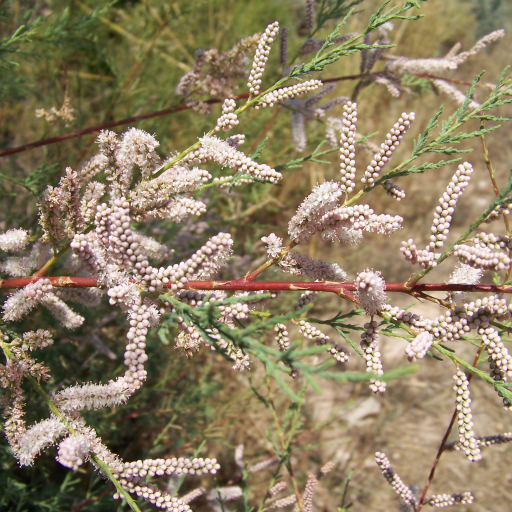
Plant Overview
Known as the "African Tamarisk," this hardy shrub is a coastal legend. Native to the sandy shores of the Mediterranean and North Africa, it is often seen dancing in the sea breeze where other plants struggle to survive. It possesses a delicate, misty appearance that belies its incredible toughness against salt, heat, and gale-force winds.
🔍 How to Identify
- 🌿 The Foliage: Tiny, emerald-green scales that hug the branches, looking more like soft, feathery needles than traditional flat leaves.
- 🌸 The Bloom: In spring, it produces long, slender "bottlebrush" spikes (racemes) crowded with hundreds of miniature pale-pink or white flowers.
- 🪵 The Structure: Dark, purplish-brown bark that starts smooth but becomes deeply fissured and beautifully gnarled as the plant matures.
🏡 In Your Garden
- 🏖️ Salt Specialist: This plant is a "halophyte," meaning it thrives in salty conditions. It has a unique biological trick: it absorbs salt from the soil and excretes it through specialized glands on its leaves.
- 🌬️ The Coastal Shield: Because it handles salt spray and high winds with ease, it is the ultimate choice for a "living windbreak" or privacy screen for beach-side homes where the soil is sandy and poor.
- 💧 Water Management: While it can survive extreme drought once established, it has deep taproots that seek out groundwater aggressively. In some regions, it is considered "thirsty," so it’s best planted away from delicate, water-sensitive flower beds.
⚠️ Safety & Toxicity
- ✅ Low Risk: The African Tamarisk is generally considered non-toxic to humans and common household pets like cats and dogs.
- 🧤 Salty Residue: The salt that the plant "sweats" out onto its leaves can occasionally cause mild skin irritation for those with very sensitive skin. It is always a good idea to wear gloves when pruning or handling the foliage for long periods.
✨ Fun Fact
The African Tamarisk is so efficient at processing minerals that on humid mornings, it can appear to be "crying." It drips salt-laden water from its leaves, creating a miniature salty rainstorm beneath its canopy that prevents competing plants from growing nearby!

Detailed Care Instructions
| Humidity | Normal |
| Lighting | Full Sun |
| Difficulty | Easy |
| Hardiness Zones | 7 - 10 |
To grow Tamarix Africana plants, you can follow the below steps:
- Obtain seeds or young plants: You can acquire Tamarix Africana seeds or young plants from a reputable nursery or seed supplier.
- Choose the right location: Tamarix Africana plants prefer full sun and well-drained soil. Ensure that the planting location receives at least 6-8 hours of direct sunlight daily.
- Prepare the soil: Tamarix Africana plants can tolerate a wide range of soil types, including sandy or loamy soils. However, it's best to amend the soil with organic matter like compost or well-rotted manure to improve its fertility and drainage.
- Plant the seeds or young plants: If using seeds, sow them in the prepared soil according to the package instructions. If using young plants, dig a hole slightly larger than the root ball and place the plant in it, ensuring that the soil level matches the surrounding ground.
- Watering: After planting, water the Tamarix Africana plant thoroughly to settle the soil and establish good root growth. Subsequently, water the plant regularly, ensuring that the soil remains slightly moist but not waterlogged. Increase the frequency of watering during hot, dry spells.
- Mulching: Apply a layer of organic mulch, such as wood chips or straw, around the base of the plant to conserve moisture, suppress weed growth, and protect the roots from extreme temperatures.
- Pruning: Tamarix Africana plants require minimal pruning. However, if you need to shape or remove dead or diseased branches, do so during late winter or early spring before new growth appears.
- Fertilization: Tamarix Africana plants generally do not require regular fertilization. However, if the plant appears stunted or shows signs of nutrient deficiency, you can apply a balanced fertilizer according to the product instructions.
- Pest and disease control: Tamarix Africana plants are relatively resistant to pests and diseases. However, occasional pests like aphids or scale insects may be controlled using insecticidal soap or horticultural oils. Regular inspection of the plant can help identify any issues early.
- Provide support if needed: Tamarix Africana plants typically have a shrubby growth habit and may not require support. However, if the plant seems weak or cannot withstand strong winds, you can provide stakes or a trellis for support.
By following these steps, you can successfully grow Tamarix Africana plants and enjoy their beautiful foliage and delicate flowers.

Place in a window with dappled sun or a spot in the middle of a room. Or directly in a window facing west or east.

To water this plant, it is important to consider the specific needs of its environment. The soil around the plant should be moist, but not waterlogged, as excessive moisture can lead to root rot. It is recommended to water deeply and infrequently, rather than shallowly and frequently, to encourage deep root growth and keep the plant from becoming too dependent on frequent watering. The water should be applied to the base of the plant rather than the leaves, and it is important to avoid getting water on any open wounds or cuts on the plant as this could lead to infection.
For best results with this plant, fertilizing should be done in early spring using a slow-release balanced fertilizer. Follow the instructions on the fertilizer package regarding the amount to use per plant or per area. In addition to fertilizer, the plant may benefit from a top dressing of organic matter such as compost or well-rotted manure. Water thoroughly after applying fertilizer to ensure it is absorbed into the soil. Avoid fertilizing in the fall or winter, as this may encourage new growth that could be damaged by cold temperatures.
The ideal soil for planting Tamarix Africana plants should have good drainage to prevent waterlogging and promote healthy root growth. It should be rich in organic matter and nutrients to support the plant's growth and development. The pH level of the soil should be mildly acidic to slightly alkaline, between 6.0 to 8.5.
The soil should be well-aerated and loose, with enough space between the soil particles to allow for water and air movement. Sandy or loamy soil types are ideal for Tamarix Africana plants, as they provide good drainage and moisture retention properties.
Before planting, it is recommended to amend the soil with organic matter, such as compost or well-rotted manure, to improve fertility and soil structure. Adding a slow-release fertilizer will also help to provide the plant with necessary nutrients over an extended period.
Proper soil preparation and maintenance are essential for ensuring the health and longevity of Tamarix Africana plants. Regular watering, pruning, and fertilization will help the plant thrive in the chosen soil type.
To propagate this plant, you will need to collect seeds from mature plants or take softwood cuttings from young plants. For seed propagation, collect seeds from the plant when they are ripe and sow them directly in the ground or in pots filled with a well-draining soil mix. For softwood cuttings, take 3-6 inch (7-15 cm) cuttings from the tip growth of the plant in early summer, remove the lower leaves, dip the cut end in rooting hormone, and plant in well-draining soil or rooting medium. Keep the soil moist but not waterlogged and provide bright, indirect light until the cuttings start to root and new growth appears. Once established, transplant the new plants to their permanent location in well-draining soil and full sun to part shade.








