Plant Overview
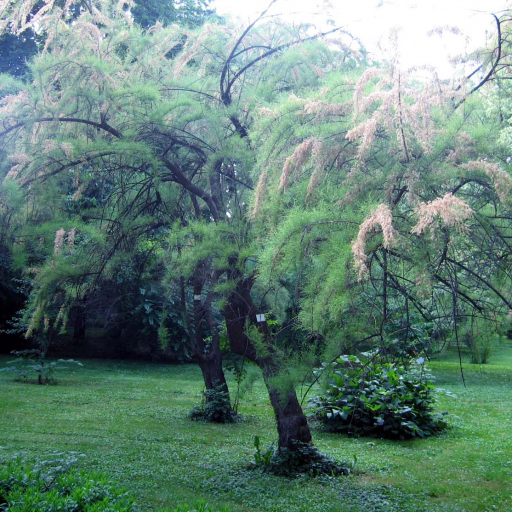
Often called the Four-stamen Tamarisk, this elegant shrub looks like a soft, pink cloud drifted down into the garden. Native to the Mediterranean and Eastern Europe, it is famous for its ethereal, feathery appearance and its incredible resilience. It is particularly beloved by coastal gardeners for its ability to dance in the wind where more brittle plants would snap.
🔍 How to Identify
- 🌸 Blossoms: Tiny, four-petaled pink flowers densely packed into cylindrical spikes (racemes) that cover the arching branches in late spring.
- 🌿 Foliage: Minute, scale-like green leaves that resemble cypress or juniper, giving the plant a soft, wispy, "smoky" texture.
- 🌑 Stems: Striking dark brown or almost purplish-black bark that provides a dramatic architectural skeleton during the winter months.
🏡 In Your Garden
- 🌊 Coastal Warrior: This plant is a specialist in salt tolerance. It features unique glands that allow it to "exhale" excess salt, making it one of the few decorative shrubs that can thrive directly facing the ocean spray.
- ✂️ Pruning Nuance: Because this species flowers on "old wood" (the growth from the previous year), you should never prune it in late winter. If you do, you'll accidentally cut off all the flower buds! Always wait until immediately after the flowers fade in early summer to shape it.
- ☀️ Sun Seeker: It has a deep taproot that helps it survive droughts, but it demands full sun. In the shade, the branches become "leggy" and the iconic pink display will be sparse.
⚠️ Safety & Toxicity
- ✅ Status: Generally non-toxic to humans, cats, and dogs.
- 🧂 Salt Accumulation: While not poisonous, the plant concentrates salt in its leaves. If a pet or child were to nibble on it, the taste would be unpleasantly salty, which usually acts as a natural deterrent.
- 🧤 Skin Care: The fine, needle-like foliage is soft, but the woody stems can be slightly abrasive; wearing gloves during pruning is recommended to avoid minor scratches.
✨ Fun Fact
The Tamarisk is a "halophyte"—a salt-loving plant. It actually collects salt from the soil and "sweats" it out through its leaves. On humid mornings, you can sometimes see tiny droplets of salty water dripping from the tips of the branches!

Detailed Care Instructions
| Humidity | Dry |
| Lighting | Full Sun |
| Difficulty | Easy |
| Hardiness Zones | 5 - 9 |
To grow Tamarix tetrandra, also known as salt cedar or athel tree, you can follow these steps:
- Soil and Sunlight: Tamarix tetrandra thrives in well-draining soil, so ensure the soil is loose and sandy. It prefers full sun exposure, so choose a sunny spot in your garden.
- Planting: Dig a hole twice the size of the plant's root ball and place the plant in the hole. Make sure the top of the root ball is level with the ground. Fill the hole with soil, firming it gently around the roots.
- Watering: Tamarix tetrandra is drought-tolerant but will benefit from regular watering during the first growing season. Water the plant deeply once a week, allowing the soil to dry out between waterings.
- Mulching: Apply a layer of organic mulch around the base of the plant to conserve moisture, suppress weeds, and moderate soil temperature. Avoid piling mulch against the trunk of the plant.
- Pruning: Tamarix tetrandra requires minimal pruning. However, you can trim back any dead or damaged branches in early spring to promote a healthy growth pattern.
- Fertilizing: Fertilization is generally not required for Tamarix tetrandra. However, if your soil is poor, you can apply a balanced slow-release fertilizer in early spring.
- Winter care: Tamarix tetrandra is hardy in USDA zones 5-10. In colder regions, protect the base of the plant with a layer of mulch or leaves during winter to prevent frost damage.
- Pests and diseases: Tamarix tetrandra is relatively resistant to pests and diseases. However, it can occasionally be affected by aphids or powdery mildew. Monitor the plant regularly and treat any issues with appropriate insecticidal sprays or horticultural oils.
By following these steps, you can successfully grow Tamarix tetrandra in your garden or landscape.

Place in a window with dappled sun or a spot in the middle of a room. Or directly in a window facing west or east.

It is important to provide regular and consistent watering to this plant throughout the growing season. The soil should be kept moist but not overly saturated, as standing water can lead to root rot. When watering, it is best to use a slow and steady stream to allow the water to deeply penetrate the soil. It is also recommended to water early in the morning or later in the evening to prevent loss of moisture through evaporation. Additionally, during periods of drought, the plant may require more frequent watering to ensure its survival.
To fertilize this plant, use a balanced fertilizer with equal ratios of nitrogen, phosphorus, and potassium. Apply the fertilizer around the base of the plant and water thoroughly afterwards. Avoid over-fertilizing, as this can cause damage to the roots. It is recommended to fertilize in the spring or early summer, before new growth begins.
The Tamarix Tetrandra plant prefers a well-draining soil with moderate moisture retention. It thrives in soils that are slightly acidic to neutral and can tolerate soil with a slightly higher pH. The soil should be rich in organic matter and nutrients, but not too heavy or compacted. A sandy loam or loamy sand soil texture is ideal for this plant. It also requires good air circulation around the roots to prevent fungal diseases, so avoiding heavy, waterlogged soils is important. The plant is drought tolerant but does require regular watering during the establishment period. Overall, the ideal soil for Tamarix Tetrandra is well-draining, rich in nutrients, and with good air circulation around the roots.
Propagation of this plant can be achieved through various methods such as stem cuttings, seed germination, and root division. Stem cuttings should be taken from healthy, mature plants in the spring or early summer. Cuttings should be around 6-8 inches long, with at least one leaf node. Remove the bottom leaves and dip the cut end of the stem into rooting hormone before placing it in a well-draining and fertile soil. Cover the pot with a clear plastic bag to increase humidity and place it in bright, indirect light. Keep the soil moist and warm until roots develop.
Seeds can be harvested from mature plants in late summer or fall. Sow them in a well-draining soil mix, covering them lightly with soil. Keep soil moist and warm until germination. It may take several weeks for seedlings to emerge.
Root division can also be done in the spring or fall. Carefully dig up the plant and separate the roots into smaller sections with at least one stem. Replant each section in well-draining soil, water thoroughly, and keep in a shaded area until new growth appears.








