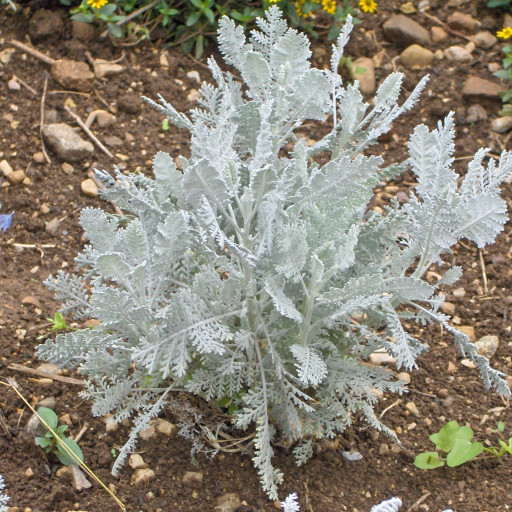
Plant Overview
Known as the Silver Lace Bush or the Canary Island Dusty Miller, this plant is a living piece of intricate filigree. Native to the volcanic cliffs of the Canary Islands, it is prized for its shimmering, ghost-white foliage that looks more like delicate Victorian lace than a hardy shrub. While it produces small, daisy-like white flowers, gardeners grow it almost exclusively for its luminous texture that seems to glow under the moonlight.
🔍 How to Identify
- 🌿 Lacy Foliage: The leaves are deeply divided and fern-like, creating a "shredded" or lacy appearance that is far more delicate than other "Dusty Miller" varieties.
- ☁️ Silvery Sheen: Every surface is covered in fine, dense white hairs (tomentum) that give the plant a metallic, silvery-white color and a soft, felt-like texture.
- 🌼 Button Flowers: In midsummer, it produces clusters of small, white, button-shaped composite flowers with creamy centers, though these are often secondary to the foliage.
🏡 In Your Garden
- ☀️ The Sun's Mirror: This plant thrives in full sun; the intense light actually helps it maintain its brilliant white color. In too much shade, the plant may turn a duller green as it loses its protective "fur."
- 🏜️ Drainage is Key: Reflecting its cliffside origins, it hates "wet feet." It requires gritty, well-draining soil and is exceptionally drought-tolerant once established, making it perfect for rock gardens or xeriscaping.
- ✂️ Shape and Form: It has a natural mounding habit but can become "leggy" or woody over time. A light trim after the flowering season helps maintain its compact, lacy puffball shape.
⚠️ Safety & Toxicity
- 🚫 Status: Generally considered toxic if ingested and a potential skin irritant.
- 🐾 Details: Like many members of the Asteraceae family, it contains sesquiterpene lactones. These can cause "compositae dermatitis" (itchy skin rashes) in sensitive individuals and can cause stomach upset or drooling in curious cats and dogs.
✨ Fun Fact
The Silver Lace Bush is actually quite rare in its native habitat on the island of Gran Canaria, where it clings to steep, rocky precipices. It has survived better in the global horticultural trade than in the wild!

Detailed Care Instructions
To grow Tanacetum Ptarmiciflorum (Silver Tansy) plants, you can follow these steps:
- Choose a suitable location: Select a spot in your garden that receives full sun to partial shade. Make sure the soil is well-drained, fertile, and rich in organic matter.
- Soil preparation: Prepare the soil by loosening it with a garden fork or tiller. Remove any weeds or debris and amend the soil with compost or well-rotted manure to enhance its fertility.
- Planting: Dig a hole that is slightly larger than the rootball of the plant. Place the plant in the hole, ensuring that the top of the rootball is level with or slightly above the soil surface. Backfill with soil and gently firm it around the plant.
- Watering: Water the newly planted Tanacetum Ptarmiciflorum thoroughly to settle the soil and encourage root establishment. Keep the soil consistently moist but not waterlogged. Water deeply when the top inch of soil feels dry.
- Mulching: Apply a layer of organic mulch around the plant to conserve moisture, suppress weed growth, and regulate soil temperature. Avoid mulching directly against the plant's stem to prevent rotting.
- Fertilizing: Tanacetum Ptarmiciflorum plants generally do not require much fertilization. If needed, you can feed them with a balanced, slow-release fertilizer once in early spring. Follow the instructions on the fertilizer packaging for application rates.
- Pruning: Regularly pinch back the growing tips of the plant to encourage bushier growth and prevent the plant from becoming leggy. You can also deadhead spent flowers to promote continuous blooming.
- Pests and diseases: Keep an eye out for common garden pests like aphids, snails, and slugs. If necessary, treat them with an organic insecticide or remove them by hand. Additionally, ensure good air circulation around the plant to prevent fungal diseases.
- Winter care: Tanacetum Ptarmiciflorum plants are generally hardy perennials. However, if you live in an area with extremely cold winters, you can protect the plant by applying a layer of mulch around its base or covering it with a frost blanket.
- Propagation: If you want to propagate more Tanacetum Ptarmiciflorum plants, you can do so by dividing mature clumps in early spring or late summer. Dig up the clump, separate out smaller sections with roots attached, and replant them in desired locations.
By following these steps, you can successfully grow Tanacetum Ptarmiciflorum plants and enjoy their beautiful silver foliage and vibrant yellow flowers.

Place in a bright room that is sun drenched almost all day. Or directly in a south-facing window.

To properly water this plant, first, identify its soil needs. It should be planted in well-draining soil that isn't too dense or compact. Then, allow the top layer of soil to dry out slightly between waterings. When watering, use a watering can or hose to gently water the soil until it is evenly moist but not soaked. Avoid getting water on the leaves or flowers as this can promote the growth of mold or mildew. Finally, ensure that any excess water is able to drain away from the plant to prevent the roots from becoming waterlogged.
To fertilize this plant, you should use a balanced, slow-release fertilizer in the early spring, before new growth appears. Apply the fertilizer evenly around the base of the plant and gently work it into the soil. Water the plant thoroughly after applying the fertilizer. Do not fertilize again during the growing season, as this can lead to excessive foliage and reduced flower production.
The ideal soil for the Tanacetum Ptarmiciflorum plant is a well-draining and nutrient-rich soil. It requires a slightly acidic to neutral pH range, ideally between 6.0 to 7.5. A soil mix that contains a good amount of organic matter, such as compost, leaf mold, or aged manure, can help improve soil fertility and moisture retention. Sandy or loamy soils can promote good drainage, which is crucial for the plant's root development, as waterlogged soils can lead to root rot. The soil should be aerated and loose to allow for the proper exchange of air and water. Adding perlite or coarse sand to the soil blend can also aid in improving drainage. Overall, the soil should be well-balanced and provide the right conditions for the plant to thrive.
To propagate this plant, you can start by collecting seeds from the flowers once they have dried out. You can then plant the seeds in a tray or pot filled with well-draining soil. Cover the seeds with a thin layer of soil and water lightly. Keep the soil consistently moist but not waterlogged, and place the tray or pot in a warm, sunny location.
Once the seedlings have a few true leaves, they can be transplanted into individual pots or directly into the garden. When transplanting, make sure to handle the seedlings gently and avoid damaging the delicate roots. Water the seedlings well after transplanting, and continue to keep the soil consistently moist.
Another way to propagate this plant is by taking stem cuttings. Select a healthy stem with several nodes and remove the leaves from the bottom half of the stem. Dip the cut end into rooting hormone and plant it in a pot filled with well-draining soil. Water lightly and place the pot in a warm, humid location, such as under a plastic bag or in a greenhouse. Once the cutting has rooted and begun to grow, it can be transplanted into a larger pot or directly into the garden.
Common pests of the tanacetum ptarmiciflorum include Spider mites, aphids. Make a habit of checking your tanacetum ptarmiciflorum frequently for pests so that any infestations can be caught and managed early.








