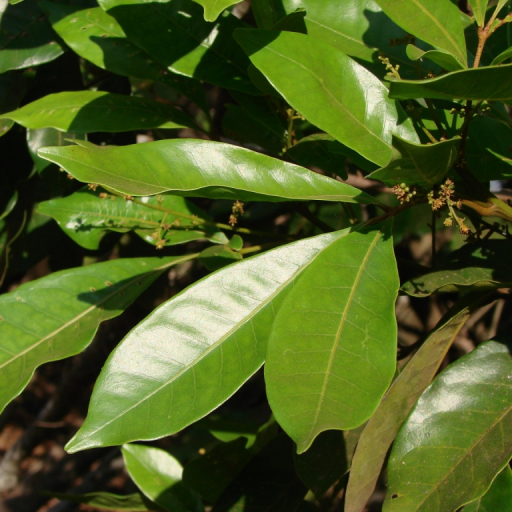
Plant Overview
Known as the Guianese Tapura, this unassuming small tree is a silent dweller of the deep Amazonian rainforest. While it may look like a standard tropical shrub, it hides a lethal secret within its tissues. It is one of the few plants in the world that naturally produces a potent metabolic poison, making it a "ghost of the forest" that most animals know to avoid.
🔍 How to Identify
- 🍃 The Leaf Trick: The most striking feature is how the flowers appear to grow directly out of the leaf stalk (petiole). This rare botanical trait makes it look as if the tiny blooms are "hitching a ride" on the foliage.
- 🌳 Growth Habit: It typically grows as a small tree or a sprawling shrub, reaching about 3 to 10 meters in height, blending perfectly into the shaded understory of lowland forests.
- ⚪ Cluster Flowers: The flowers are tiny, white or cream-colored, and gathered in tight, fuzzy clusters. They eventually give way to small, fleshy, yellowish-orange fruits.
🏡 In Your Garden
- 🌧️ Wild Roots: You won't find this plant in a typical nursery. It thrives in the extreme humidity and acidic, leaf-littered soils of the Guianas and the Amazon basin. It requires a constant "tropical sauna" environment to survive.
- 🌑 Shade Lover: Unlike many tropical plants that reach for the sun, Tapura guianensis is specialized for life in the shadows. It has evolved to photosynthesize efficiently in the dappled, low light of the forest floor where other plants might wither.
⚠️ Safety & Toxicity
- 💀 FATAL TOXICITY: This plant is extremely dangerous. It contains sodium fluoroacetate, a compound so toxic it is used globally as a high-strength pesticide (known as Compound 1080).
- 🚫 Keep Away: Ingestion of any part of this plant—leaves, fruit, or seeds—can be fatal to humans, livestock, and pets. It disrupts the body’s ability to produce energy at a cellular level. It should never be handled without gloves or grown in reach of children or animals.
✨ Fun Fact
- 🧪 Nature’s Chemist: The poison found in this plant is so effective that indigenous groups and early scientists noted that even a few fallen leaves in a small stagnant pond could be enough to affect the local micro-ecosystem. It is a true master of chemical self-defense!

Detailed Care Instructions
To grow Tapura Guianensis, also known as Maparajuba or Brazilian Plum, you can follow these steps:
- Climate and soil requirements: Tapura Guianensis is native to the tropical rainforests of South America, so it thrives in warm and humid conditions. It needs well-draining and fertile soil, preferably loamy or sandy soil.
- Germination: To start growing Tapura Guianensis, you can collect its seeds from ripe fruits. Soak the seeds in water for 48 hours to help soften their hard outer shells. After soaking, remove any remaining fruit pulp from the seeds.
- Planting: Fill a pot or seed tray with a well-draining seed starting mix. Sow the seeds about 0.5 inches deep and cover them with a thin layer of soil. Water the soil gently to ensure the seeds are adequately hydrated.
- Temperature and light: Place the pot or seed tray in a warm location with temperatures around 70-80 degrees Fahrenheit (21-27 degrees Celsius). Ensure that the plant receives bright, indirect sunlight or partial shade.
- Watering: Tapura Guianensis enjoys consistent moisture, so water the plant regularly to keep the soil evenly moist. However, avoid overwatering, as the plant may suffer from root rot.
- Transplanting: Once the seedlings have grown to a manageable size with a few sets of true leaves, you can transplant them into larger pots or directly into the ground. Choose a location that provides some shade or filtered sunlight.
- Fertilizing: Feed the Tapura Guianensis plant every two weeks during the growing season (spring and summer) with a balanced, slow-release fertilizer. This will provide essential nutrients for healthy growth.
- Pruning: Prune the plant to maintain its shape and encourage branching. Cut off any dead or damaged branches and remove any suckers that emerge from the base of the plant.
- Pests and diseases: While Tapura Guianensis is relatively pest-free, keep an eye out for common pests such as aphids, spider mites, or mealybugs. Treat any infestations promptly with organic insecticidal soap or neem oil.
- Patience: Tapura Guianensis is a slow-growing plant, so be patient with its growth. It may take several years before it reaches its full size.
Remember to research local regulations and consider any potential invasiveness concerns before planting Tapura Guianensis outdoors.

Place in a window with dappled sun or a spot in the middle of a room. Or directly in a window facing west or east.

Tapura Guianensis is a plant that requires a consistent supply of water to thrive. To water this plant, it is important to maintain the moisture levels in its soil by providing water on a regular basis.
The first step in watering Tapura Guianensis is to examine the soil to determine its moisture level. This can be done by inserting your finger into the soil to a depth of about an inch. If the soil feels dry, it is time to water the plant.
When watering Tapura Guianensis, it is important to use lukewarm water. This will help to avoid shocking the plant with cold water. To water the plant, slowly pour water over the soil until it starts to drain out of the bottom of the pot. Allow the soil to drain completely before returning the plant to its normal location.
It is important not to overwater Tapura Guianensis, as this can cause root rot and other problems. Water the plant only when the soil feels dry to the touch, and avoid letting the roots sit in standing water for extended periods of time.
Overall, proper watering is essential to the health of Tapura Guianensis. By maintaining consistent moisture levels in the soil, and avoiding overwatering, this plant should thrive and grow strong over time.
To fertilize this plant, use a balanced fertilizer with equal amounts of nitrogen, phosphorus, and potassium. Apply the fertilizer once every three months during the growing season, beginning in early spring. Do not over-fertilize the plant as it can cause damage to the roots. Water the plant well after fertilizing.
The ideal type of soil to use for Tapura Guianensis is a nutrient-rich, well-draining soil that has a slightly acidic to neutral pH level. It should be composed of a mixture of organic matter, such as compost or peat moss, and inorganic matter, such as sand or perlite, to ensure good drainage. The soil should be loose and friable to allow for root growth and prevent compaction. It is important to avoid using heavy, clay soils or soils with poor drainage, as they can lead to root rot and other issues. Additionally, the plant prefers soils that are moist but not overly wet, so regular watering is important. Adding mulch or other organic matter around the base of the plant can also help to retain moisture and provide essential nutrients.
To propagate this tree, take a cutting from the stem or branch of a mature plant. The cutting should be about 6-8 inches long with at least 2-3 leaves. Remove the lower leaves and any flowers or buds if present. Dip the cut end of the stem in rooting hormone powder, which will help the cuttings to develop roots.
Plant the cutting in a container filled with a well-draining soil mixture, such as a mix of peat moss and sand. Moisten the soil lightly and cover the container with a plastic bag or wrap to create a humid environment. Place the container in a bright, indirect light and keep the soil moist, but not waterlogged.
After a few weeks, check for root development by gently tugging on the stem. If it resists, roots have formed and the plastic cover can be removed. Continue to care for the new plant with regular watering and fertilization, and transplant to a larger pot or outdoor location when it outgrows its container.








