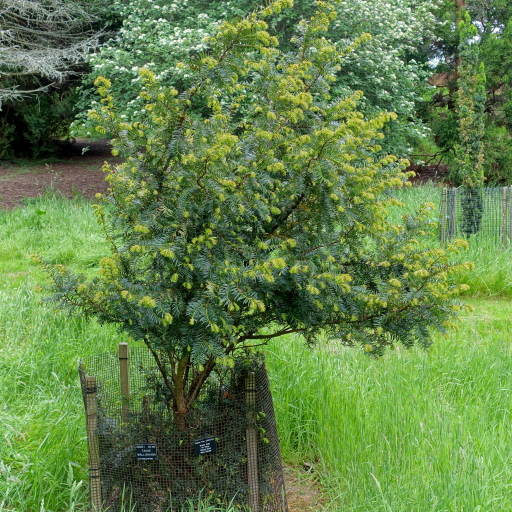
Plant Overview
Known as the Himalayan Yew, Taxus wallichiana is a tree of deep paradox. While it is globally famous for providing life-saving compounds used in modern cancer treatments, it is also steeped in ancient folklore as a symbol of immortality and death. Native to the high-altitude mists of the Himalayas and Southeast Asia, this slow-growing evergreen is a living relic that can survive for centuries.
🔍 How to Identify
- 🌿 The Foliage: Its leaves are flat, needle-like, and dark green. They are arranged spirally on the twigs but typically spread in two rows, creating a soft, feathery appearance.
- 🔴 The "Berries": Unlike most conifers that produce woody cones, the Yew produces a bright red, fleshy cup called an aril. This cup surrounds a single dark seed, looking like a tiny, colorful bell.
- Bark The Bark: The trunk is covered in thin, reddish-brown bark that often peels away in papery flakes or scales, revealing smooth purple or cinnamon-colored wood beneath.
🏡 In Your Garden
- 🌱 Patience is Key: This is an exceptionally slow-growing species. If you are planting one, understand that it prefers the "slow life." It resents being moved once established due to its sensitive root system, so choose its permanent home carefully.
- ☁️ Atmospheric Needs: Reflecting its mountain origins, it thrives in cool, moist, and shaded environments. It is one of the few conifers that performs excellently in deep shade, making it perfect for those "difficult" dark corners of a large garden.
⚠️ Safety & Toxicity
- 🚫 Status: HIGHLY TOXIC. Almost every part of the Himalayan Yew—the needles, the bark, and especially the seeds—contains lethal taxine alkaloids.
- 🐾 Details: It is dangerous to humans, horses, dogs, and cats. While the red fleshy part of the "berry" is technically the only non-toxic part, the seed inside is deadly if swallowed. It is best to keep this plant away from areas where children or curious pets play.
✨ Fun Fact
The Himalayan Yew is the primary source of Paclitaxel (Taxol), one of the most effective chemotherapy drugs ever discovered. Because it takes the bark of several mature trees to treat a single patient, the species became endangered, leading to a massive global effort to synthesize the medicine in labs to save the trees!

Detailed Care Instructions
Taxus Wallichiana, commonly known as the Himalayan yew, is a slow-growing evergreen shrub or tree that can be grown in a variety of conditions. Here are some tips on how to successfully grow Taxus Wallichiana:
- Location: Taxus Wallichiana prefers well-draining soil and partial to full sun. It can tolerate a wide range of soil types, but it does best in moist, fertile soil with a slightly acidic pH.
- Planting: Plant Taxus Wallichiana in the spring or fall, making sure to dig a hole that is slightly larger than the plant's root ball. Water the plant thoroughly after planting and keep the soil evenly moist during the first year of growth.
- Watering: Taxus Wallichiana prefers moist soil, so make sure to water regularly, especially during dry periods. Avoid overwatering, as this can lead to root rot.
- Fertilizing: Fertilize Taxus Wallichiana in the spring with a balanced fertilizer that is specifically formulated for evergreen shrubs. Follow the manufacturer's instructions for application rates.
- Pruning: Prune Taxus Wallichiana in the late winter or early spring to shape the plant and remove any dead or diseased branches. Avoid severe pruning, as this can lead to sparse growth.
- Mulching: Mulch around the base of the plant to help retain moisture and suppress weeds. Use a 2-3 inch layer of organic mulch, such as shredded bark or compost.
- Pests and diseases: Keep an eye out for common pests and diseases that can affect Taxus Wallichiana, such as spider mites, scale insects, and root rot. Treat any infestations promptly with an appropriate insecticide or fungicide.
By following these tips and providing the appropriate care, you can successfully grow Taxus Wallichiana in your garden or landscape.

Place in a bright room that is sun drenched almost all day. Or directly in a south-facing window.

Taxus Wallichiana plants prefer well-draining soil and require regular watering, especially during their growing season. To water a Taxus Wallichiana plant, it is important to water the soil evenly and thoroughly until water runs out of the drainage holes at the bottom of the pot or container.
Avoid overwatering the plant as this can lead to root rot and other issues. The frequency of watering will depend on various factors such as the size of the plant, the soil type, and the amount of sunlight it receives. Typically, it is recommended to water Taxus Wallichiana plants when the top inch of soil feels dry to the touch.
During the winter months or when the plant is not actively growing, it is important to reduce the frequency of watering to prevent waterlogged soil. Additionally, it is beneficial to mulch around the base of the plant to help retain moisture and regulate soil temperature. Regularly check the soil moisture levels and adjust your watering schedule accordingly to ensure the health and growth of your Taxus Wallichiana plant.
To fertilize the Taxus Wallichiana plant, first make sure that the soil is moist before applying fertilizer. Use a balanced, slow-release fertilizer with equal amounts of nitrogen, phosphorus, and potassium. Apply the fertilizer in the early spring before new growth appears. Avoid over-fertilizing as this can damage the plant. Water the plant thoroughly after applying the fertilizer to help it absorb the nutrients. Lastly, do not fertilize the plant in the fall or winter months as this can stimulate new growth that may be damaged by frost.
Taxus Wallichiana plants thrive in well-draining soil that is slightly acidic to neutral in pH. A mix of peat moss, pine bark, and perlite or sand is ideal for these plants. This type of soil provides good aeration and drainage for the roots, while also retaining enough moisture for the plant to thrive. Additionally, incorporating organic matter such as compost can help improve soil structure and fertility, promoting healthy growth. Avoid using heavy clay soils or highly alkaline soils, as they can lead to poor root development and health issues for the plant. Regularly check the moisture levels of the soil and water accordingly to keep the plant healthy and happy.
Taxus Wallichiana plant can be propagated through several methods, including seed propagation, cutting propagation, and layering.
To propagate Taxus Wallichiana plant from seeds, collect ripe berries in the fall and remove the fleshy seed covering. Wash the seeds and allow them to dry before planting in a well-draining seed-starting mix. Keep the soil consistently moist and place the seeds in a warm, sunny location. Germination can take up to several months, so be patient.
Cutting propagation involves taking stem cuttings from a healthy, established plant. Choose a stem with several healthy leaf nodes and remove any lower leaves. Dip the cut end in rooting hormone and plant in a well-draining potting mix. Keep the soil consistently moist and provide bottom heat to encourage root growth.
Layering is another method of propagation that involves bending a low-growing branch of the plant down to the ground and covering it with soil. The buried portion of the stem will develop roots over time, and can be cut from the parent plant once well-established.
Regardless of the propagation method used, it's important to provide the new plants with adequate water, sunlight, and nutrients to ensure successful growth. Additionally, be patient as propagation can take time and patience.








