Plant Overview
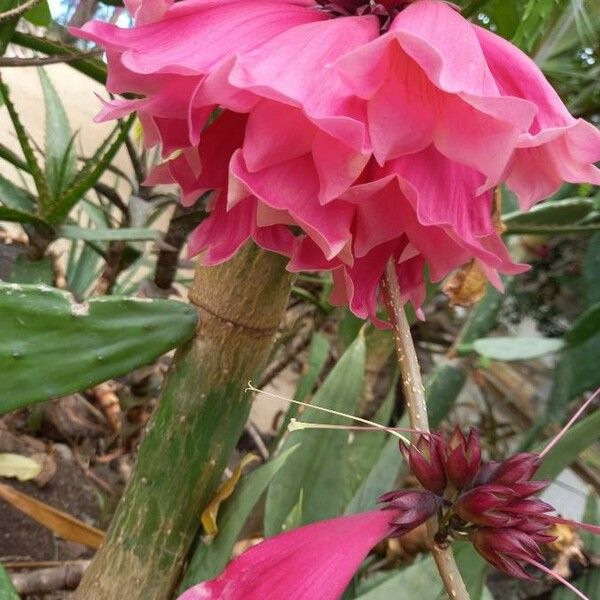
Known as the New Guinea Trumpet Vine or the Forest Bell, this spectacular woody climber hails from the tropical rainforests of the South Pacific. It is famous for a rare botanical trait called "cauliflory," where vibrant, waxy flowers burst directly from the old, thick woody stems rather than just the leafy tips. In full bloom, it looks like a waterfall of pink bells cascading down a tree trunk.
🔍 How to Identify
- 🌸 The Flowers: Large, waxy, trumpet-shaped blooms that are typically rosy-pink or deep magenta on the outside with creamy yellow or white throats.
- 🍃 The Foliage: Lush, glossy, dark green leaves arranged in pairs (pinnate), providing a dense tropical backdrop even when the plant isn't flowering.
- 🪵 The Habit: A vigorous "liana" or woody vine that uses its twining stems to scramble upward. The bark on older stems becomes corky and textured.
🏡 In Your Garden
- 🧗 Structural Support: Because this is a heavy, woody vine, it requires a very sturdy trellis, pergola, or a strong tree to climb. It is not a delicate "potted plant" for long; it wants to colonize vertical space.
- 🌦️ The "Cool Feet" Rule: Like many jungle vines, it prefers its roots to be in cool, mulched, moist shade, while its foliage climbs upward toward dappled sunlight.
- ✂️ Pruning Caution: Be careful with the shears! Since flowers form on the old wood (the brown, barky parts), over-pruning the "ugly" old stems can accidentally remove all of next season's flower buds.
⚠️ Safety & Toxicity
- ✅ Status: Generally considered non-toxic to humans and common household pets.
- 🧤 Skin Sensitivity: While not poisonous, the sap of many tropical vines can cause mild skin irritation or "itchiness" in sensitive individuals. It is always a good idea to wear gloves when pruning woody vines.
✨ Fun Fact
In its native New Guinea habitat, the Tecomanthe dendrophila has evolved its bright color and tubular shape specifically to attract nectar-seeking birds, which act as its primary pollinators!

Detailed Care Instructions
To grow Tecomanthe Dendrophila plant, follow these steps:
- Choose a suitable location: Tecomanthe Dendrophila prefers a warm and humid climate. Select a spot that receives partial shade or filtered sunlight, away from strong winds.
- Prepare the soil: The plant thrives in rich, well-draining soil. Improve the soil by adding organic matter, such as compost or aged manure, to enhance its fertility and moisture retention.
- Planting: Dig a hole that is slightly larger than the root ball of the plant. Place the plant in the hole, ensuring that it is at the same depth as it was in the pot. Backfill the hole with soil and gently compact it around the plant.
- Watering: Initially, water the plant thoroughly to help establish the roots. Afterward, water regularly, especially during dry spells. Ensure the soil remains consistently moist but not waterlogged.
- Mulching: Apply a layer of organic mulch, such as wood chips or straw, around the base of the plant. This will help retain moisture and suppress weed growth.
- Pruning: Prune the plant after flowering to maintain its shape and remove any dead or damaged branches. This will also encourage new growth and future blossoms.
- Fertilizing: Feed the Tecomanthe Dendrophila plant with a balanced, slow-release fertilizer in spring and mid-summer. Follow the package instructions for application rates.
- Trellis or support: Tecomanthe Dendrophila is a climbing vine and will benefit from a trellis or support structure. Install it near the plant, ensuring it is stable and will provide support as the vine grows.
- Pests and diseases: Monitor the plant regularly for any signs of pests or diseases, such as aphids or powdery mildew. If detected, treat the issue promptly with appropriate organic or chemical solutions.
- Patience: Tecomanthe Dendrophila is a slow-growing plant, and it may take several years before it starts blooming. Be patient and provide the necessary care, and eventually, you will enjoy its beautiful flowers.
Remember to research and understand the specific needs of Tecomanthe Dendrophila for your particular location, as conditions can vary. Additionally, consult with local experts or gardening resources for more detailed guidance tailored to your region.
Tecomanthe Dendrophila is a beautiful climbing vine that requires proper watering to thrive. Here's a guide on how to water this particular plant:
- Watering Frequency: Tecomanthe Dendrophila prefers evenly moist soil, so it's important to water it regularly. During the growing season, which is typically spring and summer, water the plant consistently to keep the soil slightly damp. Avoid overwatering as it can lead to root rot.
- Soil Moisture: Before watering, always check the soil moisture level to ensure the plant's needs are met. Insert your finger about an inch into the soil to gauge how moist it is. If it feels dry, it's time to water, but if it's still slightly damp, hold off on watering for a few more days.
- Watering Technique: When watering Tecomanthe Dendrophila, aim to thoroughly moisten the soil. Water the plant at the base, near its roots, rather than overhead, to avoid excess moisture on the foliage. Consider using a watering can or a gentle stream from a hose nozzle to control the water flow and prevent root disturbance.
- Drainage: Tecomanthe Dendrophila prefers well-draining soil to avoid waterlogging. Ensure that the pot or container you use has drainage holes, allowing any excess water to escape. This helps prevent water accumulation around the roots, which can lead to fungal diseases or root rot.
- Environmental Factors: Besides regular watering, take into account external factors that can affect the plant's water requirements. For instance, during hot or dry weather conditions, the plant may need more frequent watering to compensate for increased evaporation. Consider adjusting your watering schedule accordingly.
Remember, the key to watering Tecomanthe Dendrophila is consistency and moderation. By maintaining a slightly damp soil environment and avoiding extremes of overwatering or underwatering, you can ensure the health and longevity of this beautiful climbing vine.
- Choose a balanced fertilizer: Tecomanthe Dendrophila benefits from a well-balanced fertilizer with equal amounts of nitrogen (N), phosphorus (P), and potassium (K). Look for a fertilizer with an NPK ratio of around 10-10-10 or similar.
- Dilute the fertilizer: Follow the instructions on the fertilizer packaging to determine the right dilution ratio. Typically, it involves mixing a certain amount of fertilizer with a specific quantity of water.
- Time the fertilization: Begin fertilizing Tecomanthe Dendrophila during the active growing season, which is typically in spring and summer. Avoid fertilizing during the plant's dormant period, usually in winter.
- Apply the fertilizer: Apply the diluted fertilizer to the soil around the base of the Tecomanthe Dendrophila plant. Make sure to distribute it evenly but avoid direct contact with the plant's stems or leaves to prevent burning.
- Water thoroughly: After fertilizing, water the plant thoroughly to help the nutrients penetrate into the root zone. Proper watering will also prevent fertilizer build-up and potential damage to the plant.
- Monitor and adjust: Watch for signs of over-fertilization, such as yellowing leaves or burnt tips. If these symptoms occur, reduce the amount or frequency of fertilization. On the other hand, if the plant seems stunted or lacking vitality, slightly increase the fertilization regimen.
- Keep a schedule: Develop a fertilization schedule for Tecomanthe Dendrophila based on its growth rate and the specific fertilizer's recommendations. Typically, a monthly or bi-monthly application is sufficient during the growing season.
Remember, it is essential to follow the specific instructions provided with the fertilizer and consider the unique needs of your Tecomanthe Dendrophila plant.
Tecomanthe Dendrophila plants thrive in a specific type of soil that provides them with optimal growing conditions. The ideal soil for Tecomanthe Dendrophila should have a few key characteristics.
Firstly, the soil should be fertile and rich in organic matter. This ensures that the plant receives an adequate supply of nutrients essential for its growth and development. Organic matter improves soil structure, promotes good drainage, and increases water-holding capacity.
Secondly, the soil should have good drainage to prevent waterlogging. Tecomanthe Dendrophila plants do not tolerate excessive moisture around their root systems, as it can lead to root rot and other diseases. Therefore, a well-draining soil mix is crucial for the plant's health.
Additionally, Tecomanthe Dendrophila plants prefer a slightly acidic to neutral pH range. A pH level between 6 and 7 is generally ideal for these plants. The acidity or alkalinity of the soil can affect nutrient availability, so it is important to maintain the pH within the preferred range.
Another important factor is the soil texture. Tecomanthe Dendrophila plants prefer soil that is moderately loamy. Loamy soil contains a balanced mixture of sand, silt, and clay particles, which promotes good water retention while allowing excess water to drain away. This texture provides an ideal environment for the plant's roots to grow and spread.
Lastly, adding organic mulch to the soil surface can help conserve moisture, regulate soil temperature, and suppress weed growth. This mulch can be made of materials like compost, shredded leaves, or wood chips. It is recommended to apply a layer of mulch around the base of the Tecomanthe Dendrophila plant, but ensure that it does not touch the plant's stem to prevent moisture-related diseases.
In summary, Tecomanthe Dendrophila plants require a fertile, well-draining soil rich in organic matter, with a slightly acidic to neutral pH range. It is also beneficial to use a soil mix that is moderately loamy and to apply organic mulch around the plant's base for additional benefits.
Tecomanthe dendrophila is a tropical vine native to certain regions, and propagating it can be achieved through various methods such as seeds, stem cuttings, or layering.
- Seeds: Start by collecting mature seeds from a mature Tecomanthe dendrophila plant. These seeds are usually enclosed in a thick, woody capsule-like structure. To improve germination rates, carefully remove the outer casing to expose the seeds inside. Soaking the seeds in warm water for 24 hours prior to planting can help speed up germination. Fill a seed tray or small pots with a well-draining potting mix and sow the seeds, lightly pressing them into the soil, but not burying them too deeply. Keep the soil moist and place the tray or pots in a warm and bright location. Germination usually takes a few weeks to a few months.
- Stem cuttings: Take a 6 to 8-inch cutting from a healthy Tecomanthe dendrophila plant, preferably from a semi-woody stem. Remove the bottom leaves and dip the cut end into a rooting hormone powder or liquid to encourage root formation. Insert the cutting into a pot filled with a well-draining soil mixture, leaving at least two nodes above the soil surface. Water the cutting thoroughly and place it in a warm and bright location, ideally with indirect sunlight. Mist the cutting regularly to maintain humidity. Roots should start forming within a few weeks to a couple of months.
- Layering: Choose a healthy and flexible branch of a Tecomanthe dendrophila plant and make a small wound or nick in the stem near a node. Place this wounded portion into a pot filled with a well-draining potting mix and secure it using a U-shaped wire or a small stake. Cover the wounded portion with soil, leaving the remaining part of the branch exposed. Water the soil thoroughly and maintain consistent moisture. Within a few weeks to a few months, roots should develop in the buried portion of the stem. Once the roots are well-established, gently separate the new plant from the parent plant and transfer it to its own pot.
It is important to note that Tecomanthe dendrophila plants generally prefer warm and humid conditions, so maintaining a suitable environment, regular watering, and fertilizing can facilitate successful propagation.








