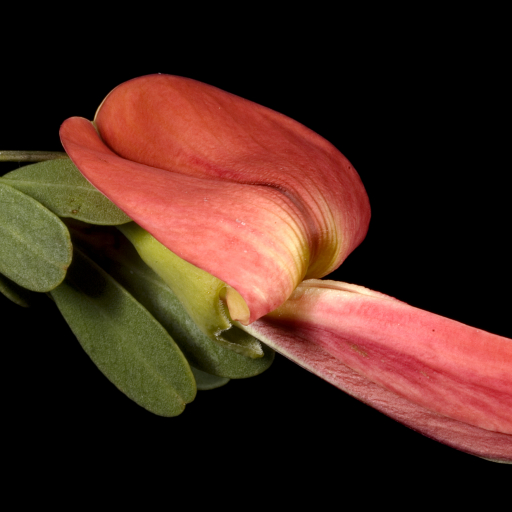
Plant Overview
Commonly known as Cockies’ Tongues, the Templetonia Retusa is a striking Australian native that brings a burst of fiery color to coastal landscapes. This hardy evergreen shrub is famous for its vibrant, bird-attracting flowers that look remarkably like the curved tongue of a cockatoo. Whether clinging to a limestone cliff or gracing a suburban garden, it is a champion of resilience and architectural beauty.
🔍 How to Identify
- 🦜 The "Tongue" Flowers: Large, pea-like blossoms usually appearing in brilliant shades of red or terracotta, though rare yellow forms exist. They have an elongated shape that points downward.
- 🍃 Leathery Foliage: The leaves are a distinct glaucous (blue-green) or grey-green color, wedge-shaped (cuneate), and often have a small notch or "dent" at the tip.
- 🌿 Growth Habit: A dense, woody shrub that typically reaches 1 to 2 meters in height, creating a thick screen of architectural foliage.
🏡 In Your Garden
- 🧱 The Limestone Lover: Unlike many Australian natives that demand acidic soil, this plant is a "calciphile," meaning it absolutely thrives in alkaline and limestone-rich soils.
- 💧 Look but Don't Move: This shrub develops a deep taproot to survive droughts. Because of this, it hates having its roots disturbed; choose its "forever home" carefully, as transplanting an established plant is rarely successful.
- 🐦 Pollinator Magnet: The flowers are specifically shaped to be pollinated by honeyeaters. The weight of the bird landing on the flower triggers the "tongue" to open and dust the bird with pollen.
⚠️ Safety & Toxicity
- 🟢 General Safety: Templetonia Retusa is considered to have low toxicity and is generally safe for home gardens.
- 🐾 Seed Caution: Like many members of the pea family (Fabaceae), the seed pods that follow the flowers contain small beans. While not notoriously deadly, it is best to discourage pets or curious children from ingesting the seeds, as they can cause mild stomach upset.
✨ Fun Fact
The common name "Cockies' Tongues" is so accurate that early explorers used it as a shorthand description. The flower’s deep red color and curved "keel" petal perfectly mimic the inside of a Major Mitchell’s Cockatoo's mouth!

Detailed Care Instructions

Some plants require more regular watering than others, which should be done every few days. It's critical to maintain the soil moist all of the time. The water requirements of the same plant placed in pots with varying sizes will differ. Because the water in the smaller pot evaporates faster than the water in the larger pot, it will require more watering. Regardless of pot size, the surface should constantly be maintained moist.








