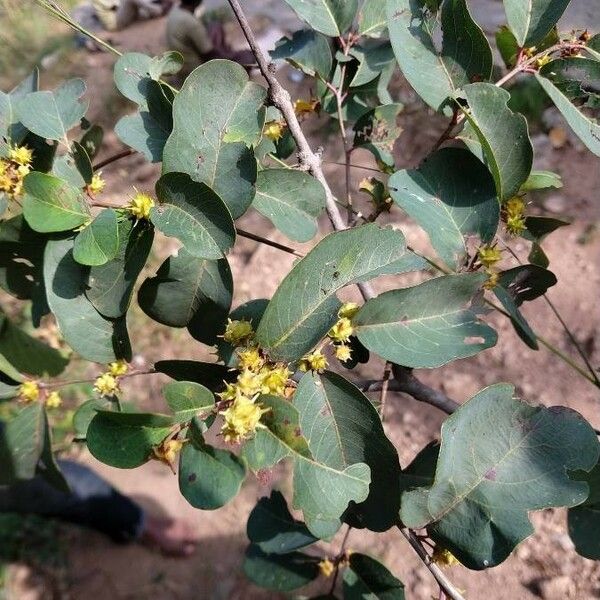
Plant Overview
Known as the "African Birch" or Kane, this resilient tree is a cornerstone of the West African savanna. With its graceful, weeping branches and silvery-green foliage, it looks like a delicate willow but possesses the strength of iron. It is a tree of immense cultural value, prized for its incredibly hard wood and its role in traditional craftsmanship and medicine.
🔍 How to Identify
- 🍃 The Leaves: Look for small, lance-shaped leaves with a soft, grayish-green hue. They are arranged alternately and often have a slightly fuzzy texture on the underside.
- 🌿 Growth Habit: The tree is easily recognized by its "weeping" appearance. The slender branches droop elegantly toward the ground, giving it a light, airy silhouette despite its massive size.
- 🌰 The Fruit: It produces unique, yellowish-green flower heads that mature into small, cone-like spherical fruits. These "cones" stay on the tree for a long time and turn brown as they dry.
🏡 In Your Garden
- ☀️ Sun & Resilience: This is a sun-worshipper that thrives in open spaces. It is exceptionally drought-tolerant once established, making it a perfect choice for xeriscaping or "dry" gardening in warmer climates.
- 🪵 The Taproot: Because it has a deep, aggressive taproot system, it is difficult to transplant once it reaches a certain size. Choose its permanent home carefully—it hates being moved and prefers well-drained, sandy soils.
⚠️ Safety & Toxicity
- ✅ Status: Generally non-toxic and safe.
- 🦷 Details: While not poisonous to pets or children, the bark and leaves are very high in tannins. In Africa, the twigs are traditionally used as "chewing sticks" for dental hygiene because of their antimicrobial properties, though the taste is quite bitter.
✨ Fun Fact
The Terminalia anogeissiana is a secret ingredient in the fashion world! Its leaves and bark are used to create a vibrant yellow base dye for the famous "Bogolan" or Malian Mudcloth. Without this tree, the intricate traditional patterns of West African textiles wouldn't have their signature earthy tones.

Detailed Care Instructions








