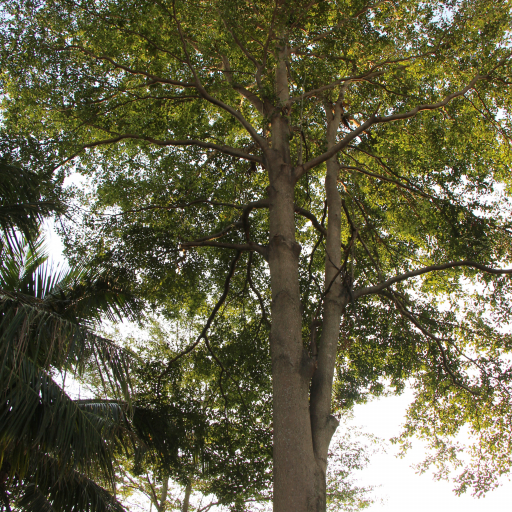
Plant Overview
Known widely as the Madagascar Almond or the Umbrella Tree, this elegant species is a favorite among landscape architects for its striking, geometric silhouette. Originating from the coastal forests of Madagascar, it has traveled the world to become a staple in tropical and subtropical gardens. Its unique "pagoda-style" branching makes it look like a piece of living art, providing a sophisticated, zen-like atmosphere wherever it is planted.
🔍 How to Identify
- 🌳 Layered Branching: The most distinct feature is its horizontal, tiered branches that grow in neat levels, resembling the ribs of an open umbrella.
- 🍃 Small Oval Leaves: The foliage consists of tiny, bright green (or sometimes variegated white-green) leaves that are teardrop-shaped and grow in dense clusters at the ends of the twigs.
- 🪵 Smooth Gray Bark: The trunk is typically straight and slender with smooth, pale gray bark that provides a beautiful contrast to its vibrant green canopy.
🏡 In Your Garden
- 🏗️ Architectural Shade: Because of its wide, flat canopy, it is an excellent "roof" for patios, but be wary of its roots; they are powerful and can easily lift nearby pavement or crack pipes if planted too close to structures.
- ✂️ Low Maintenance Silhouette: Unlike many ornamental trees, the Madagascar Almond naturally keeps its layered shape with very little pruning, making it ideal for gardeners who want a high-end look without constant shearing.
⚠️ Safety & Toxicity
- ✅ Low Risk: The Terminalia mantaly is generally considered non-toxic to humans and does not cause skin irritation upon contact.
- 🐾 Pet Watch: While not listed as a major poison, the seeds and bark contain tannins which may cause mild digestive upset if chewed on by dogs or cats. It is best to discourage pets from snacking on fallen debris.
✨ Fun Fact
The Madagascar Almond is a "self-pruning" enthusiast; as the tree grows taller, it naturally sheds its lower branches to maintain its iconic umbrella-like crown at the top!

Detailed Care Instructions
To grow Terminalia Mantaly, also known as Madagascar Almond or Fony Baobab, you can follow these steps:
- Climate and Soil: Terminalia Mantaly thrives in tropical and subtropical climates. It prefers well-drained soils with a pH range of 6 to 7.5. Make sure the soil is rich in organic matter.
- Propagation: There are two common methods of propagation - seeds and cuttings.
- Using Seeds: Soak the seeds in warm water for 24 hours before planting. Sow the seeds into seedling trays or pots filled with a well-draining seed-starting mix. Keep the soil consistently moist but not waterlogged. Germination can take several weeks to a couple of months.
- Using Cuttings: Take 10-15 cm long semi-hardwood stem cuttings from a healthy parent plant. Remove the lower leaves and dip the base of the cutting in rooting hormone. Plant the cuttings in a well-draining potting mix, ensuring that at least one node is below the surface. Place the pot in a warm, humid location with bright, indirect light. Mist the cuttings regularly to maintain humidity.
- Using Seeds: Soak the seeds in warm water for 24 hours before planting. Sow the seeds into seedling trays or pots filled with a well-draining seed-starting mix. Keep the soil consistently moist but not waterlogged. Germination can take several weeks to a couple of months.
- Sunlight: Terminalia Mantaly requires full sun to partial shade. Place the plant in a location where it can receive at least 4-6 hours of direct sunlight daily. In hotter climates, some shade during the hottest part of the day can be beneficial.
- Watering: Maintain regular watering, especially during the growing season. Water the plant deeply, allowing the soil to dry slightly between waterings. Avoid overwatering, as excessive moisture can lead to root rot.
- Fertilizer: Use a balanced, slow-release fertilizer or organic compost in spring and summer to promote healthy growth. Follow the manufacturer's instructions for application rates. Avoid over-fertilizing, as it can cause nutrient burn.
- Pruning: Prune Terminalia Mantaly to maintain its shape and remove any dead or damaged branches. Pruning in early spring before new growth appears is preferable.
- Pests and Diseases: Monitor the plant for common pests like aphids, mealybugs, and scale insects. Treat infestations with appropriate insecticidal soaps or organic solutions. Terminalia Mantaly is relatively resistant to diseases but may be susceptible to root rot if overwatered.
Remember to research and consider your specific climatic conditions, as they may require slight modifications to the care instructions mentioned above.
When watering this plant, make sure to check the soil's moisture level before adding water. Stick your finger about an inch deep into the soil and see if it feels dry or moist. If it still feels moist, wait a few more days before watering. When it's time to water, add water slowly and carefully to the soil, avoiding getting the water on the leaves or stems of the plant. Allow the water to soak into the soil until it drains out of the drainage holes in the bottom of the pot. Make sure not to overwater the plant, as this can lead to root rot. It's also important to avoid letting the soil completely dry out, as this can cause stress to the plant.
To fertilize this plant, use a balanced fertilizer with equal parts nitrogen, phosphorus, and potassium. Apply fertilizer every 2-3 months during the growing season. Use a slow-release fertilizer for best results. Avoid over-fertilizing, as this can lead to leaf burn and other damage. Water the plant thoroughly after fertilizing to help the nutrients penetrate the soil.
The Terminalia Mantaly plant prefers well-draining soil that is rich in organic matter. A good soil mix for this plant would consist of a combination of sandy soil, peat moss, and perlite or pumice to ensure proper drainage. The soil should have a slightly acidic to neutral pH level (around 6.0 to 7.0). Additionally, adding some compost or leaf mold to the soil mix can help provide nutrients for the plant. It is important to avoid using heavy or compacted soils, as this can lead to poor drainage and root rot. Regularly checking the moisture levels of the soil and watering appropriately is also important for the health of the Terminalia Mantaly plant.
To propagate this plant, you will need to take a stem cutting from a healthy parent plant. Choose a stem that is at least 4-6 inches long and has several healthy leaves. Using a sharp, clean knife or shears, make a clean cut just below a node (the spot where a leaf meets the stem).
Remove any leaves or branches from the lower half of the stem, leaving only a few leaves at the top for photosynthesis. Dip the cut end of the stem in rooting hormone powder to stimulate root growth.
Prepare a pot with well-draining soil and insert the stem cutting about 1 inch deep into the soil. Water the soil thoroughly and place the pot in a bright, indirect light location.
Keep the soil moist but not overly wet, and avoid direct sunlight which can damage the young plant. After a few weeks, check for root development by gently tugging on the stem. If it resists, roots have developed.
Once roots have developed, the new plant can be transplanted into a larger pot. Make sure to keep the soil moist and provide plenty of bright, indirect light to help the plant establish and grow strong.








