Plant Overview
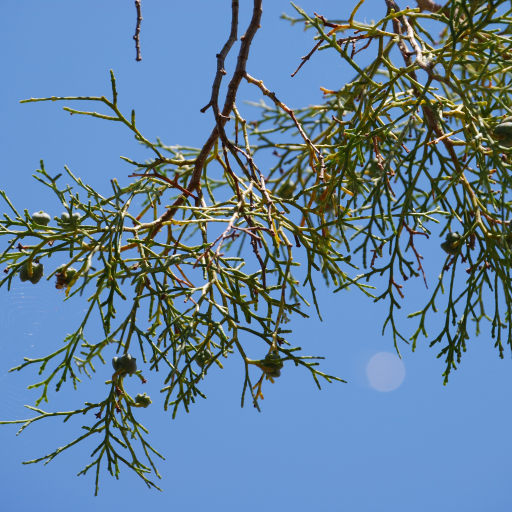
Known affectionately as the Sandarac tree or Barbary Thuja, this hardy conifer is a botanical "living fossil"—the only remaining member of its genus. Native to the rugged landscapes of North Africa and a tiny corner of Spain, it has been prized for centuries for its aromatic resin and its "Burl" wood, which looks like swirling storm clouds when polished. It is the national tree of Malta, where it is known as Għargħar.
🔍 How to Identify
- 🍃 Segmented Foliage: The bright green leaves are tiny and scale-like, arranged in flattened sprays. They appear in whorls of four, giving the stems a unique "jointed" or "articulated" look.
- 💠 Square Cones: Unlike the round cones of many evergreens, its seed cones are small, woody, and distinctly four-sided, looking a bit like a tiny, thick-petaled flower when they open.
- 🪵 Weathered Bark: On mature trees, the bark is grayish-brown and fissured, often peeling away in vertical strips to reveal a warm, reddish core underneath.
🏡 In Your Garden
- 🏜️ The Drainage Master: This plant is an expert at surviving drought and poor soil. Its greatest enemy is "wet feet"—if your soil is heavy clay, you must amend it with gravel or plant the tree on a slope to ensure water never pools around the roots.
- ✂️ Surprising Resilience: Unlike most conifers, which die if cut back too hard, Tetraclinis articulata can "resprout" from its base (coppicing). This makes it very forgiving for home gardeners who might need to manage its size or shape.
⚠️ Safety & Toxicity
- ✅ Low Risk: The Sandarac tree is generally considered non-toxic to humans, dogs, and cats.
- 🧴 Resin Sensitivity: The tree produces a sticky, fragrant resin called Sandarac. While used in varnishes and incense, the raw resin or fine sawdust from pruning can cause mild skin irritation or sneezing in sensitive individuals.
✨ Fun Fact
The wood of this tree is so beautiful that it is historically used for the luxury dashboards of high-end cars, like Rolls-Royces. In Morocco, artisans in Essaouira have spent centuries perfecting the art of "Thuya" woodworking using the tree's underground root burls.

Detailed Care Instructions
Growing Tetraclinis articulata plants, commonly known as the desert cypress or sandarac tree, can be achieved by following these steps:
- Climate and Hardiness: Determine if Tetraclinis articulata can be grown in your climate. This plant is native to the Mediterranean region and requires a warm, dry climate with excellent drainage. It is hardy in USDA zones 8-11.
- Sunlight: Choose a location that receives full sunlight. Tetraclinis articulata requires at least 6-8 hours of direct sunlight each day.
- Soil: Use well-draining soil with a slightly alkaline pH. Sandy or loamy soil with good drainage is preferred. If your soil is heavy clay, mix in sand or organic matter to improve drainage.
- Planting: Make sure to plant Tetraclinis articulata in the spring. Dig a hole slightly larger than the root ball and place the plant in the hole, making sure it sits at the same depth as it was in the container. Backfill the hole with soil, gently firming it in place.
- Watering: Water the newly planted Tetraclinis articulata thoroughly, saturating the root zone. Afterward, water deeply but infrequently, allowing the soil to dry out between waterings. Avoid overwatering, as this can cause root rot.
- Mulching: Apply a layer of organic mulch around the plant to help conserve moisture and suppress weed growth. Avoid placing the mulch directly against the stem or trunk to prevent rot.
- Fertilizer: Use a balanced, slow-release fertilizer in the early spring to promote healthy growth. Follow the package instructions for the appropriate dosage.
- Pruning: Tetraclinis articulata has a naturally elegant shape, so pruning should be minimal. Remove any dead or damaged branches during the dormant season in late winter or early spring.
- Protection: Provide protection from strong winds and cold temperatures, especially if you are growing Tetraclinis articulata at the edge of its hardiness zone. Consider using windbreaks or protective covers during harsh weather conditions.
- Pests and Diseases: Tetraclinis articulata is generally resistant to pests and diseases. However, monitor for any signs of insect infestations or fungal issues, and treat them accordingly.
Remember to do further research on growing Tetraclinis articulata specific to your region as local conditions may vary.

Place in a bright room that is sun drenched almost all day. Or directly in a south-facing window.

Tetraclinis Articulata is a type of tree that is native to certain regions of the world. When it comes to watering this plant, it is important to take into account various factors that can affect its overall health and growth.
One key consideration is the type of soil the plant is grown in. Tetraclinis Articulata typically thrives in well-draining soil that is not too moist or too dry. This means that you will want to ensure that the soil is appropriately moistened, but not waterlogged.
To water Tetraclinis Articulata, you should begin by assessing the moisture levels in the soil. This can be done by inserting your finger into the soil to a depth of about 1 inch. If the soil feels dry at this depth, it is time to water the plant.
When watering, it is important to avoid getting water on the leaves of the plant, as this can lead to fungal growth and other issues. Instead, focus on watering the soil around the base of the plant.
You should aim to water Tetraclinis Articulata deeply and infrequently. This means that you should give the plant a thorough soaking, and then allow the soil to dry out somewhat before watering again. Depending on the climate and other environmental factors, you may need to water once or twice a week during the growing season.
Overall, providing the right amount of water is essential to the health and success of Tetraclinis Articulata. By taking into account the plant's specific needs and the conditions in which it is grown, you can help ensure that it grows strong and healthy.
- Choose a balanced fertilizer with equal amounts of nitrogen, phosphorus, and potassium.
- Dilute the fertilizer according to the instructions on the package.
- Apply the fertilizer once a month during the growing season (spring and summer).
- Water the plant thoroughly before fertilizing to prevent root burn.
- Pour the diluted fertilizer around the base of the plant, avoiding the foliage.
- Avoid over-fertilizing, as this can lead to plant stress and damage.
Tetraclinis articulata is a species of evergreen tree that belongs to the cypress family. When it comes to choosing soil for this plant, it is important to consider its natural habitat. Tetraclinis articulata is a native of arid and semi-arid regions, where the soil is typically sandy, well-drained, and poor in organic matter.
Therefore, it is advisable to use a light, sandy soil with good drainage for Tetraclinis articulata. The soil should be well-aerated and not too rich in nutrients, as this can lead to overgrowth and reduced health. Organic matter can be added to the soil in small amounts to help improve its fertility, but care should be taken not to overdo it.
In general, the soil used for Tetraclinis articulata should be alkaline to neutral in pH, with a range of about 7.5 to 8.5. The plant is tolerant of drought and can survive in relatively dry conditions, but regular watering can help promote healthy growth and prevent stress.
Overall, the key to successfully growing Tetraclinis articulata is to provide it with a well-drained, nutrient-poor soil that replicates its natural environment to the best of your ability.
To propagate a certain variety of plant, you will need to select a healthy and mature plant as the parent plant. Using a sharp and sterilized pruning shears or knife, take a cutting from the parent plant.
Ensure that the cutting is at least 4-6 inches long and has 2-3 leaves or needle-like structures attached to it. Remove the lower leaves or needles from the cutting to expose the nodes for rooting.
Dip the cut end of the cutting in rooting hormone powder to encourage root growth.
Prepare a potting mix that is well-draining and has good aeration. Plant the cutting in the potting mix and water thoroughly. Cover the pot with a clear plastic bag or plastic wrap to create a mini greenhouse for the cutting.
Place the pot in a bright and warm location but out of direct sunlight. The cutting should root in 2-4 weeks. Once it has rooted, remove the plastic cover and gradually acclimate the new plant to brighter light and less humidity.
Continue to care for the new plant by watering it regularly and fertilizing it with an appropriate fertilizer. After a year, the new plant should be mature enough to be transplanted to a permanent spot in your garden.








