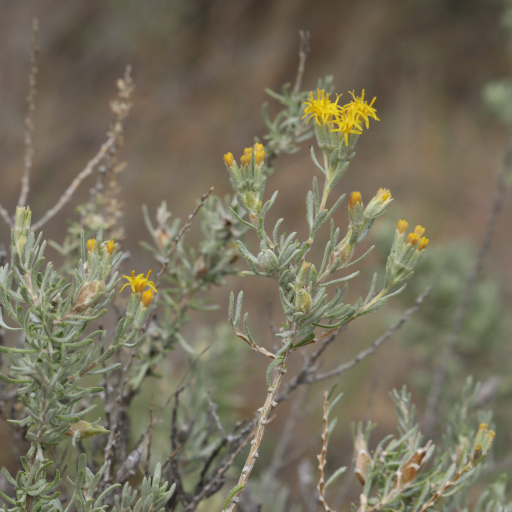
Plant Overview
Known as the Grey Horsebrush or Spineless Horsebrush, this silvery-white shrub is a ghostly beauty of the American West’s high deserts. Its velvety appearance comes from a dense coat of matted hairs that protect it from the scorching sun and biting winds of the sagebrush steppe. While it looks soft and inviting, it holds a secret chemical defense that makes it a formidable inhabitant of the wild.
🔍 How to Identify
- ☁️ The Foliage: The leaves and stems are covered in a thick, felt-like layer of silvery-white hairs (tomentose), giving the entire plant a distinct "grey" or "dusty" glow.
- 🌼 The Blooms: In mid-summer, it produces clusters of bright yellow, disc-shaped flowers. Unlike daisies, these flowers lack outer "petals" (ray florets), looking more like tiny golden tubes.
- 🌿 The Shape: It typically grows as a rounded, multi-branched woody shrub, usually staying between one and three feet tall, blending perfectly into rocky hillsides.
🏡 In Your Garden
- ☀️ Sun & Soil: This plant is the ultimate sun-worshipper. It requires exceptionally well-draining, sandy, or rocky soil. In a garden setting, it is often used for xeriscaping because it can survive on almost zero supplemental water once established.
- 🌬️ Climate Resilience: It is incredibly hardy, surviving both the intense heat of the desert summer and the sub-zero temperatures of high-altitude winters. The "hairs" on its leaves act like a natural thermos, regulating temperature and reducing moisture loss.
⚠️ Safety & Toxicity
- 🚫 Status: Toxic to livestock and potentially pets.
- 🐑 Details: It is famous among ranchers for causing "bighead" disease in sheep. The plant contains toxins that cause severe photosensitivity and swelling of the head and ears. While humans are unlikely to eat it, it should be kept away from grazing animals and curious pets.
✨ Fun Fact
The "Spineless" part of its name is a point of pride—unlike many of its close cousins in the Tetradymia family, this species lacks the sharp, woody thorns that usually make horsebrushes a literal pain to touch!

Detailed Care Instructions
To grow Tetradymia canescens, also known as Spineless Horsebrush or Gray Horsebrush, you can follow these steps:
- Choose the right location: Tetradymia canescens prefers full sun or partial shade. It can tolerate a wide range of soil types but does best in well-drained sandy or gravelly soils.
- Prepare the soil: Before planting, loosen the soil and remove any weeds or grass. This will ensure better nutrient absorption for the plant.
- Sow the seeds: Tetradymia canescens can be grown from seeds. Sow the seeds directly into the prepared soil by scattering them evenly on the surface. Lightly press the seeds into the soil, but do not cover them as they need light to germinate.
- Water regularly: Keep the soil slightly moist until the seeds germinate. Once the plant establishes, it is drought-tolerant and needs minimal watering. Overwatering can cause root rot and damage the plant.
- Mulch the soil: Apply a layer of organic mulch around the base of the plant to retain moisture and suppress weeds. This will also help protect the roots from extreme temperatures.
- Prune if necessary: Tetradymia canescens has a naturally attractive shape, but if you notice any dead or damaged branches, you can prune them to promote healthier growth. Prune in early spring before new growth appears.
- Protect from extreme cold: If you live in an area with freezing temperatures, provide winter protection for young plants. Mulch around the base of the plant to insulate the roots and cover the plant with a frost cloth or row cover during cold snaps.
- Monitor pests and diseases: Tetradymia canescens is relatively resistant to pests and diseases. However, keep an eye out for any signs of aphids, spider mites, or powdery mildew. Treat accordingly if detected.
- Fertilize sparingly: Tetradymia canescens is adapted to low-nutrient soils and does not require heavy fertilization. Applying a slow-release, balanced fertilizer in early spring can benefit its growth.
- Allow natural seeding: Once the plant matures, it will produce seeds. Allow the seeds to disperse naturally to encourage future growth or collect the seeds for propagation.
Remember to check your local regulations before growing Tetradymia canescens, as it may be considered invasive in some areas.

Place in a bright room that is sun drenched almost all day. Or directly in a south-facing window.

To properly water this particular plant, it is important to first consider the soil and drainage. It prefers well-draining sandy or gravely soil that does not retain too much water. Overwatering can damage the roots and lead to rotting.
When watering, it is recommended to allow the soil to dry out slightly between waterings. This can typically be determined by touching the soil with your finger and ensuring it is completely dry before watering.
You can water the plant deeply once a week during the growing season, and then reduce frequency during the winter months when the plant is in a dormancy period. It is important to avoid getting water on the leaves or flowers, as this can promote the growth of fungal diseases.
Overall, proper watering is essential for the health and growth of this plant. By ensuring adequate drainage and avoiding overwatering, you can help maintain the plant's health and longevity.
To fertilize this plant, it is best to use a balanced fertilizer with equal amounts of nitrogen, phosphorus, and potassium. Apply the fertilizer during the plant's active growing season, typically in the spring and summer months. Use a slow-release fertilizer and apply it according to the instructions on the package, ensuring that it is evenly distributed around the plant's base. Avoid over-fertilizing, as this can lead to the plant becoming leggy and weak. Additionally, be sure to water the plant thoroughly before and after fertilizing to help the nutrients soak into the soil and reach the root system.
Tetradymia Canescens is a plant that grows best in well-draining soil that is slightly alkaline and has a sandy texture. This plant prefers soil with low organic matter levels, as it is adapted to rocky or sandy regions with low fertility. Additionally, Tetradymia Canescens is adapted to dry conditions and can tolerate drought, so the soil should not be too moist or waterlogged. It is also important to note that this plant is native to specific regions and may not thrive in all soil conditions and climates. Therefore, it is essential to research and understand its natural habitat requirements before growing it in a garden or landscape.
To propagate this plant, you can take stem cuttings from the parent plant in late spring or early summer. Use clean, sharp scissors to cut a stem that is about 4-6 inches long, and remove the lower leaves. Dip the cut end in rooting hormone powder and plant it in a pot filled with well-draining soil.
Place the pot in a bright, sunny location and keep the soil moist but not waterlogged. After a few weeks, the cutting should develop roots and begin to grow new leaves. Once the young plant has outgrown its pot, it can be transplanted into a larger pot or directly into the ground.








