Plant Overview
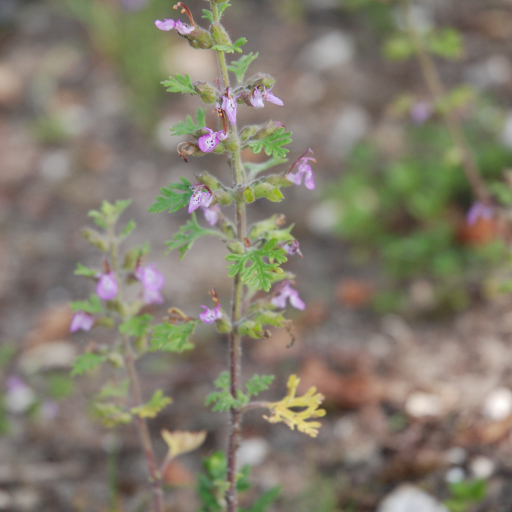
Known as the Cut-leaved Germander, this low-growing herb is a hidden gem of the stony hillsides of Europe. Unlike its more aggressive mint-family cousins, Teucrium botrys is a delicate pioneer species that thrives where other plants refuse to grow. Its deeply lobed leaves give it a prehistoric, fern-like appearance that adds a unique texture to any wild-style rock garden.
🔍 How to Identify
- 🍃 The Foliage: The most striking feature is its "cut" leaves. They are deeply pinnatifid, meaning they are split into many narrow segments, resembling a miniature oak leaf or a rugged fern.
- 🌸 The Blooms: Small, tubular flowers appear in shades of pinkish-purple or lilac. They are "labiate" (lipped), with the lower lip acting as a perfect landing pad for foraging bees.
- 🏺 The Calyx: After the petals fall, the calyx (the green base of the flower) becomes noticeably swollen and inflated, protecting the developing seeds like a tiny, hairy urn.
🏡 In Your Garden
- 🪨 The Hardscrabble Hero: This plant is an "obligate calcicole," meaning it craves lime and chalk. If your soil is rocky, poor, or alkaline, this germander will feel right at home while more pampered plants wither.
- ☀️ Sun Seeker: It demands full sun and "dry feet." It is highly susceptible to root rot in heavy, clay-rich, or damp soils, so ensure it is planted in a spot with sharp drainage, such as a gravel bed or a rockery.
⚠️ Safety & Toxicity
- 💊 Mildly Toxic: While some germanders were historically used in herbal medicine, the genus Teucrium contains compounds (diterpenoids) that can be toxic to the liver if ingested in large quantities.
- 🐾 Pet Caution: To be safe, keep this plant away from curious pets. While it isn't "deadly" upon contact, ingestion can cause digestive upset or more serious internal issues in small animals.
✨ Fun Fact
The species name botrys comes from the Greek word for "a bunch of grapes." This refers to the way the flowers and their swollen bases cluster together along the stem, looking like a miniature, vertical vine of fruit.

Detailed Care Instructions

Place in a bright room that is sun drenched almost all day. Or directly in a south-facing window.

Some plants require more regular watering than others, which should be done every few days. It's critical to maintain the soil moist all of the time. The water requirements of the same plant placed in pots with varying sizes will differ. Because the water in the smaller pot evaporates faster than the water in the larger pot, it will require more watering. Regardless of pot size, the surface should constantly be maintained moist.








