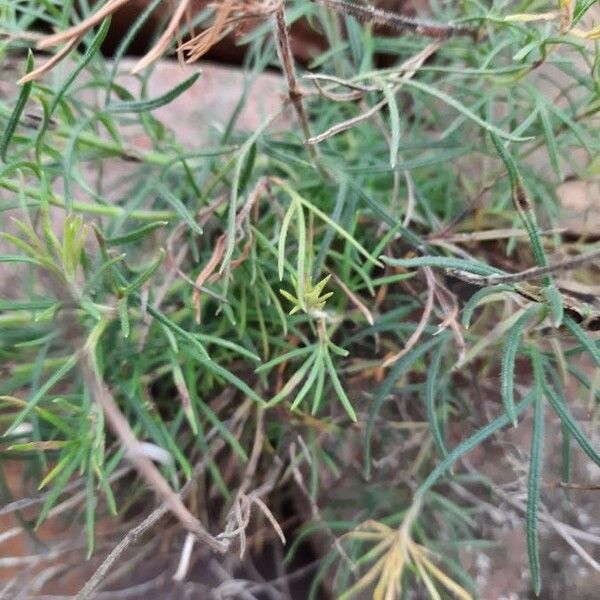
Plant Overview
Commonly known as the False Ground Pine, this Mediterranean native is a master of disguise. While its needle-like foliage suggests a tiny conifer or a pine seedling, it is actually a resilient member of the Mint family. Often found clinging to rocky limestone cliffs, it brings a wild, rugged elegance to sun-scorched gardens where other plants might wither.
🔍 How to Identify
- 🌿 The Foliage: The leaves are deeply divided into thin, linear segments, giving the plant a soft, "fuzzy" pine-needle appearance.
- 🌸 The Blooms: Unlike real pines, it produces classic Mint-family flowers. These are usually creamy white or pale yellow, often decorated with delicate purple or reddish veins on the lower lip.
- 📏 Growth Habit: It maintains a low, mounding shape, rarely exceeding 8–12 inches in height, making it an excellent "ground-hugging" specimen.
🏡 In Your Garden
- ☀️ Sun Seeker: This plant thrives in "harsh" conditions. It craves full sun and develops its best silver-green color when exposed to intense light.
- 🪨 Drainage is Key: Because it naturally grows in rocky crevices, it has a deep taproot that hates "wet feet." In a garden setting, ensure the soil is gritty or sandy; it will quickly rot in heavy, clay-rich soil.
- ✂️ Pruning Nuance: It prefers a "light touch." Avoid heavy pruning into old wood; instead, lightly shear it after flowering to maintain a tight, bushy shape and prevent it from becoming leggy.
⚠️ Safety & Toxicity
- 🐾 Pet Safety: While not usually listed as high-risk, most Teucrium species contain compounds (diterpenoids) that can be toxic to the liver if ingested in large quantities by dogs or cats.
- 👶 Human Caution: It is not an edible herb. Historically, some Germanders were used in folk medicine, but this is now discouraged as they can cause significant liver irritation. Keep it as an ornamental beauty only.
✨ Fun Fact
The name Pseudochamaepitys is a Greek mouthful that literally translates to "False Ground Pine." It was named this because it looks nearly identical to the Ajuga chamaepitys (Yellow Bugle), proving that even in the plant world, some looks are just too good not to copy!

Detailed Care Instructions

Place in a bright room that is sun drenched almost all day. Or directly in a south-facing window.

To water this particular plant, one should first assess the soil moisture level prior to watering to avoid over-watering and risking drowning the plant. This can be done by sticking a finger or a soil moisture meter into the soil to determine if it is dry or moist. If the soil is dry to the touch, then it is time to water the plant. One should pour water gently onto the soil, avoiding direct contact with the leaves, and continue to do so until the water drains out from the drainage holes at the bottom of the pot. This plant prefers a well-draining soil so any excess water should be removed to prevent soggy soil conditions. The frequency of watering will depend on the environmental conditions such as temperature, humidity, and air circulation, but generally it is recommended to water once a week during growing seasons and less frequently during dormant periods.
Teucrium Pseudochamaepitys plant thrives in well-draining, fertile soil that is slightly alkaline and has a pH between 7.0 and 8.0. The soil should have good drainage to prevent waterlogging, which can cause root rot. It also prefers soil that is rich in organic matter, which can help improve soil structure and fertility. When planting Teucrium Pseudochamaepitys, it is important to carefully select the soil type that is appropriate for the plant to ensure it grows healthily.








