Plant Overview
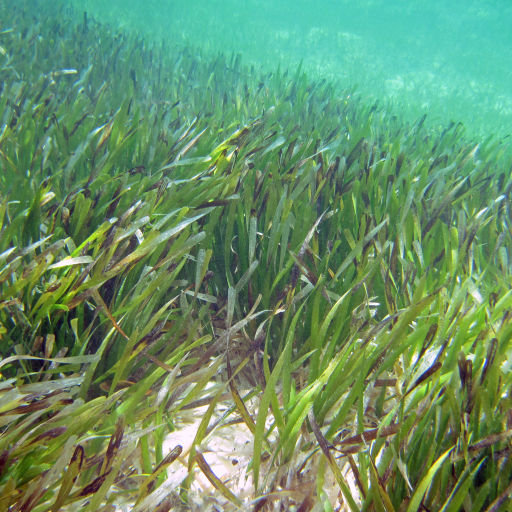
Known as the "Lawn of the Ocean," Turtle Grass is arguably the most important seagrass in the Caribbean and Gulf of Mexico. It isn't an seaweed (alga), but a true flowering plant that creates vast, swaying emerald meadows beneath the waves. These underwater prairies act as a vital nursery for countless marine species and are a primary food source for the majestic Green Sea Turtle.
🔍 How to Identify
- 🌿 The Leaves: Long, flat, ribbon-like blades that are typically emerald to dark green. They usually grow between 4 to 12 inches long.
- 📏 Blunt Tips: Unlike some other seagrasses that have pointed or serrated ends, the tips of Turtle Grass are distinctly rounded and smooth.
- ⚓ Root System: If you were to look beneath the sand, you’d find thick, woody horizontal stems called rhizomes that anchor the plant firmly against strong ocean currents.
- 🌸 Hidden Flowers: It occasionally produces small, pale greenish-white flowers and rounded fruits, though these are often hidden near the base of the leaves.
🌊 Habitat & Ecology
- 🏝️ Coastal Architects: This plant is a "climax species," meaning it represents the final, stable stage of an underwater ecosystem. It stabilizes the seafloor with its massive root system, preventing coastal erosion during storms.
- 🐟 A Natural Nursery: These meadows are the "daycare centers" of the sea. They provide essential cover for juvenile fish, seahorses, and queen conchs, protecting them from larger predators.
- ☀️ Sunlight Seekers: Turtle Grass requires very clear, shallow water because it relies heavily on photosynthesis. If the water becomes too cloudy from pollution or runoff, the grass can struggle to survive.
⚠️ Safety & Toxicity
- ✅ Status: Completely non-toxic and safe.
- 🦀 Details: While the plant itself is harmless to touch or encounter while swimming, these meadows are home to diverse wildlife. Always be mindful of camouflaged creatures like sea urchins or stingrays that might be resting among the blades.
✨ Fun Fact
Turtle Grass is one of the few plants on Earth that has mastered the art of "hydrophilous pollination"—it completes its entire reproductive cycle, from flowering to seed dispersal, entirely underwater without ever needing to reach the surface!

Detailed Care Instructions
To successfully grow Thalassia testudinum, or turtle grass, you can follow these steps:
- Choose a suitable location: Turtle grass generally grows in coastal areas, so if you live near the shore or have access to a coastal environment, that would be ideal. Make sure the water temperature is suitable for the plant's growth.
- Gather the necessary materials: You will need turtle grass seeds or rhizomes, a planting container, nutrient-rich soil, and clean seawater.
- Prepare the planting container: Fill the container with nutrient-rich soil, leaving some space at the top. Make sure the container has good drainage.
- Plant the seeds or rhizomes: If using seeds, scatter them over the surface of the soil and lightly press them into the soil. If using rhizomes, plant them about 1-2 inches deep into the soil.
- Place the container in a suitable environment: Turtle grass requires full sunlight for proper growth, so place the container in an area that receives at least 6 hours of direct sunlight each day. The water temperature should be around 70-80°F (21-27°C).
- Water the plant: Fill the planting container with clean, saltwater regularly. Avoid using tap water or water that contains chemicals as it may harm the plant.
- Maintain the plant: Turtle grass requires frequent watering and nourishment. Continuously provide clean seawater and ensure the container has proper drainage to avoid waterlogging.
- Avoid disturbing the roots: Once the plant is established, try not to disturb its roots as this can hinder growth.
- Monitor the plant's health: Watch out for signs of distress, such as wilting, yellowing leaves, or pests. Take appropriate measures to address any issues that arise.
Remember that growing Thalassia testudinum can be challenging, especially in non-coastal environments. If you are unable to provide the necessary conditions, it may be better to enjoy turtle grass in its natural habitat or consider alternatives that are better suited for your region.

Place in a bright room that is sun drenched almost all day. Or directly in a south-facing window.

Thalassia Testudinum is a species of aquatic plant commonly found in coastal areas. To properly water this plant, follow these guidelines:
1. Understand the water requirements: Thalassia Testudinum thrives in brackish or saltwater environments. It needs access to water with some level of salinity to survive. This plant is typically found in shallow coastal waters where it can receive sufficient sunlight for photosynthesis.
2. Create a suitable environment: If you are cultivating Thalassia Testudinum in a home aquarium or artificial pond, it's important to recreate the plant's natural habitat. Ensure the water salinity levels are appropriate for the plant's growth. You may need to add salt mixes specifically designed for marine or brackish water plants.
3. Monitor water quality: Regularly test the water to maintain the correct salinity levels. You can use a hydrometer or refractometer to measure the salt concentration. The ideal salinity range for Thalassia Testudinum varies depending on the location, but it generally requires water with a salinity of around 25 to 35 parts per thousand (ppt).
4. Provide proper lighting: Thalassia Testudinum requires ample lighting to carry out photosynthesis effectively. If cultivating this plant indoors, make sure to provide it with bright artificial lights or use specialized aquarium lighting that replicates natural sunlight.
5. Understand water movement: Thalassia Testudinum usually grows in areas with gentle water currents. In an aquarium or pond, mimic this by creating a mild water flow using a water pump or airstone. Be cautious not to provide excessive water movement, as it may uproot or damage the plant.
6. Prune and maintain: Regularly trim any dead or decaying parts of the Thalassia Testudinum plant. This helps to maintain its overall health and encourages new growth. Remove any floating debris or algae in the water to prevent obstruction of light and nutrients.
7. Avoid overwatering: While Thalassia Testudinum depends on water for survival, overwatering can be detrimental to its growth. Make sure the plant is submerged in water but not excessively soaked or submerged in a way that inhibits its photosynthesis.
Remember, it is crucial to research and understand the specific care requirements for Thalassia Testudinum based on your growing environment.
To fertilize the plant Thalassia Testudinum, follow these steps:
- Choose a balanced fertilizer formulated for aquatic plants. Look for one with a nitrogen-phosphorous-potassium (N-P-K) ratio of around 10-10-10.
- Dilute the fertilizer according to the instructions on the package. Usually, a common dilution ratio is 1 teaspoon of fertilizer per gallon of water.
- Carefully pour the diluted fertilizer mixture into the water surrounding the plant. Avoid pouring it directly onto the leaves or stems.
- After fertilization, monitor the plant's response closely. If you notice any signs of stress or discoloration, reduce the fertilizer quantity or frequency of application.
- Repeat the fertilization process every 4-6 weeks during the growing season. Adjust the frequency as needed based on the plant's overall health and growth.
- Maintain proper lighting conditions and water quality to provide additional support for the plant's growth and overall vitality.
Note: It is important to conduct research on the specific needs of Thalassia Testudinum to ensure optimal care.
For optimal growth and health of the Thalassia Testudinum plant, a specific type of soil is recommended. This species thrives in a particular soil composition that provides necessary nutrients and supports overall root development. The recommended soil for Thalassia Testudinum is one that is rich in organic matter, well-draining, and slightly alkaline.
Organic matter is crucial for this plant as it helps retain moisture and promotes the growth of beneficial microorganisms in the soil. It also provides a steady release of essential nutrients, which are vital for the Thalassia Testudinum's optimal growth. Therefore, a soil mix with a good proportion of organic matter is ideal for this plant species.
In terms of drainage, the soil should be well-draining to avoid waterlogged conditions that can be detrimental to Thalassia Testudinum. Excessive water retention can lead to root rot or other issues. Therefore, using a soil mix that allows excess water to drain away easily, while still retaining enough moisture for the plant's needs, is essential.
Moreover, the Thalassia Testudinum plant prefers slightly alkaline soil conditions. With a pH level slightly above neutral (around 7.5-8.5), the plant can access essential nutrients more effectively, ensuring healthier growth and development.
In summary, for successful cultivation of the Thalassia Testudinum plant, use a soil mix that is rich in organic matter, well-draining, and slightly alkaline to provide the necessary nutrients, moisture retention, and optimal pH levels.
To propagate Thalassia Testudinum plant, you can follow these steps:
- Prepare the growing medium: Thalassia Testudinum can be propagated in both water and sand-based substrates. If propagating in soil, mix equal parts of potting soil and sand to create a well-draining medium.
- Obtain healthy parent plants: Select mature and healthy Thalassia Testudinum plants as a source for propagating new plants. Ensure that the parent plant is disease-free and free from any damages.
- Collect rhizomes or shoots: Thalassia Testudinum can be propagated through rhizomes, horizontal stems that grow under the soil, or through shoots, which are new growth stems above the ground. Carefully dig out rhizomes or cut healthy shoots from the parent plant using sterilized scissors or a knife.
- Prepare the propagation containers: If propagating in water, fill a container with clean, freshwater. If propagating in soil, fill small pots or trays with the prepared growing medium.
- Plant the rhizomes or shoots: In water propagation, place the collected rhizomes or shoots in the container with the water, ensuring that they are fully submerged. In soil propagation, make a hole in the growing medium, and gently place the rhizome or shoot into it, covering it lightly with the soil.
- Provide suitable conditions: Thalassia Testudinum prefers warm temperatures and bright, indirect sunlight. Place the propagation containers in a well-lit area, maintaining a consistent temperature between 70-80°F (21-27°C).
- Maintain appropriate water levels: If propagating in water, remember to replace the water regularly to prevent stagnation and decay. In soil propagation, water the plants lightly, keeping the soil slightly moist but not waterlogged.
- Monitor and care for the new plants: Regularly observe the propagated plants for signs of growth. Provide adequate sunlight and maintain optimal environmental conditions. Avoid overwatering, as excessive moisture can cause root rot.
- Transplant to permanent location: After the new plants have developed a sufficient root system and healthy foliage, they can be transplanted into a permanent location. Choose an area with suitable soil and water conditions for Thalassia Testudinum growth.
By following these steps, you can successfully propagate Thalassia Testudinum plants and contribute to the growth of this species.








