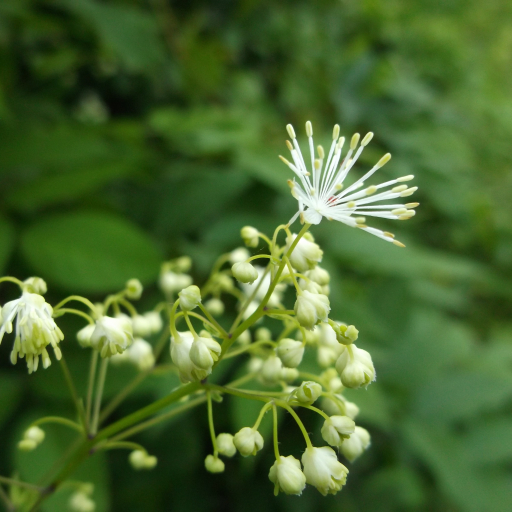
Plant Overview
Commonly known as the King of the Meadow or Tall Meadow-Rue, this North American native is a true skyscraper of the wildflower world. Often reaching heights of seven feet or more, it looks like a delicate, lacy fern that decided to touch the clouds. In folklore, its presence was often seen as a sign of fertile, life-giving soil nearby.
🔍 How to Identify
- 🌿 The Foliage: The leaves are complex and compound, mimicking the look of a delicate Maidenhair fern. They are a soft bluish-green and provide a beautiful texture even when the plant isn't blooming.
- ☁️ The Bloom: Instead of traditional petals, the flowers look like tiny, explosive starbursts or "mist" held high above the leaves. These are actually clusters of long, creamy-white stamens.
- 📏 The Stature: One of the tallest perennials you'll encounter, it features sturdy, often purplish stems that remain upright without the need for staking, despite their airy appearance.
🏡 In Your Garden
- 💧 Wet Feet Welcome: This plant is a specialist for damp areas. It is the perfect candidate for rain gardens, the edges of ponds, or those "problem spots" in the yard that stay soggy after a storm.
- ☀️ Dappled Light: While it can handle some sun, it thrives in partial shade. In the wild, it lives on the edge of forests, so it appreciates a break from the harsh afternoon heat to keep its delicate foliage from scorching.
- 🦋 Pollinator Magnet: While it relies partly on the wind for pollination, the star-shaped stamen clusters are a favorite snack for hoverflies and small native bees.
⚠️ Safety & Toxicity
- 🟢 Generally Safe: Thalictrum pubescens is not considered highly toxic, but it is also not edible.
- 🐾 Pet & Child Safety: Like many members of the Buttercup family, it contains minor alkaloids that can cause a stomach ache or mild irritation if consumed in large quantities. It is best treated as an ornamental plant rather than a medicinal or culinary one.
- 🦌 Deer Resistance: Gardeners love it because its bitter taste makes it "deer-resistant," meaning the local wildlife will usually skip it in favor of your hostas or lilies.
✨ Fun Fact
The "flowers" of the Tall Meadow-Rue are actually incomplete! They lack true petals. What you are seeing are "petalloid sepals" that fall off early, leaving behind only the showy, thread-like stamens that give the plant its signature "misty" look.

Detailed Care Instructions
| Humidity | Normal |
| Lighting | Shade |
| Toxicity | Poisonous |
| Difficulty | Easy |
| Hibernation | Cold Period |
| Hardiness Zones | 3 - 8 |
To grow Thalictrum pubescens (Meadow Rue), you can follow these steps:
- Choose a suitable location: Thalictrum pubescens prefers partial shade to full sun exposure, so select a spot in your garden that receives a few hours of direct sunlight each day along with some shade.
- Prepare the soil: The plant thrives in well-draining soil that is rich in organic matter. Incorporate compost or well-rotted manure into the soil to improve its fertility and drainage.
- Sow or plant the seeds or seedlings: Thalictrum pubescens can be grown from seeds or started from seedlings. If planting seeds, sow them directly into the garden in early spring or late fall. Ensure the seeds are covered with a thin layer of soil. If using seedlings, space them about 12-18 inches apart.
- Water regularly: Keep the soil evenly moist, especially during the plant's first growing season. Avoid overwatering, as it may lead to root rot. Once established, Thalictrum pubescens can tolerate dry spells, but it prefers consistently moist soil.
- Mulch around the plants: Apply a layer of organic mulch, such as wood chips or straw, around the base of the plants. Mulching helps retain moisture, suppresses weed growth, and protects the roots from extreme temperatures.
- Provide support: Thalictrum pubescens grows tall and may need support to prevent its delicate stems from bending or breaking. Install stakes or use a trellis nearby to provide support as the plant grows.
- Prune when necessary: Remove any dead or damaged stems to maintain the plant's health and appearance. Pruning can be done in late winter or early spring before new growth starts.
- Fertilize if needed: Thalictrum pubescens generally doesn't require excessive fertilization. However, if you notice weak growth or yellowing leaves, apply a balanced, slow-release fertilizer according to package instructions during the growing season.
By following these steps and providing proper care, your Thalictrum pubescens plant should grow well and produce beautiful flowers.

Place in a window with dappled sun or a spot in the middle of a room. Or directly in a window facing west or east.

To properly water Thalictrum pubescens, it is important to consider a few key factors. First, this plant typically thrives in moist, well-draining soil. Therefore, a watering schedule that ensures consistent moisture is crucial.
1. Soil moisture check: Before watering, check the soil moisture level by inserting a finger or a moisture meter about an inch deep into the soil. If it feels dry, it's an indication that watering is required.
2. Watering method: Thalictrum pubescens benefits from thorough watering that reaches deep into the root zone. For established plants, it is recommended to use a soaker hose or drip irrigation system rather than overhead watering. This minimizes water waste due to evaporation and helps prevent foliage diseases.
3. Watering frequency: The frequency of watering depends on various factors such as soil type, climate, and growing conditions. Typically, providing water when the top inch of soil feels dry is sufficient. Avoid overwatering, as excessive moisture can lead to root rot.
4. Watering technique: When watering Thalictrum pubescens, aim for a slow, gentle flow of water that allows it to penetrate the soil without causing runoff. Give the plant a good soak until the water reaches about 6-8 inches deep, ensuring it reaches the entire root system.
5. Mulching: Applying a layer of organic mulch around the base of the plant can help retain moisture in the soil, reduce weed growth, and protect the roots from extreme temperatures.
6. Seasonal adjustments: During periods of hot, dry weather, Thalictrum pubescens may require more frequent watering to prevent dehydration. Conversely, in cooler or rainy seasons, it may be necessary to scale back watering to prevent waterlogged conditions.
Remember that it is crucial to water your Thalictrum pubescens plant based on its specific needs, considering the factors mentioned above. Adjusting the watering routine accordingly will help ensure the plant's optimal health and growth.
To fertilize Thalictrum Pubescens, use a balanced, water-soluble fertilizer with a nitrogen-phosphorus-potassium (NPK) ratio of 10-10-10 or similar. Follow these instructions for optimal growth:
- Choose a fertilizer specifically formulated for flowering plants or perennials.
- Dilute the fertilizer according to the package instructions. Usually, you'll mix it with water in a specific ratio.
- Water the plant thoroughly before applying fertilizer to ensure the soil is well-moistened.
- Apply the diluted fertilizer around the base of the plant, avoiding direct contact with the leaves or stem.
- Use a watering can or a hose with a gentle spray attachment to evenly distribute the fertilizer.
- Be cautious not to over-fertilize; a general rule of thumb is to apply fertilizer every four to six weeks during the growing season.
- After applying the fertilizer, water the plant again to help it absorb the nutrients and prevent any potential root burn.
- Monitor the plant's response to the fertilizer, ensuring it does not show signs of nutrient burn or stress. Adjust the fertilizer application accordingly.
- Additionally, consider amending the soil with organic matter, such as compost, to improve overall soil fertility and plant health.
Remember to always read and follow the specific instructions provided with your fertilizer product, as different brands may have variations in application rates and timing.
Thalictrum pubescens, a perennial flowering plant, thrives in a specific type of soil that provides optimal conditions for its growth. This plant prefers well-draining soil that is rich in organic matter. It benefits from a loamy or sandy texture, allowing air circulation and preventing waterlogging.
The soil pH requirements for Thalictrum pubescens typically range from slightly acidic to neutral (around 5.5 to 7.0). While it can tolerate a slightly alkaline environment, keeping the pH within the preferred range is ideal for ensuring proper nutrient uptake and overall health of the plant.
To enhance soil fertility, it is beneficial to incorporate organic matter such as compost or well-rotted manure into the soil. This helps improve soil structure, moisture retention, and nutrient availability, creating a favorable environment for Thalictrum pubescens to thrive.
Additionally, the plant prefers a soil that retains adequate moisture without becoming waterlogged. Consistent moisture is important, especially during the plant's active growing season. However, excessive water retention can lead to root rot or other fungal diseases, so ensuring proper drainage is crucial.
It is also worth noting that Thalictrum pubescens is a native plant found in various habitats, including woodlands and meadows. The presence of these natural environments can provide insights into the ideal growing conditions for this species.
In summary, Thalictrum pubescens prefers well-draining soil that is rich in organic matter, with a balanced pH ranging from slightly acidic to neutral. Ensuring proper moisture retention while avoiding waterlogging is crucial for the health and vigor of this perennial plant.
Thalictrum Pubescens, a perennial herbaceous plant, can be propagated through various methods to reproduce its offspring. Here is a detailed description of how to propagate this plant:
- Seed Propagation:
- Collect mature seeds from the Thalictrum Pubescens plant. These seeds are usually found in seed pods or capsules.
- Prepare a seed-starting mix consisting of equal parts soil, peat moss, and perlite. Fill small pots or trays with this mixture.
- Sprinkle the Thalictrum Pubescens seeds evenly on the surface of the seed-starting mix. Do not bury the seeds as they require light for germination.
- Gently press the seeds into the soil mix to ensure good seed-to-soil contact.
- Mist the seeds with water to moisten the soil surface.
- Place the pots or trays in a warm, brightly lit location while avoiding direct sunlight. Maintain a consistent temperature around 70-75°F (21-24°C).
- Keep the soil evenly moist until the seeds germinate, which can take several weeks to several months.
- Once the seedlings are large enough to handle, carefully transplant them into individual pots or a prepared garden bed. Allow them to grow for a season or two before transplanting them into their permanent location.
- Collect mature seeds from the Thalictrum Pubescens plant. These seeds are usually found in seed pods or capsules.
- Division:
- Choose a mature Thalictrum Pubescens plant with well-established roots. Ideally, this should be done during early spring or fall when the plant is dormant.
- Start by digging around the plant's base to expose its root system. Carefully lift the plant from the ground, trying to keep the root ball intact.
- Gently shake off excess soil to clearly see the plant's roots.
- Use a sharp, clean knife or garden shears to divide the root ball into multiple sections. Each section should have its own set of healthy roots and shoots.
- Trim any damaged or dead roots and foliage from each divided section.
- Replant the divided sections immediately, either in pots or directly into the garden soil. Ensure they are placed at the same depth they were originally growing.
- Water the newly divided sections thoroughly to settle the soil around the roots.
- Choose a mature Thalictrum Pubescens plant with well-established roots. Ideally, this should be done during early spring or fall when the plant is dormant.
- Stem Cuttings:
- Take stem cuttings from a healthy Thalictrum Pubescens plant in late spring or early summer.
- Choose a non-flowering stem with several healthy nodes.
- Using a sharp, clean knife or pruners, cut the stem just below a node, creating a cutting piece that is around 4-6 inches long.
- Remove the lower leaves, leaving only a few at the tip of the cutting.
- Optionally, dip the cut end of the stem in a rooting hormone powder to enhance root development.
- Fill small pots or trays with a well-draining rooting medium, such as a mix of perlite and peat moss.
- Insert the lower end of the cutting into the rooting medium, burying at least one node. Firmly press the medium around the cutting to hold it in place.
- Place the pots or trays in a warm and humid environment with bright, indirect light. You can cover them with a plastic bag to create a mini greenhouse effect.
- Mist the cuttings regularly to maintain high humidity levels and prevent them from drying out.
- After a few weeks, gently tug on the cuttings to check for root development. Once roots have formed, transplant the cuttings into individual pots or a prepared garden bed.
By following these propagation methods, you can successfully propagate Thalictrum Pubescens and enjoy the beauty of this plant in your garden or landscape.
- Take stem cuttings from a healthy Thalictrum Pubescens plant in late spring or early summer.








