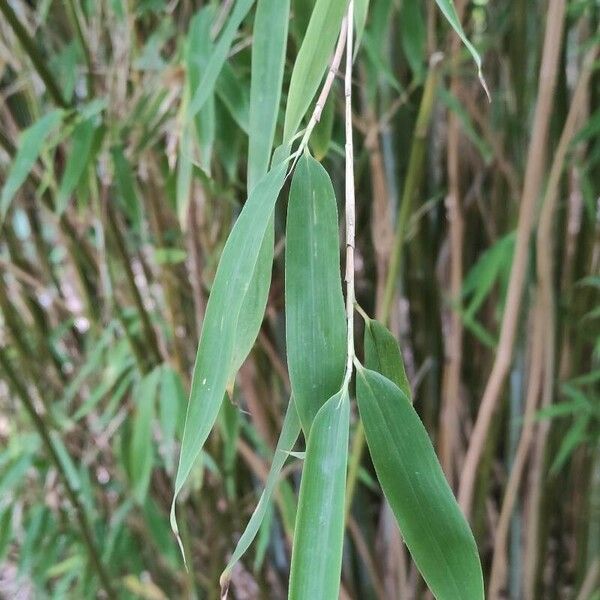
Plant Overview
Commonly known as the Umbrella Bamboo, this graceful evergreen is the "ballerina" of the bamboo world. Originating from the high-altitude forests of China, it earned its nickname from its distinctive weeping habit, where the weight of its delicate foliage causes the canes to arch beautifully like an open parasol. It is famously known as a primary food source for Giant Pandas in the wild, adding a touch of ancient mountain mist to any modern landscape.
🔍 How to Identify
- ☂️ The Canopy: Look for slender, yellowish-green canes (culms) that grow upright at first but eventually lean outward, creating a fountain-like, drooping silhouette.
- 🍃 The Foliage: The leaves are narrow, pointed, and a vibrant pea-green color. They have a delicate, papery texture that rustles softly even in the slightest breeze.
- 🎋 The Growth Habit: Unlike invasive "running" bamboos, this species is a "clumper." It grows in tight, predictable mounds that expand slowly, making it perfect for smaller gardens or large pots.
🏡 In Your Garden
- ☁️ The Shade Lover: While many bamboos crave scorching sun, the Umbrella Bamboo is a forest-dweller at heart. It thrives in dappled shade or morning sun; too much direct afternoon heat can cause its leaves to curl up in protest to conserve moisture.
- 💧 Thirsty but Tidy: It loves consistent moisture but hates "wet feet." Ensure your soil is rich in organic matter and well-draining. Because it lacks aggressive underground runners, you won't have to worry about it popping up in your neighbor's yard!
- 🌬️ Wind Protection: Its delicate leaves are sensitive to cold, drying winds. Planting it near a fence or a taller hedge will keep its foliage looking lush and green throughout the winter.
⚠️ Safety & Toxicity
- ✅ Pet & Child Friendly: The Umbrella Bamboo is generally considered non-toxic to humans, cats, and dogs. It is one of the safest choices for a family-friendly garden.
- ✂️ Physical Safety: While not chemically toxic, the leaves have a high silica content and can have slightly sharp edges. Always wear gloves when pruning to avoid "grass cuts" on your hands.
✨ Fun Fact
The Umbrella Bamboo follows a mysterious biological clock known as "gregarious flowering." Approximately every 80 to 100 years, every Umbrella Bamboo plant in the world—regardless of where it is planted—will bloom simultaneously, produce seeds, and then die back, making room for a new generation.

Detailed Care Instructions

Place in a window with dappled sun or a spot in the middle of a room. Or directly in a window facing west or east.

Some plants require more regular watering than others, which should be done every few days. It's critical to maintain the soil moist all of the time. The water requirements of the same plant placed in pots with varying sizes will differ. Because the water in the smaller pot evaporates faster than the water in the larger pot, it will require more watering. Regardless of pot size, the surface should constantly be maintained moist.
To maintain their leaves healthy and green, these plants need a lot of nitrogen. Because they rely on fertilizers to grow, fertilize them once a week with diluted fertilizers. The plants housed in containers need fertilizers more frequently. However, adding excessive fertilizers makes it hard for the roots to take up water that causes their leaves to turn yellow or brown.








