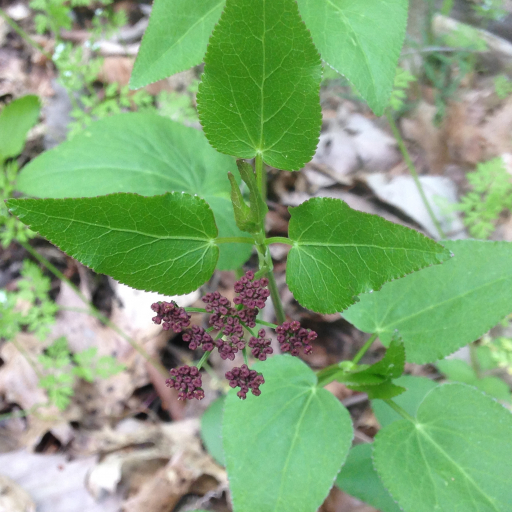
Plant Overview
Often called the Smooth Meadow-parsnip, this native North American perennial is a master of disguise. It often glows in woodland edges like a cluster of golden fireworks, frequently being mistaken for its famous cousin, the Golden Alexander. Whether you find the sunny yellow variety or the moody, dark-maroon atropurpureum version, it adds a touch of wild elegance to any naturalized landscape.
🔍 How to Identify
- 🌿 The "Three-Leaf" Pattern: True to its name (trifoliatum), the leaves are typically divided into three distinct, finely-toothed leaflets with a smooth, waxy texture.
- 🌼 Umbrella Blooms: It produces "umbels"—flat-topped clusters of tiny flowers that look like miniature yellow (or deep burgundy) lace doilies held aloft on slender stems.
- 📏 The Central Secret: Look closely at the flower clusters; unlike similar species, every single tiny flower in the cluster—including the one in the very center—is perched on its own little stalk.
- Stem Smooth Stems: The stems are notably hairless and smooth to the touch, often turning a deep reddish-purple as the plant matures.
🏡 In Your Garden
- 🦋 Butterfly Buffet: This plant is a vital host for the Black Swallowtail butterfly. If you see tiny striped caterpillars munching on the leaves, don't panic—they are just preparing for their transformation!
- 🌦️ The "Edge" Lover: In the wild, it thrives where the forest meets the field. In your garden, it prefers "dappled" light; too much harsh afternoon sun can scorch the foliage, while too much shade will make it floppy.
- 🌱 Low Maintenance: Once established, it is remarkably self-sufficient. It has a sturdy root system that helps it survive occasional dry spells, though it prefers consistently moist, well-drained soil.
⚠️ Safety & Toxicity
- 🚫 Look-Alike Warning: Exercise extreme caution. Meadow-parsnips belong to the Apiaceae family, which includes some of the most toxic plants on earth, such as Water Hemlock. Never forage or consume any part of this plant unless you are an expert.
- 🧴 Skin Sensitivity: The sap of many plants in this family can cause "phytophototoxicity"—a fancy way of saying your skin might blister or develop a rash if the sap gets on you and is then exposed to sunlight.
- 🐾 Pet Safety: While not typically high on the list of "deadly" garden plants, it is best to keep curious dogs and cats from chewing on the foliage to avoid stomach upset.
✨ Fun Fact
The easiest way to tell the difference between Thaspium and its twin, Zizia aurea, is to look at the fruit! The Smooth Meadow-parsnip produces "winged" seeds that look like tiny footballs with ridges, designed to catch the wind and travel to new corners of the meadow.

Detailed Care Instructions

Place in a bright room that is sun drenched almost all day. Or directly in a south-facing window.

Some plants require more regular watering than others, which should be done every few days. It's critical to maintain the soil moist all of the time. The water requirements of the same plant placed in pots with varying sizes will differ. Because the water in the smaller pot evaporates faster than the water in the larger pot, it will require more watering. Regardless of pot size, the surface should constantly be maintained moist.








